


 Deutsch
 English
 Español
 Français
 Nederlands
 Português


 Share
Share




As TSMC accelerates its $165 billion Arizona mega-fab to produce A16 and N2 chips by 2028, the United States faces a strategic inflection point in semiconductor independence. The Supreme Court's February 2026 ruling striking down IEEPA tariff authority, combined with remaining Section 232 chip tariffs and a tightening skilled labor shortage, reveals deep structural gaps between domestic ambition and operational reality. This article analyzes whether America's chip sovereignty push can overcome permitting delays, workforce deficits, and the enduring concentration of advanced fabrication in Taiwan — examining the strategic, economic, and geopolitical trade-offs that will define the next decade of global tech supply chains.
The $165 Billion Bet: TSMC's Arizona GigaFab
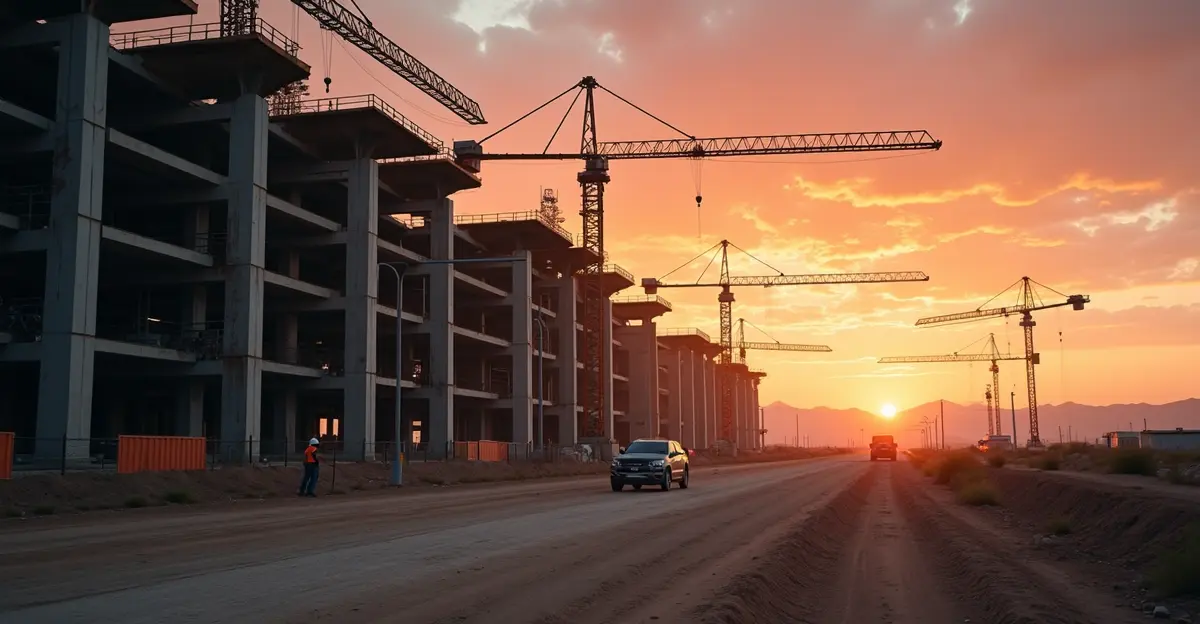
TSMC's Arizona complex near Phoenix has become the largest foreign direct investment in U.S. history. As of March 2026, Fab 21 Phase 1 is already producing 4nm chips for Apple and NVIDIA, including NVIDIA's Blackwell AI processors — marking the first cutting-edge AI silicon made outside Taiwan. Phase 2 construction is complete, with 3nm production targeted for 2027 — a full year ahead of schedule. A third fab for 2nm chips is under construction, and TSMC has secured 902 additional acres of state trust land, bringing the total site to over 2,000 acres with plans for up to six fabs, four advanced packaging facilities, and an R&D center.
TSMC CEO C.C. Wei announced in July 2025 that the gigafab cluster would account for 30% of TSMC's 2nm and more advanced capacity. The company's $52–56 billion capital expenditure plan for 2026 reflects surging AI demand, with 2nm wafer prices exceeding $30,000. Apple has secured over 50% of initial N2 capacity. The expansion also brings CoWoS (Chip on Wafer on Substrate) advanced packaging to U.S. soil, eliminating the need to ship wafers to Taiwan for final assembly — a critical de-risking step for supply chains serving Nvidia, Apple, and AMD.
However, the CHIPS Act implementation challenges remain significant. Construction costs in the U.S. are four to five times higher than in Taiwan, and TSMC has acknowledged that chips made in Arizona will cost at least 50% more than those from Taiwan. The U.S. Commerce Department provided $6.6 billion in direct funding and up to $5 billion in loans under the CHIPS and Science Act, but $5.7 billion in Intel grants was converted to a federal equity stake in August 2025, and $7.4 billion in research funding to Natcast was canceled.
Supreme Court Ruling Reshapes Tariff Landscape
On February 20, 2026, the Supreme Court ruled 6-3 in Learning Resources, Inc. v. Trump that the International Emergency Economic Powers Act (IEEPA) does not authorize the President to impose tariffs, voiding the entire 'Liberation Day' tariff architecture. The ruling triggered refunds on $166 billion in duties collected from over 330,000 businesses. Within hours, the administration pivoted to Section 122 of the Trade Act of 1974, imposing a 10% ad valorem surcharge on imports with a hard 150-day expiration (July 24, 2026).
Section 232 tariffs on semiconductors remain intact. On January 14, 2026, President Trump signed a proclamation imposing a 25% Section 232 tariff on semiconductor imports, semiconductor manufacturing equipment (SME), and derivative products, effective January 15, 2026. For Chinese-origin semiconductors, the tariff stacks with Section 301 duties, totaling 50% on customs value. The tariff aims to reduce U.S. dependence on foreign chips but creates tension by also taxing the equipment needed for domestic fab construction. The Section 232 semiconductor tariff impact is particularly acute for importers of advanced manufacturing tools from ASML, Applied Materials, and Tokyo Electron.
Tariff Paradox: Protecting While Taxing
The Section 232 tariff on semiconductor manufacturing equipment creates a paradox: it taxes the very tools needed to build domestic fabs. Importers of EUV lithography machines from ASML face the 25% surcharge, raising costs for TSMC's Arizona expansion. The White House has signaled potential exemptions for equipment destined for CHIPS Act-funded facilities, but no formal exclusion process has been established. SEMI, the global semiconductor industry association, released its 2026 U.S. Policy Strategy on January 28, calling for balanced trade policy that preserves access to critical inputs.
The Workforce Deficit: 115,000 Jobs at Risk
The U.S. semiconductor workforce stands at 368,400 workers as of March 2026, down from a peak of ~401,000 in 2023. The industry needs to add ~115,000 jobs by 2030, with ~67,000 at risk of going unfilled due to skill shortages. The roles in shortest supply — process engineers, equipment technicians, and skilled operators — require specific degrees, vendor training, and 18–36 months of on-the-job experience.
TSMC has hired U.S. workers and sent them for training in Taiwan for 12–18 months, but the pipeline remains thin. Community college programs and apprenticeships are being expanded, but the US semiconductor talent shortage 2026 is a structural bottleneck that no single company can solve alone. The WEF Global Risks Report 2026 ranks geoeconomic confrontation as the top short-term risk, and labor shortages compound the challenge of reshoring critical industries.
Geopolitical Stakes: Taiwan Strait Risk and the 'Silicon Pact'
Taiwan produces roughly 90% of the world's most advanced chips, creating a critical single point of failure amid rising tensions in the Taiwan Strait. Chinese export controls on tungsten have caused prices to surge 557%, while helium shortages from disruption to Qatar's facilities add further pressure. The U.S.-Taiwan 'Silicon Pact' of 2026 provided tariff relief in exchange for $250 billion in Taiwanese investment, including TSMC's expanded Arizona commitment and $250 billion in credit guarantees.
Analysts caution that replicating Taiwan's engineering ecosystem at scale in any single country remains a challenge. TSMC's Kumamoto Fab 1 in Japan is underperforming, Fab 2 construction is delayed, and a slowing German auto sector may hinder further European investments. Despite the global shift, Taiwan remains central — four of nine new fabs under construction are located there. The Taiwan semiconductor supply chain risk will persist for the foreseeable future, as the slow ramp-up of U.S. capacity means Taiwan stays critical to global silicon supply.
Expert Perspectives
"The Supreme Court's IEEPA ruling fundamentally changes the tariff playbook," said Sarah Miller, trade policy analyst at the Peterson Institute. "Section 232 remains a powerful tool, but its application to semiconductor equipment creates internal contradictions that undermine the CHIPS Act's goals."
SEMI President and CEO Ajit Manocha emphasized: "U.S. leadership in semiconductors depends on clear, predictable policy execution. Member companies are investing at historic levels, but clear rules and predictable incentives are essential for those investments to succeed."
FAQ
What is TSMC's Arizona investment?
TSMC is investing $165 billion to build a semiconductor gigafab cluster near Phoenix, Arizona — the largest foreign direct investment in U.S. history. The complex includes up to six fabs, four advanced packaging facilities, and an R&D center.
What did the Supreme Court rule on IEEPA tariffs?
On February 20, 2026, the Supreme Court ruled 6-3 that IEEPA does not authorize the President to impose tariffs, voiding the 'Liberation Day' tariff architecture and triggering refunds on $166 billion in duties.
What are Section 232 semiconductor tariffs?
Section 232 tariffs impose a 25% duty on semiconductor imports and manufacturing equipment, effective January 15, 2026, based on national security grounds. For Chinese-origin chips, the rate totals 50% when stacked with Section 301 duties.
How many semiconductor jobs are needed in the U.S.?
The industry needs to add ~115,000 jobs by 2030, with ~67,000 at risk of going unfilled due to skill shortages in process engineering, equipment technician, and operator roles.
Why is Taiwan still critical for chips?
Taiwan produces over 90% of the world's most advanced chips. Despite TSMC's global expansion, four of nine new fabs under construction are in Taiwan, and the U.S. ramp-up will take years to meaningfully reduce dependence.
Conclusion: Sovereignty Within Reach, but Not Yet Secured
America's semiconductor sovereignty push is making historic progress. TSMC's Arizona gigafab is producing advanced chips on U.S. soil for the first time, the CHIPS Act has catalyzed billions in private investment, and the Supreme Court's tariff ruling has forced a more disciplined trade policy framework. Yet the structural gaps — workforce shortages, permitting delays, higher costs, and Taiwan's enduring dominance — remain formidable.
The WEF Global Risks Report 2026 warns that geoeconomic confrontation is the top global risk, and the semiconductor industry sits at the epicenter of this competition. The next decade will test whether the U.S. can translate ambition into operational reality, or whether the concentration of advanced fabrication in Taiwan will remain the defining vulnerability of the global tech economy.

Follow Discussion