


 Deutsch
 English
 Español
 Français
 Nederlands
 Português


 Share
Share




The Quantum Computing Tipping Point: How 2026 Marks the First Practical Supremacy Milestone
IBM's bold prediction that 2026 will witness quantum computers outperforming classical computers for the first time on practical problems represents a watershed moment in technological history. This quantum advantage milestone, centered on IBM's Nighthawk processor with 120 qubits and improved quantum error correction, will fundamentally reshape industries from pharmaceuticals to finance while creating unprecedented national security challenges. The strategic implications of this breakthrough extend far beyond computational speed, touching on everything from drug discovery timelines to global power dynamics in the intensifying US-China technology race.
What is Quantum Practical Supremacy?
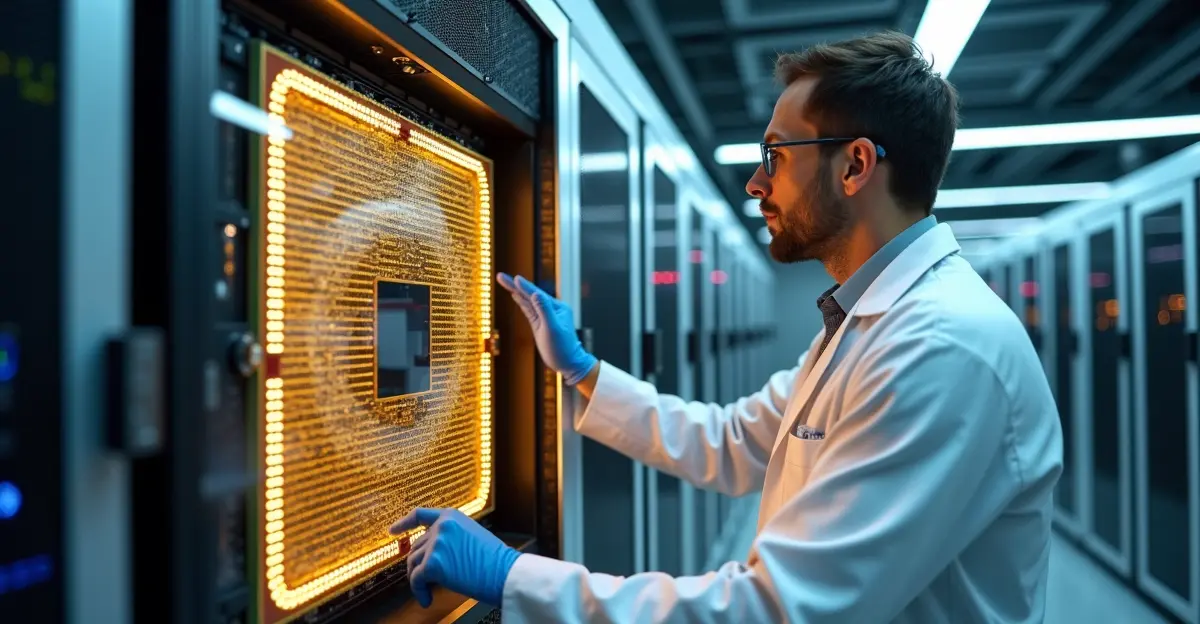
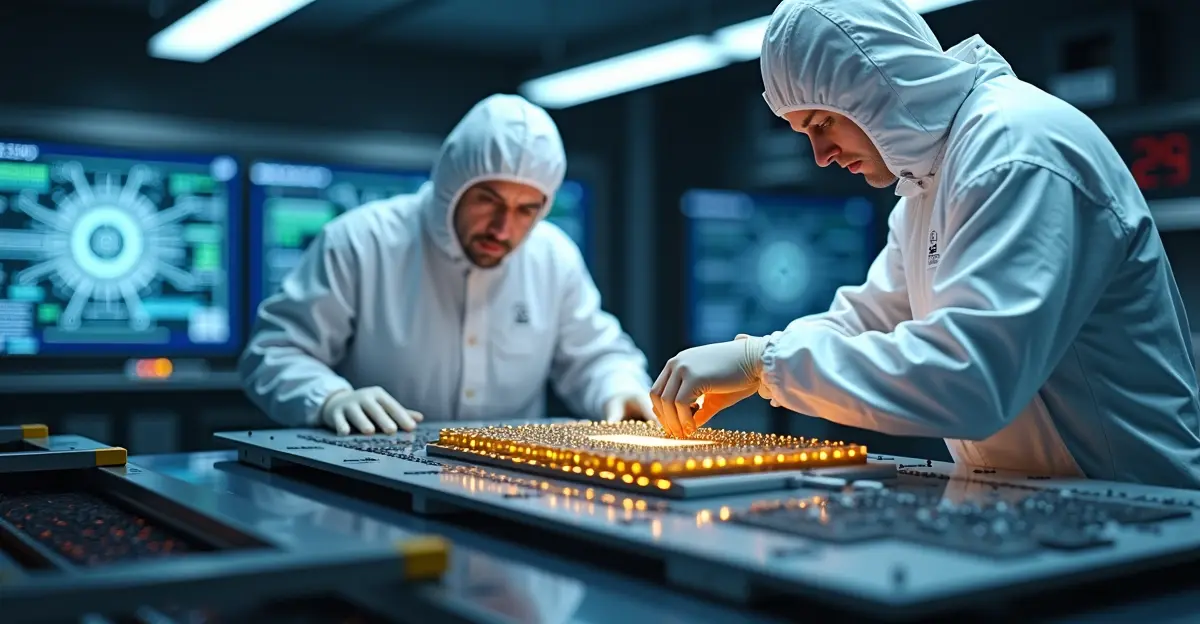
Quantum practical supremacy refers to the moment when quantum computers solve real-world problems faster or more efficiently than classical computers can. Unlike previous demonstrations of quantum advantage on artificial tasks, the 2026 milestone targets scientifically and commercially relevant applications. According to IBM's roadmap, this will be achieved through the Nighthawk processor's 120 superconducting qubits arranged in a dense square lattice design, enabling 30% greater circuit complexity than previous generations. The company plans to demonstrate this capability by running 7,500 quantum gates on up to 360 qubits through the IBM Quantum Platform, working alongside high-performance classical computing systems.
Industry Transformation: Three Key Sectors
1. Pharmaceutical Revolution in Drug Discovery
Quantum computing represents a transformative $200-500 billion opportunity for the pharmaceutical industry by 2035, addressing declining R&D productivity through accurate molecular simulations. Unlike AI, which struggles with quantum-level interactions, quantum computing enables first-principles calculations based on quantum physics laws, allowing researchers to predict drug properties like toxicity and stability without relying on experimental data. 'Traditional drug development takes over a decade and billions of dollars, with classical methods struggling to explore the vast chemical space of 10^60 potential molecules,' explains a recent Nature review. Quantum approaches like Quantum Phase Estimation (QPE) for molecular energy calculations and Variational Quantum Eigensolver (VQE) for electronic structure problems could accelerate drug development timelines by years.
2. Materials Science Breakthroughs
The ability to simulate quantum systems accurately will revolutionize materials science, enabling the design of novel superconductors, batteries, and catalysts. Quantum computers excel at modeling electron interactions and chemical bonds at the quantum level, tasks that overwhelm classical supercomputers. This capability could lead to breakthroughs in energy storage, carbon capture technologies, and advanced manufacturing materials. The semiconductor industry stands to benefit significantly from quantum simulations of novel materials for next-generation chips.
3. Financial Modeling and Optimization
Financial institutions are preparing for quantum advantages in portfolio optimization, risk analysis, and derivative pricing. Quantum algorithms can explore exponentially more possibilities in complex financial models, potentially identifying optimal investment strategies that classical computers would require years to discover. According to Federal Reserve research, the financial sector faces particular urgency due to 'harvest now, decrypt later' threats, where adversaries collect encrypted financial data today for future quantum decryption.
National Security Implications and Geopolitical Tensions
The quantum computing race has become a central front in the US-China technology competition, with both nations investing tens of billions into quantum development. While America leads in most quantum research, China has deployed industrial-scale funding and centralized coordination to achieve dominance in quantum systems, particularly in quantum communications. 'Quantum supremacy will be a critical national asset, enabling breakthroughs in encryption, materials science, energy production, medical research, and military applications,' warns a U.S.-China Economic and Security Review Commission report.
Three groundbreaking research papers published between May 2025 and March 2026 have dramatically accelerated the quantum threat timeline. Craig Gidney's May 2025 paper showed RSA-2048 encryption could be broken with fewer than 1 million qubits (down from 20 million), while Google Quantum AI's March 2026 paper revealed that elliptic curve cryptography protecting cryptocurrencies could be broken with fewer than 500,000 qubits in minutes. These developments have moved quantum threats from theoretical concerns to immediate practical risks.
The 'Harvest Now, Decrypt Later' Crisis
Intelligence agencies from the US, UK, and Germany confirm that state actors are already collecting encrypted data they cannot currently read, storing it for future decryption when quantum computers become powerful enough. This 'harvest now, decrypt later' (HNDL) strategy represents a quiet crisis in cybersecurity, as security teams don't respond because there are no immediate effects, but the consequences emerge years later in diplomatic crises or intelligence breaches. While cryptographically relevant quantum computers are estimated to arrive between 2030-2040, organizations need to begin migration to quantum-resistant cryptography now, as full migration for complex organizations takes 7-10 years.
Expert Perspectives on the 2026 Timeline
Industry experts and prediction markets remain skeptical about IBM's 2026 timeline, viewing it as a year of steady technical progress rather than revolutionary breakthroughs. IBM's 'utility-first' strategy contrasts with Google's 'fidelity-first' approach, with IBM betting on rapid scaling of physical qubits while Google prioritizes error correction. Quantum advantage, if achieved, will be narrow and task-specific—primarily for chemistry simulations, optimization tasks, and drug discovery applications—rather than general-purpose computing. Fault-tolerant quantum computing remains a decade-long journey, with IBM targeting 2029 for its fault-tolerant Quantum Starling system.
Global Quantum Divide and Economic Implications
Over 150 countries lack national quantum strategies, creating an emerging 'quantum divide' that could exacerbate global inequality. The technology intersects with artificial intelligence advancement and semiconductor geopolitics, creating both unprecedented opportunities and complex governance challenges. Nations with early quantum capabilities could gain disproportionate economic advantages in pharmaceuticals, materials science, and financial services, while those without risk falling behind in technological competitiveness.
FAQ: Quantum Computing 2026 Milestone
What exactly will quantum computers achieve in 2026?
IBM predicts quantum computers will solve practical scientific problems faster than classical computers for the first time, particularly in chemistry simulations and optimization tasks using their 120-qubit Nighthawk processor.
How will this affect current encryption systems?
Current encryption standards like RSA and elliptic curve cryptography will become vulnerable to quantum attacks, necessitating immediate migration to quantum-resistant cryptographic algorithms approved by NIST.
Which industries will benefit first from quantum computing?
Pharmaceuticals, materials science, and financial services will see the earliest practical applications, with quantum computing potentially accelerating drug discovery and improving financial modeling.
What is the 'harvest now, decrypt later' threat?
Adversaries are already collecting encrypted data they cannot currently decrypt, storing it for future decryption when quantum computers become powerful enough to break current encryption standards.
How does China compare to the US in quantum development?
While the US leads in quantum research, China has achieved dominance in quantum communications through centralized coordination and industrial-scale funding, making this a key area of geopolitical competition.
Conclusion: Preparing for the Quantum Era
The 2026 quantum computing milestone represents more than a technical achievement—it marks the beginning of a fundamental shift in computational paradigms with far-reaching implications for global security, economics, and power dynamics. Organizations must begin preparing now for both the opportunities and threats presented by quantum computing, from exploring quantum applications in their industries to implementing quantum-resistant security measures. As IBM's roadmap progresses toward fault-tolerant systems by 2029, the window for strategic preparation is closing rapidly.




Follow Discussion