


 Deutsch
 English
 Español
 Français
 Nederlands
 Português


 Share
Share




The Quantum Supremacy Tipping Point: How 2026's Computational Breakthroughs Reshape Global Security and Economics
In 2026, quantum computing has reached a historic inflection point where quantum computers are now outperforming classical supercomputers for practical business applications, creating immediate strategic implications for global security, economic competitiveness, and technological leadership. IBM experts predict this milestone year marks the transition from theoretical research to commercial reality, with profound consequences across multiple domains that demand urgent policy and strategic analysis. The quantum computing revolution is no longer a distant future scenario but an unfolding reality reshaping our world.
What is Quantum Supremacy?
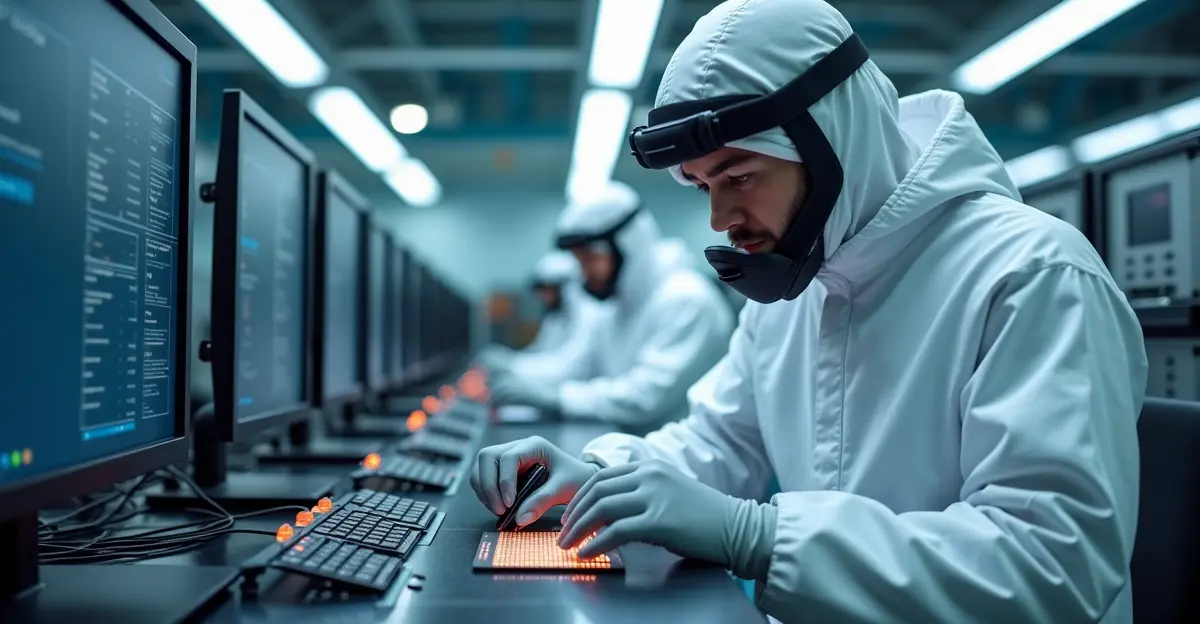
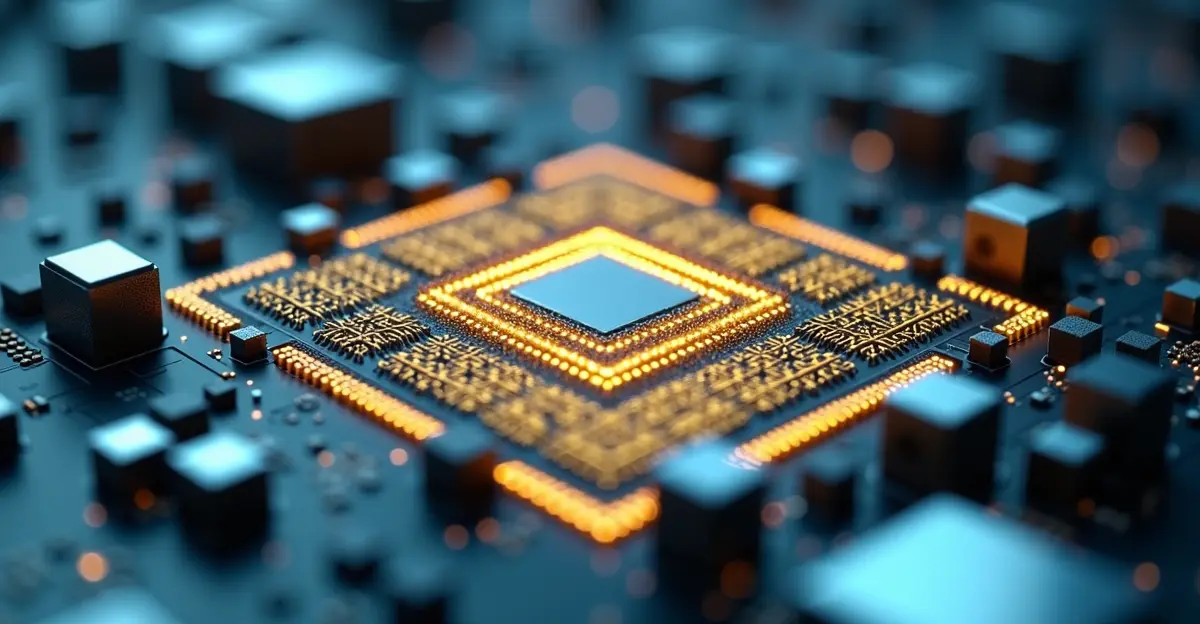
Quantum supremacy, also called quantum advantage, refers to the point where a programmable quantum computer solves a problem that no classical computer can solve in any feasible amount of time. Coined by John Preskill in 2011, this concept has evolved from theoretical possibility to practical reality in 2026. IBM's Quantum Nighthawk processor with 120 qubits and advanced manufacturing techniques has enabled this breakthrough, while Google's 1000-qubit Willow system has demonstrated quantum advantage in optimization tasks. The global quantum race has attracted over $40 billion in investment, reflecting enterprise confidence that quantum advantage is achievable within 12-24 months for specific applications.
The Encryption Crisis: Current Standards Become Vulnerable
Three groundbreaking research papers published between May 2025 and March 2026 have dramatically accelerated the quantum computing threat timeline. Craig Gidney's May 2025 paper showed RSA-2048 encryption could be broken with fewer than 1 million qubits (down from 20 million), while Google Quantum AI's March 2026 paper demonstrated that elliptic curve cryptography protecting major cryptocurrencies could be broken with fewer than 500,000 qubits in minutes rather than days. 'Harvest now, decrypt later' campaigns are accelerating, where threat actors collect encrypted data today to decrypt later using quantum computers, creating an urgent need for quantum-resistant cryptography.
Post-Quantum Cryptography Solutions
The solution involves migrating to Post-Quantum Cryptography (PQC) standards like CRYSTALS-Kyber and CRYSTALS-Dilithium, requiring infrastructure overhaul. The G7 recommends critical infrastructure adopt quantum-resistant cryptography by 2030-2032, with full migration by 2035. Security teams must act now to implement quantum-resistant encryption before quantum hardware becomes available, as the cybersecurity landscape faces its most fundamental transformation since the invention of public-key cryptography.
Economic Transformation: Drug Discovery, Materials Science, and Financial Optimization
Quantum computing promises to revolutionize multiple industries by enabling faster, smarter, and more precise approaches. In pharmaceuticals, quantum approaches can accelerate molecular simulation, drug-target interaction prediction, and clinical trial optimization, potentially reducing the typical decade-long, billion-dollar drug development timeline. Quantum computers can simulate molecular interactions at unprecedented levels of accuracy, allowing researchers to better understand complex biological systems and identify promising drug candidates.
Financial and Materials Science Applications
In finance, quantum optimization algorithms are solving NP-hard problems in logistics and portfolio management, while in materials science, quantum simulations enable discovery of new superconductors, catalysts, and battery materials. The addressable market at full maturity is estimated at $100-250 billion, attracting patient capital despite near-term volatility. Early commercial applications are emerging in optimization, financial modeling, and chemical simulations, with companies focusing on generating revenue through cloud platforms and software tools.
Geopolitical Competition: US, China, and EU Quantum Race
Quantum computing has emerged as a new frontier of great-power competition, with nations viewing it as a strategic asset for economic prowess, military strength, and technological sovereignty. The United States employs a private-sector-driven approach through its National Quantum Initiative Act, leveraging companies like IBM, Google, and Microsoft. China pursues a state-directed strategy with massive centralized investment, while the European Union focuses on collaborative research across member states.
Strategic Implications
While America leads in most quantum research, China has deployed industrial-scale funding and centralized coordination to achieve dominance in quantum systems. China currently leads the world in quantum communications and is making rapid progress in quantum computing and sensing. The competition reflects broader geopolitical tensions, with quantum technology becoming another frontier in the Great Power Competition, raising questions about cooperation versus confrontation in this critical emerging field.
Defense Applications and National Security
Quantum technologies offer transformative military applications including quantum sensing for submarine detection, quantum navigation systems that don't rely on GPS, and quantum-secure communications resistant to interception. China's quantum development closely aligns with national security goals and military applications, with close integration between state research labs and defense systems. The opacity about China's quantum progress creates risks of miscalculation about its true technological capabilities.
Quantum Sensing and Secure Communications
Quantum sensors can detect minute changes in gravitational fields, enabling detection of underground facilities or submarines, while quantum key distribution provides theoretically unbreakable encryption for sensitive communications. These applications represent a new dimension of military technology competition that could redefine strategic balances in the coming decade.
Supply Chain Vulnerabilities: Rare Earth Minerals and Manufacturing
Rare-earth elements form the hidden foundation of quantum technologies, with China dominating the global supply chain by controlling about 90% of refining capacity and most downstream magnet manufacturing. Key rare-earth minerals essential for quantum computing include ytterbium (used in trapped-ion quantum computers), erbium (enables quantum internet connections), europium (provides long-term quantum memory), neodymium (offers strong optical signals), and yttrium (serves as substrate material).
Strategic Dependencies
Western governments are investing in new refining and recycling projects, but experts emphasize that diversifying processing—not just mining—remains the critical step to reduce dependency on China. The recent export restrictions by China and the US response highlight the strategic importance and vulnerability of these supply chains for quantum technology development, creating a critical supply chain security challenge for Western nations.
FAQ: Quantum Supremacy 2026 Explained
What is quantum supremacy?
Quantum supremacy is the point where quantum computers outperform classical computers for specific tasks, achieved in 2026 through breakthroughs in qubit count and error correction.
How does quantum computing threaten encryption?
Quantum algorithms like Shor's algorithm can break current RSA and elliptic curve encryption, requiring migration to post-quantum cryptographic standards by 2035.
Which countries lead in quantum computing?
The US leads in research and private sector innovation, China dominates quantum communications and state-directed development, while the EU focuses on collaborative research across member states.
What are practical quantum applications in 2026?
Current applications include drug discovery acceleration, financial optimization, materials science simulations, and logistics optimization, with broader commercial impact expected by 2028-2029.
How vulnerable are quantum supply chains?
Extremely vulnerable, with China controlling 90% of rare earth refining essential for quantum hardware, creating strategic dependencies that Western nations are working to address.
Conclusion: The Quantum Future is Now
The 2026 quantum supremacy milestone represents more than a technical achievement—it marks a strategic inflection point with profound implications for global security, economic competitiveness, and technological leadership. As nations and corporations navigate this new landscape, the decisions made today will determine who leads in the quantum era. IBM's roadmap targets fault-tolerant quantum computing by 2029 with 1,000 qubits, signaling the next major milestone in this technological revolution that is reshaping our world in real-time.




Follow Discussion