


 Deutsch
 English
 Español
 Français
 Nederlands
 Português


 Share
Share




The Quantum Arms Race: How 2026 Export Controls Are Redefining Global Tech Competition
The global quantum technology landscape is undergoing a seismic shift as 2026 export controls implemented by the United States and other nations create a fragmented ecosystem reminiscent of the semiconductor bifurcation. With the U.S. Department of Commerce's quantum technology export controls taking full effect in 2026 after their September 2024 implementation, nations worldwide are scrambling to build parallel quantum infrastructures and assert 'quantum sovereignty' in what experts describe as the most significant technological arms race since the Cold War.
What Are Quantum Export Controls?
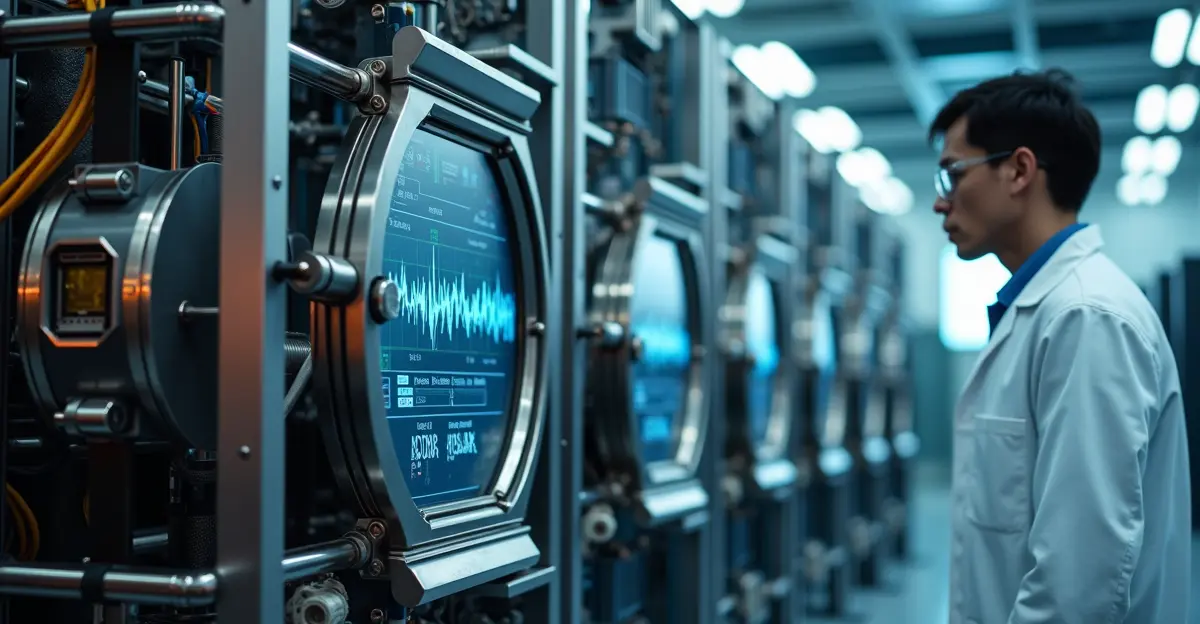
Quantum export controls are national security measures restricting the international transfer of quantum computing technologies, components, materials, software, and technical knowledge. The U.S. Bureau of Industry and Security (BIS) implemented comprehensive controls in September 2024 covering quantum computers, related equipment, dilution refrigerators, specialized materials, and even 'deemed exports' where sharing knowledge with foreign nationals within the country is treated as an export. These controls aim to prevent sensitive quantum capabilities from being accessed by potential adversaries, particularly those that could compromise encryption systems or be used for military applications.
The Strategic Context: From Open Research to National Security
Quantum research, once an open frontier of international collaboration, now faces border checkpoints for knowledge transfer. The semiconductor export controls of recent years provided a blueprint for how advanced technologies become geopolitical tools. According to U.S.-China Economic and Security Review Commission reports, quantum supremacy represents a critical national asset with transformative implications for encryption, materials science, energy production, and intelligence capabilities. 'Whoever achieves quantum supremacy first could secure irreversible strategic superiority,' warns the commission's analysis.
Global Responses and Parallel Infrastructures
China's Quantum Ambitions
China has responded to U.S. restrictions with massive state investment totaling approximately $15 billion, viewing quantum technology as pivotal in global science and technology competition. The country leads in quantum communications with the world's largest quantum communication network spanning 12,000 kilometers, including two quantum satellites. China's new five-year national development plan specifically targets quantum leadership and AI expansion, calling for scalable quantum computers and integrated space-earth quantum communication networks.
Europe's Quantum Sovereignty Strategy
The European Commission has unveiled an ambitious quantum sovereignty strategy aiming to make the EU a world leader in quantum technologies by 2030. The plan targets five key areas: research, infrastructure, ecosystem development, space/dual-use technologies, and skills development. Central initiatives include a €50 million quantum-design facility, six pilot chip-production lines, and a pilot 'Quantum Internet' for ultra-secure communications. A Quantum Act is planned for 2026 to incentivize cross-border projects and de-risk private investment.
Other Nations Building Domestic Capabilities
Countries including Japan, South Korea, Australia, and Canada are developing their own quantum programs, creating what experts call a 'splinternet' of quantum technologies. Each nation is building domestic supply chains with strategic 'control points' to reduce dependency on foreign technologies.
The Quantum Bifurcation: Lessons from Semiconductors
The quantum technology fragmentation mirrors the semiconductor industry's recent trajectory, where export controls created parallel supply chains and competing technological standards. Key similarities include:
- National security concerns driving technology restrictions
- Massive government investments in domestic capabilities
- Emergence of competing technological standards
- Supply chain decoupling and reshoring initiatives
- Strategic competition between democratic and authoritarian models
However, quantum technology presents unique challenges. Unlike semiconductors with established manufacturing processes, quantum technologies are still in research and development phases, making control of intellectual property and research collaboration particularly sensitive.
Impact on AI Development and National Security
The intersection of quantum computing and artificial intelligence represents a critical frontier. Quantum-enhanced AI could accelerate drug discovery, optimize complex systems, and break current encryption standards. The AI development race is now inextricably linked to quantum progress, with nations recognizing that quantum supremacy could provide decisive advantages in both commercial and military applications. According to The Quantum Insider, China's strategy explicitly links quantum and AI development as 'new quality productive forces' expected to drive economic growth.
Expert Perspectives on the Quantum Divide
Technology analysts warn that the quantum divide could have profound consequences. 'We're witnessing the birth of parallel quantum universes,' says Dr. Evelyn Nakamura, quantum policy analyst. 'Nations are building incompatible quantum infrastructures that could hinder global scientific progress while creating security vulnerabilities through technological fragmentation.' The Wassenaar Arrangement on export controls provides a multilateral framework, but quantum technologies present unique challenges not fully addressed by existing regimes.
Economic Implications and Market Forecast
The European Commission forecasts a global quantum market exceeding €155 billion by 2040, generating thousands of high-skilled jobs. However, the fragmented landscape creates uncertainty for businesses and investors. European quantum startups receive only 5% of global private investment despite over €11 billion in public funding since 2019, highlighting the challenges of competing in a bifurcated market.
Future Outlook: Cooperation or Confrontation?
As 2026 progresses, the quantum technology landscape faces critical decisions. Will nations find ways to collaborate on basic research while protecting national security interests, or will the quantum divide deepen into technological isolation? The global tech competition in quantum computing will likely shape international relations for decades, with implications extending far beyond technology to encompass economic power, military capability, and geopolitical influence.
Frequently Asked Questions
What technologies are covered by quantum export controls?
Quantum export controls cover complete quantum computers, key components, enabling equipment like dilution refrigerators, specialized materials, software, and technical know-how, including 'deemed exports' of knowledge shared with foreign nationals.
How do quantum export controls differ from semiconductor restrictions?
While both address national security concerns, quantum controls target earlier-stage technologies still in R&D, focus more on intellectual property and research collaboration, and involve more complex technical parameters for determining what constitutes controlled technology.
What is 'quantum sovereignty'?
Quantum sovereignty refers to a nation's ability to develop, control, and deploy quantum technologies independently, reducing reliance on foreign technologies and ensuring national security in quantum-enabled systems.
How will quantum fragmentation affect scientific research?
Scientific collaboration may become more restricted, with researchers facing barriers to international cooperation, reduced data sharing, and competing technological standards that could slow overall progress in quantum science.
What are the economic consequences of quantum bifurcation?
Economic consequences include duplicated research efforts, inefficient allocation of resources, market fragmentation, increased costs for businesses operating across technological divides, and potential slowdown in commercial quantum applications.



Follow Discussion