


 Deutsch
 English
 Español
 Français
 Nederlands
 Português


 Share
Share




The Quantum Computing Arms Race: How National Security Imperatives Are Reshaping Global Tech Alliances
As the United Nations designates 2025 as the International Year of Quantum Science and Technology, quantum computing has evolved from theoretical physics to a core national security priority, creating new geopolitical fault lines between major powers. This technological arms race is reshaping global alliances, restricting scientific exchange, and threatening to undermine current encryption standards that protect everything from financial transactions to military communications. With nations investing billions and implementing 'human capital import controls,' the race for quantum supremacy has become a central front in the Great Power Competition between the United States, China, and the European Union.
What is Quantum Computing?
Quantum computing represents a revolutionary approach to computation that leverages quantum mechanical phenomena like superposition and entanglement to process information. Unlike classical computers that use bits (0 or 1), quantum computers use qubits that can exist in multiple states simultaneously, potentially solving complex problems exponentially faster. This capability makes quantum computers particularly threatening to current encryption methods, as they could theoretically break widely-used cryptographic systems that protect global communications and data security.
The Geopolitical Landscape of Quantum Development
The quantum computing race has created distinct technological blocs with competing approaches and strategic priorities. The United States has positioned quantum computing as a national security imperative, with the National Quantum Initiative Act allocating $1.2 billion over five years and establishing quantum research centers across major universities and national laboratories. Meanwhile, China has made quantum technology a cornerstone of its 'Made in China 2025' strategy, investing an estimated $15 billion in quantum research and development, with particular focus on quantum communications and satellite-based quantum key distribution.
The European Union has taken a more collaborative approach through its Quantum Flagship program, committing €1 billion to coordinate research across member states while attempting to balance open scientific exchange with security concerns. This divergence in strategies reflects deeper philosophical differences about technological sovereignty and international cooperation in the quantum domain.
Human Capital Import Controls and Scientific Exchange Restrictions
One of the most significant developments in the quantum race has been the emergence of 'human capital import controls' that restrict the movement of researchers and knowledge across borders. Chinese quantum scientists increasingly face difficulties obtaining US visas, with reports of extensive questioning and delays at consular offices. These restrictions mark a dramatic shift from the traditionally open nature of scientific collaboration, particularly in fundamental research areas.
'We're witnessing the weaponization of scientific exchange,' notes Dr. Elena Rodriguez, a quantum policy expert at the Center for Strategic and International Studies. 'What was once considered global public knowledge is now being treated as strategic national assets, with profound implications for the pace of innovation and international relations.'
National Security Implications and Encryption Vulnerabilities
The national security implications of quantum computing are profound and multifaceted. Current public-key encryption standards, including RSA and elliptic-curve cryptography, could be broken by sufficiently powerful quantum computers using Shor's algorithm. This vulnerability threatens the security of government communications, financial systems, critical infrastructure, and military operations worldwide.
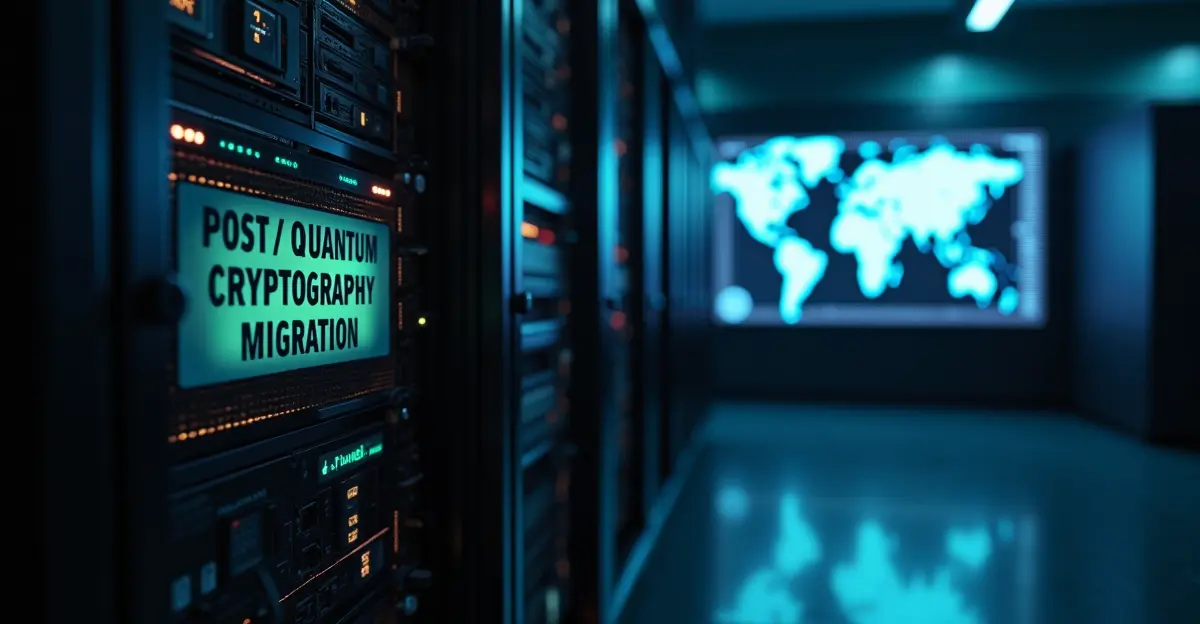
In response, the US National Institute of Standards and Technology (NIST) has been leading efforts to develop post-quantum cryptography standards, with the final selections expected in 2025. However, the transition to quantum-resistant encryption presents enormous technical and logistical challenges, requiring updates to virtually every digital system globally. The race to develop both quantum computing capabilities and quantum-resistant defenses has created a complex security dilemma reminiscent of nuclear arms control negotiations.
The Great Power Competition Dimension
Quantum computing has become a central arena in the broader Great Power Competition, with each major player pursuing distinct strategic objectives. The United States views quantum supremacy as essential for maintaining military and economic dominance, while China sees it as crucial for technological self-reliance and reducing dependence on Western systems. The European Union aims to establish itself as a 'third way' in quantum development, promoting ethical guidelines and international standards while protecting its technological sovereignty.
This competition extends beyond pure research to encompass industrial policy, export controls, and international standards-setting. The US-China technology decoupling has accelerated in the quantum domain, with both nations implementing export controls on quantum-related technologies and components. These measures reflect growing concerns about dual-use technologies that could have both civilian and military applications.
International Governance and the 2025 Pivot Point
The UN's designation of 2025 as the International Year of Quantum Science and Technology comes at a critical juncture. This recognition provides an opportunity to establish international governance frameworks for quantum technologies before they become fully weaponized or commercialized. Key questions include how to manage the risks of quantum computing while preserving its benefits, establishing norms for responsible development, and preventing a destabilizing arms race.
Several initiatives are emerging to address these challenges. The Quantum Economic Development Consortium brings together industry, academia, and government stakeholders to develop standards and best practices. Meanwhile, discussions at the United Nations and other multilateral forums are exploring potential confidence-building measures and transparency mechanisms for quantum capabilities.
Expert Perspectives on the Quantum Future
Experts warn that the current trajectory could lead to dangerous fragmentation of the global research ecosystem. 'We risk creating parallel quantum universes with incompatible standards and limited interoperability,' cautions Professor Michael Chen of the MIT Quantum Computing Center. 'This would not only slow progress but could create security vulnerabilities as different systems interact in unpredictable ways.'
Others emphasize the need for balanced approaches that protect national security while preserving scientific openness. 'The challenge is to develop guardrails without building walls,' says Dr. Sarah Johnson, director of quantum policy at the European Commission. 'We need mechanisms to prevent technology transfer that genuinely threatens security while maintaining the collaborative spirit that has driven quantum research for decades.'
Frequently Asked Questions
What makes quantum computers a national security threat?
Quantum computers could break current encryption standards that protect sensitive government, military, and financial communications. They could also accelerate the development of new materials, pharmaceuticals, and artificial intelligence capabilities with strategic implications.
How are countries restricting quantum research exchange?
Nations are implementing visa restrictions for researchers, export controls on quantum technologies, and limitations on international collaborations. Chinese scientists in particular face increased scrutiny when seeking to work or study in quantum-related fields abroad.
What is post-quantum cryptography?
Post-quantum cryptography refers to encryption algorithms designed to be secure against both classical and quantum computer attacks. NIST is leading global efforts to standardize these algorithms, with implementation expected to begin in 2025-2026.
Why is 2025 significant for quantum computing?
2025 marks the UN International Year of Quantum Science and Technology, coinciding with expected milestones in quantum hardware development, post-quantum cryptography standardization, and increased national investments in quantum capabilities.
Can international cooperation continue in quantum research?
While security concerns are limiting some collaborations, many experts believe targeted cooperation on fundamental research and standards development remains possible and necessary to address global challenges.
Conclusion: Navigating the Quantum Future
The quantum computing arms race represents one of the most significant technological and geopolitical developments of our time. As nations pursue quantum capabilities with increasing urgency, the international community faces critical choices about how to manage this transformative technology. The decisions made in 2025 and beyond will shape not only the future of computing but also the balance of power in the 21st century. Balancing national security imperatives with the benefits of open scientific collaboration will require innovative governance approaches and sustained diplomatic engagement across the quantum divide.





Follow Discussion