


 Deutsch
 English
 Español
 Français
 Nederlands
 Português


 Share
Share




Quantum Computing Arms Race: How National Security Drives Military Applications
January 2025 has witnessed a pivotal acceleration in the global quantum computing arms race, marked by Poland's ambitious military quantum computer prototype project and the United Nations' declaration of 2025 as the International Year of Quantum Science and Technology. These developments signal a strategic shift where quantum computing is transitioning from theoretical research to practical defense applications, driven by national security imperatives that are reshaping military capabilities and global power dynamics. The quantum supremacy race is no longer confined to laboratories but has become a critical component of national defense strategies worldwide.
What is the Quantum Computing Arms Race?
The quantum computing arms race refers to the intense global competition among nations to develop and deploy quantum technologies for military and strategic advantage. Unlike traditional computing, quantum computers leverage quantum mechanical phenomena like superposition and entanglement to perform calculations exponentially faster than classical computers for specific problems. This technological edge could potentially break current encryption systems, optimize complex military logistics, and accelerate materials discovery for advanced weaponry. The race has intensified as governments recognize that quantum supremacy could fundamentally alter the global security architecture and military balance of power.
Recent Developments: Poland's Military Quantum Initiative
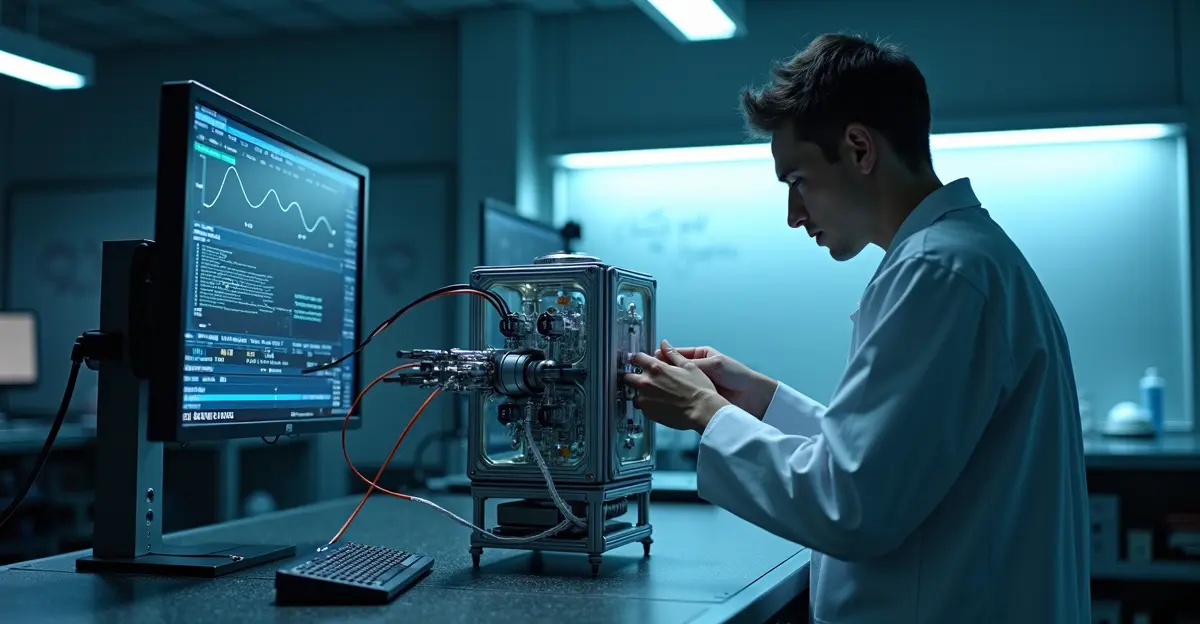
In January 2025, Poland announced significant progress on developing its first military quantum computer prototype, with completion expected by year's end. According to Lieutenant Colonel Przemysław Lipczyński of Poland's Cyberspace Defense Forces, a consortium led by Warsaw University of Technology, in collaboration with the Military University of Technology and Military Institute of Armament Technology, is developing the machine with funding exceeding $12 million from Poland's National Center for Research and Development.
"The project focuses on defense and security applications, particularly strengthening Poland's capabilities in quantum cryptography and cryptanalysis," explained a source familiar with the initiative. The military aims to use quantum computing for enhanced cybersecurity, including quantum key distribution for secure encryption key transmission resistant to quantum-based attacks.
Key Military Applications Being Developed
- Cryptography Breaking: Quantum computers could potentially break widely-used encryption algorithms like RSA and ECC, threatening secure military communications
- Advanced Materials Discovery: Simulating molecular structures for developing new defense materials, stealth coatings, and high-performance alloys
- Battlefield Simulation Optimization: Compressing multi-variable simulations from hours to minutes for real-time threat prediction and complex scenario modeling
- Secure Communications: Quantum Key Distribution (QKD) creates theoretically unbreakable encryption through quantum physics principles
- Logistical Optimization: Solving complex supply chain, troop deployment, and resource allocation problems with unprecedented efficiency
UN's International Year of Quantum Science and Technology
Coinciding with these military developments, the United Nations General Assembly declared 2025 as the International Year of Quantum Science and Technology (IYQ) under UNESCO's leadership. This initiative celebrates 100 years of quantum science and aims to foster global collaboration, with special focus on building capacity in the Global South, advancing gender equality in STEM fields, and addressing the quantum divide. The opening ceremony in February 2025 brought together over 1200 participants including Nobel Prize laureates at UNESCO Headquarters in Paris.
While promoting peaceful applications, the UN declaration has inadvertently highlighted the strategic importance of quantum technologies, prompting increased government investments worldwide. According to UNESCO, quantum technologies are driving 21st century breakthroughs, transforming our understanding of the universe where particles behave in ways that challenge everyday reality.
Geopolitical Implications: US, China, and Europe
The quantum computing race has created distinct strategic approaches among major powers. Between 2019-2021, China invested $11 billion, Europe $5 billion, the U.S. $3 billion, and the U.K. $1.8 billion in quantum technologies, according to recent analysis. Each nation is pursuing 'quantum sovereignty' through different strategies:
| Country/Region | Strategy | Key Focus Areas | Military Integration |
|---|---|---|---|
| United States | Distributed innovation ecosystem across government, academia, and private sector | Post-quantum cryptography, quantum sensors, AI integration | Pentagon's 'Quantum and Battlefield Information Dominance' framework |
| China | State-directed approach with centralized coordination and industrial-scale funding | Quantum communications, quantum sensing, military research integration | Close alignment with military research labs and defense firms |
| Europe | Quantum Flagship program coordinating efforts across member states | Quantum computing hardware, quantum internet, standardization | Varying approaches among NATO members, some favoring dual-use technologies |
The U.S.-China Economic and Security Review Commission report details the intense competition, noting that while America leads in most quantum research, China has deployed industrial-scale funding and centralized coordination to seize dominance in quantum systems, particularly in quantum communications where it leads globally. "China's state-directed approach concentrates talent and resources in key areas, closely aligning quantum development with national security goals through integration with military research labs and defense firms," the report states.
Military Applications Transforming Warfare
Quantum technologies are poised to revolutionize multiple aspects of modern warfare. Quantum-accelerated simulation enables faster battlefield planning, real-time threat prediction, and complex scenario modeling. Quantum sensors provide precise navigation in GPS-denied environments and early detection of stealth threats by detecting ultra-precise changes in gravity and magnetic fields.
The Pentagon has elevated quantum technology to a central position in its future military strategy through a new six-part framework unveiled by Under Secretary of War for Research and Engineering Emil Michael. The newly created 'Quantum and Battlefield Information Dominance' category focuses on developing resilient communications and navigation systems that can withstand jamming and electronic attacks.
Timeline for Military Deployment
Current assessments suggest varying timelines for quantum technology deployment:
- Near-term (1-5 years): Quantum sensing for navigation, quantum communication networks
- Medium-term (5-10 years): Quantum-enhanced optimization for logistics and battlefield simulation
- Long-term (10-20 years): Fault-tolerant quantum computing for cryptography breaking and complex materials discovery
Expert Perspectives on the Quantum Threat
Security analysts warn that quantum computers pose a significant future threat to modern cryptography, potentially allowing adversaries to break encryption protecting sensitive military and intelligence communications. The RAND Corporation emphasizes that U.S.-allied militaries must clarify their quantum defense strategies to ensure future interoperability of secure communications.
"The first country to operationalize quantum sensing for defense will gain a decisive advantage by eliminating the stealth advantage of current weapon systems, fundamentally reshaping nuclear deterrence and conventional warfare," notes a CSIS analysis on quantum sensing and future warfare.
FAQ: Quantum Computing and National Security
What is quantum supremacy in military context?
Quantum supremacy in military context refers to a nation's ability to use quantum computers to solve problems that are practically impossible for classical computers, potentially breaking enemy encryption, optimizing complex military operations, or discovering new defense materials faster than adversaries.
How could quantum computing break current encryption?
Quantum computers running Shor's algorithm could theoretically factor large numbers exponentially faster than classical computers, breaking widely-used public-key encryption systems like RSA and ECC that protect military communications, financial transactions, and sensitive government data.
What are the main defense strategies against quantum threats?
Two main approaches exist: post-quantum cryptography (PQC) using mathematical problems believed to be quantum-resistant, and quantum key distribution (QKD) using quantum physics principles. The U.S. favors PQC with upgrades ordered by 2035, while China has heavily invested in QKD infrastructure.
How is Europe responding to the quantum arms race?
Europe's Quantum Flagship program coordinates efforts across member states with €1 billion in funding, though faces challenges with duplication and funding gaps. Individual nations like Poland are pursuing domestic development to ensure technological independence.
What is the Y2Q threat?
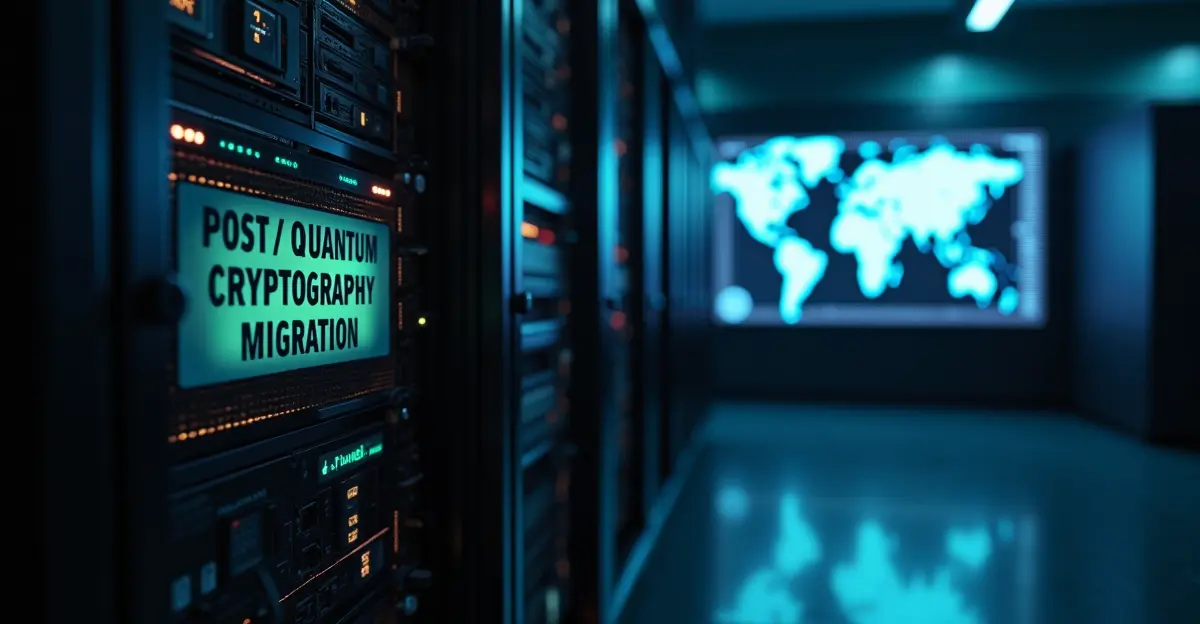
Y2Q (Years to Quantum) refers to the timeframe when quantum computers become powerful enough to break current encryption, estimated by some experts to occur within 10-20 years, creating urgency for cryptographic migration to quantum-resistant systems.
Conclusion: The Future of Quantum Warfare
The developments of January 2025 mark a turning point in the quantum computing arms race, where national security imperatives are accelerating military applications at an unprecedented pace. As nations race to develop quantum capabilities, the strategic landscape is being reshaped by technologies that could render current defense systems obsolete while creating new vulnerabilities and opportunities. The technological sovereignty race extends beyond computing to encompass quantum sensing, communication, and materials science, creating a multi-domain competition that will define global security for decades to come. With the UN's International Year of Quantum Science and Technology providing both a platform for collaboration and a reminder of the stakes, governments worldwide must navigate the delicate balance between advancing quantum technologies for societal benefit while preparing for their disruptive impact on military affairs and international relations.




Follow Discussion