


 Deutsch
 English
 Español
 Français
 Nederlands
 Português


 Share
Share




The Quantum Defense Race: How Military Applications Are Accelerating Quantum Technology Commercialization
Quantum technology investment surged 50% in 2024 to nearly $2 billion, with governments increasing their share to 34% of total funding, signaling a dramatic shift in how quantum technologies are being developed and deployed. As the United Nations designates 2025 as the International Year of Quantum Science and Technology, defense sector investments and military applications are driving quantum technology from research labs to real-world deployment at unprecedented speed. This strategic push is creating a new quantum arms race between major powers, with profound implications for global security and commercial markets.
What is Quantum Technology?
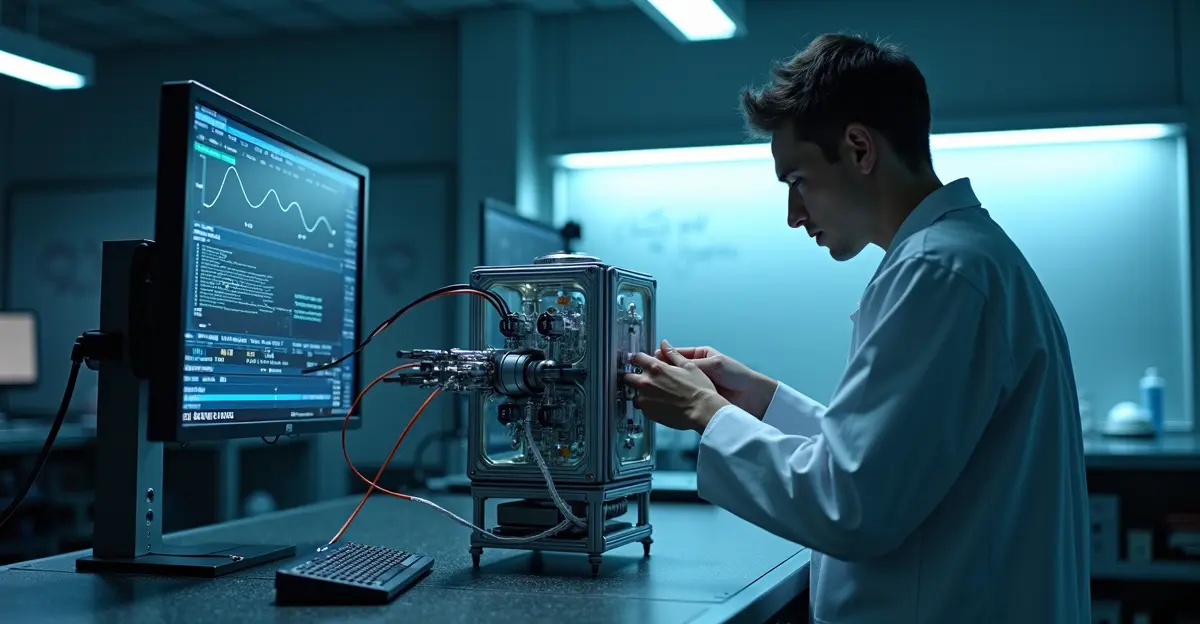
Quantum technology encompasses systems that leverage the principles of quantum mechanics—superposition, entanglement, and quantum tunneling—to perform tasks impossible with classical physics. The three primary domains include quantum computing (using qubits instead of classical bits), quantum sensing (detecting atomic-scale interactions in gravity, magnetism, and light), and quantum communications (ultra-secure information transfer). According to McKinsey's 2025 Quantum Technology Monitor, the quantum market could reach $100 billion within a decade, with quantum computing alone expected to generate $72 billion by 2035.
Defense Investments Fueling Quantum Advancements
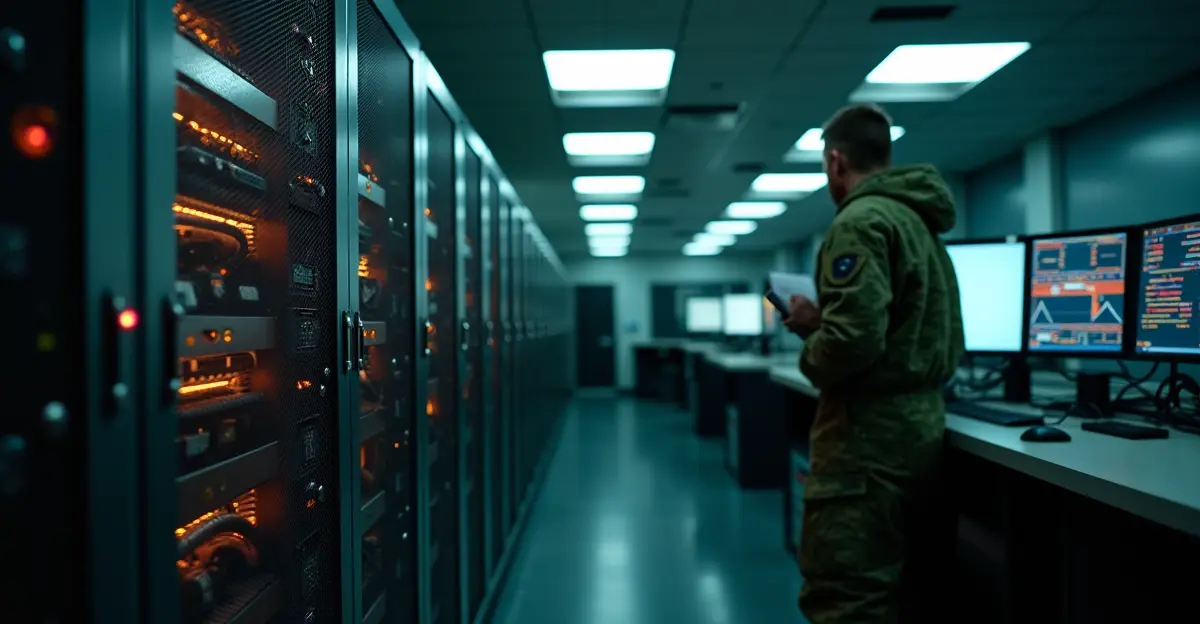
Canada's recent $900 million investment through its Defence Industrial Strategy exemplifies how military funding is accelerating quantum development. Announced by Minister of National Defence David J. McGuinty at the University of Waterloo, this funding targets three critical quantum areas: computing for code-breaking and AI integration, communications for secure battlefield networks, and sensors for detecting electric, magnetic, and gravitational fields beyond classical systems. This strategic investment aims to equip the Canadian Armed Forces with cutting-edge quantum capabilities while strengthening Canada's defence industrial base and creating high-paying jobs.
Globally, quantum technology investments now exceed $55.7 billion according to the Qureca Quantum Initiatives Worldwide 2025 report. The funding landscape has shifted from venture capital dominance to a hybrid model combining private sector investment with accelerating government commitment. Government funding now accounts for 34% of startup investment, with global public funding reaching $10 billion by April 2025. Major initiatives include Japan's $7.4 billion commitment and Spain's €808 million investment, while the U.S. leads with multiple legislative initiatives including the proposed $2.5 billion Department of Energy Quantum Leadership Act.
Military Applications Driving Commercialization
Quantum Sensing for Navigation and Intelligence
Quantum sensing technologies are poised to revolutionize modern warfare by potentially nullifying stealth capabilities of submarines and advanced aircraft. These technologies detect atomic-scale interactions in gravity, magnetism, and light, which could expose previously undetectable military assets. Quantum magnetometers can track submarines by mapping Earth's magnetic field, while quantum gravimeters can detect underground anomalies. According to a CSIS analysis, the first country to operationalize quantum sensing for defense will gain significant military advantage, potentially reshaping nuclear deterrence and conventional warfare by eliminating the stealth advantage of current weapon systems.
Quantum-Resistant Cryptography for Secure Communications
The U.S. National Institute of Standards and Technology (NIST) has finalized the first quantum-resistant cryptography standards after an 8-year selection process, publishing three key algorithms as FIPS-203 (ML-KEM) for key exchange, FIPS-204 (ML-DSA) for digital signatures, and FIPS-205 (SL-DSA) as an alternative signature scheme. These post-quantum cryptography (PQC) standards are designed to withstand attacks from future quantum computers while running on today's hardware. The migration to quantum-safe infrastructure is now urgent for organizations globally, with adversaries already employing a 'harvest now, decrypt later' strategy to collect encrypted data that future quantum computers could decrypt.
The Emerging Quantum Arms Race
The U.S. Defense Intelligence Agency's 2025 Worldwide Threat Assessment warns that China and Russia are making significant progress in militarizing quantum technologies, potentially reshaping global defense power dynamics. China has invested billions, launched the world's first quantum satellite, and conducted field tests of quantum navigation systems. Russia is developing quantum radar and cryptographic protocols. The DIA warns these advances could render current U.S. stealth and encryption technologies obsolete, compromising military communications and intelligence operations.
According to the U.S.-China Economic and Security Review Commission report, while America leads in most quantum research, China has deployed industrial-scale funding and centralized coordination to achieve dominance in quantum systems, particularly in quantum communications where it leads globally. China's state-directed approach concentrates talent and resources in specific areas, closely aligning quantum development with national security goals through integration with military research labs.
Strategic Implications and Commercial Spillover
The defense sector's focus on quantum technologies is accelerating commercialization timelines that would otherwise take decades. Military requirements for rugged, reliable systems are driving engineering advancements that benefit civilian applications. Quantum sensors developed for submarine detection could revolutionize mineral exploration and earthquake prediction. Quantum communication systems designed for secure battlefield networks could transform financial transactions and data privacy. The dual-use technology paradigm is creating a virtuous cycle where defense funding accelerates basic research that eventually benefits commercial markets.
Quantum computing funding has experienced explosive growth in 2025, with the sector attracting over $1.25 billion in Q1 alone—more than double the $550 million raised in Q1 2024, representing a 128% year-over-year surge. By September 2025, total equity funding reached $3.77 billion across the first three quarters. This rapid acceleration is directly tied to national security concerns and the recognition that quantum supremacy will determine future advantages in encryption, materials science, medical research, and intelligence capabilities.
Expert Perspectives on the Quantum Transition
'The transition to quantum-safe systems is urgent, with governments that haven't started migration already considered behind,' warns a recent analysis from The Jerusalem Post. 'While AI has already transformed modern warfare, it represents only the beginning of a broader technological revolution centered on quantum technologies.' The U.S. faces challenges including hardware limitations, talent shortages, and infrastructure gaps, requiring accelerated public-private partnerships and updated military doctrines to maintain strategic advantage.
The industry has shifted focus from growing qubits to stabilizing them, marking a turning point toward reliable quantum infrastructure. Quantum communication is emerging as a critical area for security, while innovation clusters are forming globally in locations like Abu Dhabi, Tel Aviv, Tokyo, Illinois, and Maryland. The European Quantum Technology Flagship represents a €1 billion, 10-year-long megaproject that exemplifies the scale of international commitment to quantum advancement.
FAQ: Quantum Defense and Commercialization
What is quantum-resistant cryptography?
Quantum-resistant cryptography refers to encryption algorithms designed to withstand attacks from future quantum computers. NIST has recently standardized three such algorithms (ML-KEM, ML-DSA, and SL-DSA) to protect against quantum decryption threats.
How does quantum sensing threaten stealth technology?
Quantum sensors can detect minute changes in gravitational, magnetic, and electromagnetic fields, potentially revealing submarines, aircraft, and underground facilities that current stealth technology hides from conventional detection methods.
Why is Canada investing $900 million in quantum defense?
Canada's investment aims to develop quantum computing for code-breaking, quantum communications for secure battlefield networks, and quantum sensors for advanced detection capabilities, while strengthening its defense industrial base and creating high-tech jobs.
What is the 'harvest now, decrypt later' threat?
Adversaries are collecting encrypted data today with the expectation that future quantum computers will be able to decrypt it, making the transition to quantum-resistant encryption urgently necessary for national security.
How will military quantum development benefit civilian applications?
Defense requirements for rugged, reliable systems accelerate engineering breakthroughs that eventually spill over into commercial markets, from improved medical imaging to more secure financial transactions and advanced materials discovery.
Future Outlook and Conclusion
As 2025 marks both the International Year of Quantum Science and Technology and a pivotal moment in quantum defense investment, the race for quantum supremacy is accelerating at an unprecedented pace. Defense sector funding is not merely supporting research but actively shaping the trajectory of quantum technology development. The strategic competition between major powers is creating both security challenges and commercial opportunities, with the quantum computing market projected to reach $72 billion by 2035. The convergence of military necessity and technological possibility is driving quantum technologies from laboratory curiosities to operational systems that will transform both warfare and civilian life in the coming decade.



Follow Discussion