


 Deutsch
 English
 Español
 Français
 Nederlands
 Português


 Share
Share




The Middle East's Emergence as a Strategic Semiconductor Hub
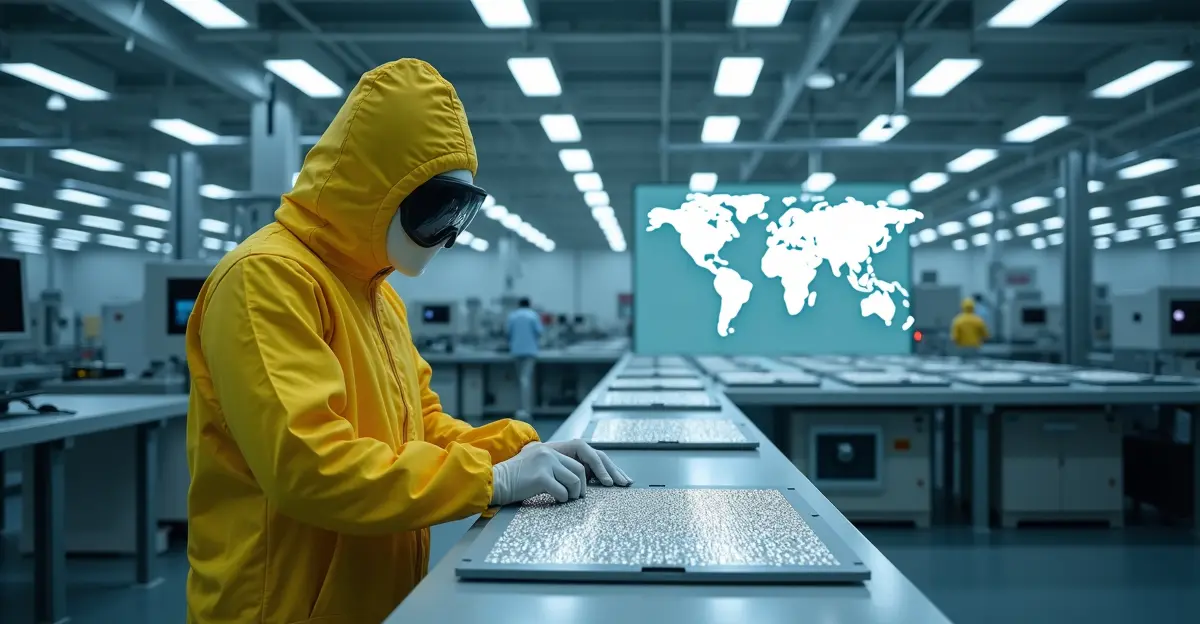
The global semiconductor landscape is undergoing a dramatic transformation as the Middle East emerges as a strategic manufacturing corridor, challenging traditional production centers in East Asia. Recent December 2024 reports highlight major semiconductor investments in Bahrain and broader Middle Eastern initiatives, coinciding with ongoing U.S.-China trade tensions and global supply chain reconfiguration efforts. Indian semiconductor manufacturer Polymatech Electronics' $100 million facility in Bahrain represents just one piece of a larger regional strategy that could reshape global technology supply chains and create new geopolitical dependencies.
What is a Semiconductor Hub?
A semiconductor hub refers to a concentrated geographic region with specialized infrastructure, talent, and supply chains for designing, manufacturing, and testing integrated circuits. Traditional hubs have been dominated by Taiwan (TSMC), South Korea (Samsung), and China, but global diversification efforts are creating new corridors. The Middle East's emergence as a potential hub represents a strategic shift driven by energy transition strategies, sovereign wealth funds, and geopolitical realignments away from East Asian concentration risks.
Bahrain's $100 Million Semiconductor Facility
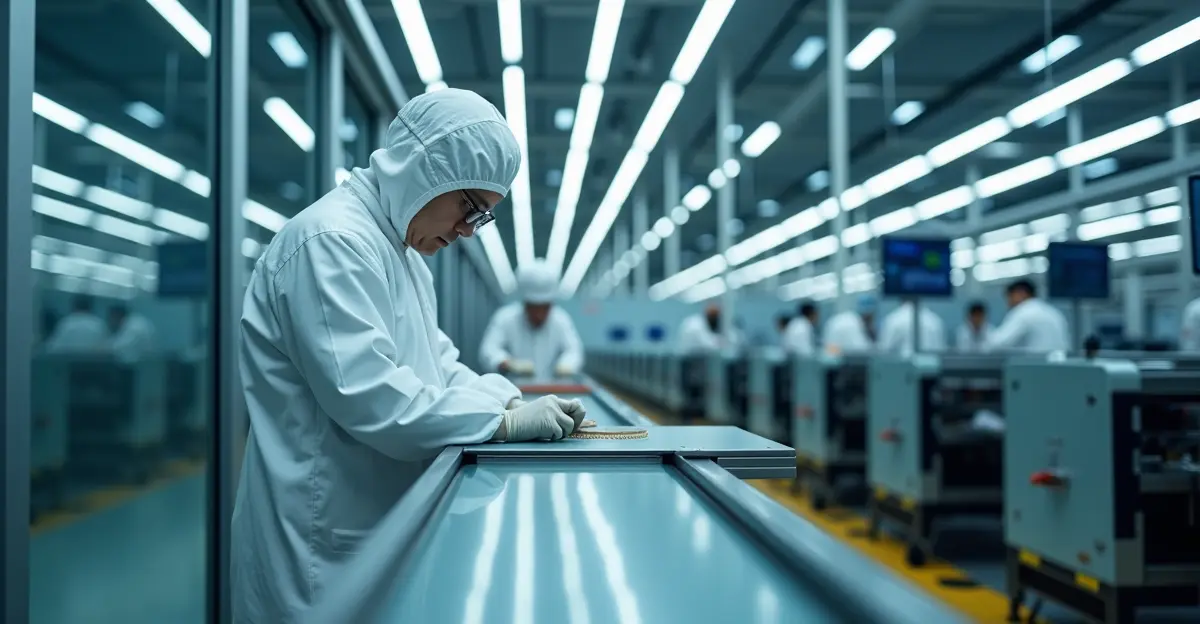
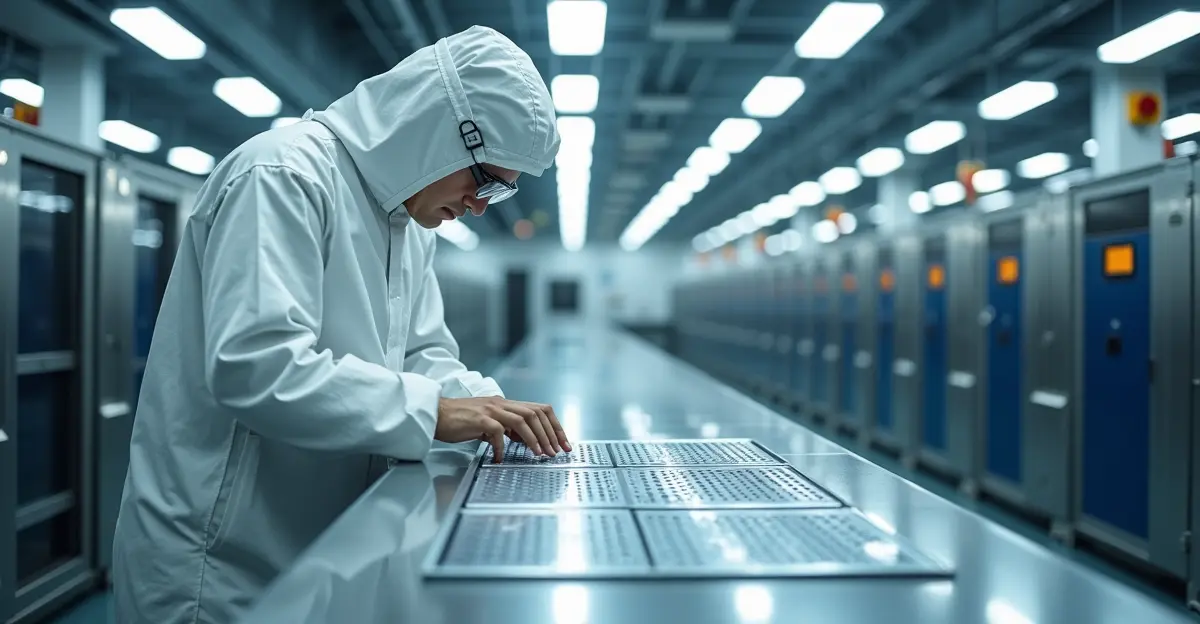
Polymatech Electronics, an Indian opto-semiconductor chip producer, is making a landmark $100 million investment in Bahrain, with an initial $16.2 million commitment for a facility in the Industrial Area of Hidd. Operating under the brand name Atri, the facility will produce essential components for 5G and 6G technologies, medical illumination devices, and specialized lighting for agriculture. This marks Bahrain's first semiconductor manufacturing investment and positions the country as a gateway to the GCC and MENA regions. 'This investment represents a pivotal milestone in Bahrain's digital transformation journey,' stated Bahrain's Minister of Sustainable Development.
Regional Semiconductor Market Growth
The Middle East semiconductor market reached USD 33,354.7 million in 2025 and is projected to grow to USD 67,840.9 million by 2034, exhibiting an 8.21% CAGR during 2026-2034. Key growth drivers include increasing demand for advanced electronic devices, expansion of cloud computing and IoT applications, and regional push towards 5G technology deployment. Major countries developing semiconductor capabilities include:
- Saudi Arabia: Vision 2030 investments in chip technology
- UAE: Abu Dhabi's $100 billion hub ambitions
- Egypt: Leveraging engineering talent for fabless design
- Oman: Building local capabilities as part of economic transformation
- Turkey, Israel, Qatar, Kuwait, Jordan, and Iran: Various initiatives
Geopolitical Drivers of Supply Chain Diversification
The U.S.-China tech rivalry has accelerated technical decoupling, leading to deliberate state-led strategies to diversify semiconductor production away from East Asia. The United States recently authorized advanced semiconductor exports to Saudi Arabia and the United Arab Emirates, allowing companies like NVIDIA and AMD to supply cutting-edge AI chips to Middle Eastern partners. This strategic pivot aims to cement U.S. technological leadership in emerging markets while reducing dependency on traditional manufacturing centers. The global semiconductor supply chain is moving from 'just-in-time' efficiency to 'just-in-case' resilience, with profound implications for AI development and technological progress.
Energy Transition and Sovereign Wealth Funds
Middle Eastern nations are leveraging their hydrocarbon wealth to fund semiconductor ambitions through sovereign wealth funds. With oil revenues providing substantial capital, countries like Saudi Arabia and the UAE are investing billions in technology diversification as part of broader energy transition strategies. This approach mirrors historical patterns where resource-rich nations use commodity wealth to build advanced industrial capabilities. The region's abundant energy resources also provide competitive advantages for energy-intensive semiconductor manufacturing processes.
Challenges and Competitive Landscape
Establishing a true semiconductor hub requires more than just building fabrication facilities. Key challenges facing Middle Eastern nations include:
- Acquiring specialized talent and developing supplier ecosystems
- Securing sensitive equipment and overcoming export controls
- Developing constant innovation capabilities and full-stack ecosystems
- Competing with established hubs in Taiwan, South Korea, and China
- Building packaging, testing, and R&D capabilities alongside manufacturing
Experts note that while the UAE's proven ability to deliver on bold economic goals positions it well, overcoming these high hurdles will take several years even under optimal conditions. The region must also navigate the complex geopolitics of technology and manage relationships with both Western and Eastern technology partners.
Strategic Implications and Future Outlook
The Middle East's semiconductor ambitions represent a fundamental shift in global technology supply chains. By 2034, the regional market could reach nearly $68 billion, creating new strategic dependencies and economic opportunities. This transformation has several key implications:
- Reduced concentration risk in East Asian manufacturing
- New geopolitical alignments in technology partnerships
- Economic diversification for oil-dependent economies
- Enhanced regional technological sovereignty and security
- Increased competition for talent and investment globally
The success of Bahrain's Polymatech facility and similar initiatives will depend on sustained investment, talent development, and integration into global supply networks. As the U.S.-China technology competition intensifies, the Middle East's strategic position could make it a crucial balancing force in global semiconductor politics.
Expert Perspectives on Regional Transformation
Industry analysts note that the Middle East's semiconductor push represents more than just economic diversification. 'This is about technological sovereignty and positioning for the post-oil economy,' explains a regional technology strategist. 'Semiconductors are the new oil - they power everything from smartphones to military systems, and controlling their production is a strategic imperative.' The region's ability to leverage its financial resources, strategic location, and growing technical capabilities will determine its success in challenging established manufacturing centers.
FAQ: Middle East Semiconductor Hub
What is Bahrain's semiconductor investment?
Indian company Polymatech Electronics is investing $100 million in Bahrain for a semiconductor facility producing 5G/6G components and specialized lighting, with an initial $16.2 million commitment.
Why is the Middle East becoming a semiconductor hub?
Geopolitical tensions, energy transition strategies, sovereign wealth funds, and supply chain diversification away from East Asia are driving regional semiconductor investments.
How big is the Middle East semiconductor market?
The market reached $33.4 billion in 2025 and is projected to grow to $67.8 billion by 2034, with an 8.21% annual growth rate.
Which Middle Eastern countries are leading semiconductor development?
Saudi Arabia (Vision 2030), UAE ($100 billion hub ambitions), Egypt (fabless design), Bahrain (Polymatech facility), and Oman are key players.
What challenges does the region face?
Talent acquisition, supplier ecosystem development, equipment security, and competition with established hubs in Taiwan, South Korea, and China.
Conclusion: A New Semiconductor Corridor Emerges
The Middle East's emergence as a semiconductor manufacturing corridor represents one of the most significant shifts in global technology supply chains in decades. With Bahrain's $100 million facility serving as a catalyst, regional ambitions could transform economic structures, create new strategic dependencies, and challenge traditional production centers. As global tensions reshape technology politics, the Middle East's semiconductor journey will be closely watched by policymakers, investors, and industry leaders worldwide. The success of these initiatives will determine whether the region can truly become a third pole in the global semiconductor landscape alongside East Asia and North America.


Follow Discussion