


 Deutsch
 English
 Español
 Français
 Nederlands
 Português


 Share
Share




The New Quantum Frontier: How U.S. Export Controls Are Reshaping Global Tech Competition
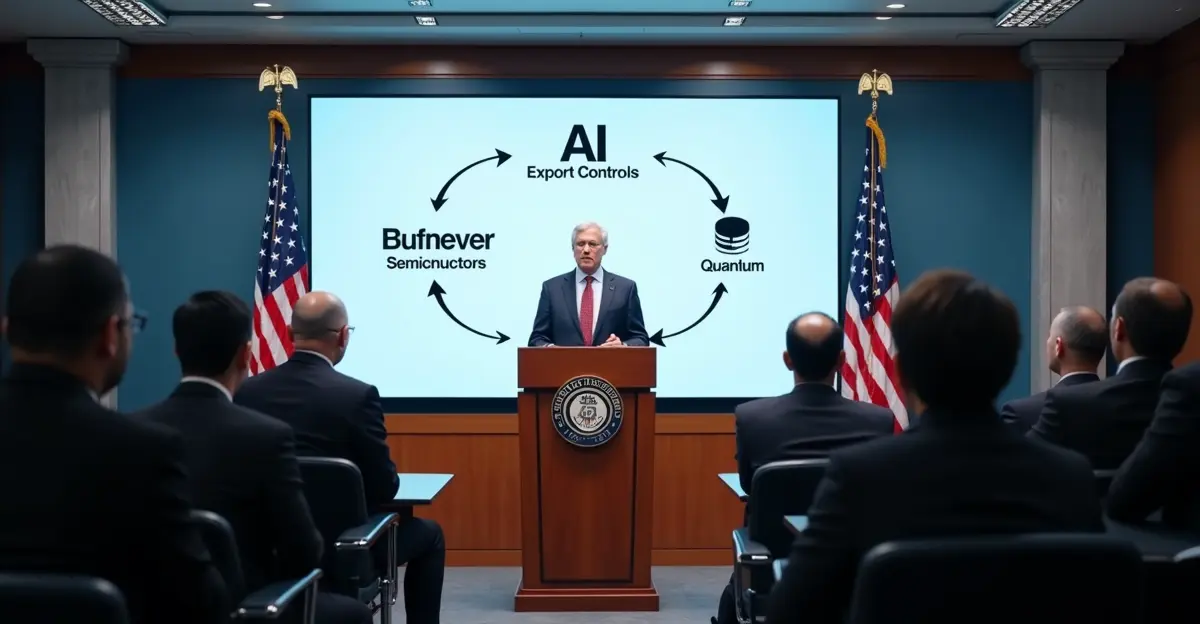
The U.S. Department of Commerce's Bureau of Industry and Security (BIS) recently implemented sweeping new export controls targeting quantum computing and advanced semiconductor technologies, marking a significant escalation in technology protectionism that will fundamentally reshape global innovation dynamics and strategic competition. These regulations represent Washington's most aggressive move yet to maintain American technological supremacy in critical emerging fields while addressing national security concerns about dual-use technologies that could potentially be weaponized.
What Are the New Export Controls?
The expanded export controls, building upon the October 2022 restrictions on advanced computing and semiconductor manufacturing, now specifically target quantum computing technologies, advanced chip design software, and specialized manufacturing equipment. According to the Bureau of Industry and Security, these measures aim to prevent sensitive technologies from reaching geopolitical rivals, particularly China, that could use them for military applications or to undermine U.S. technological leadership. The controls cover quantum computing hardware, cryogenic systems, specialized materials, and software tools essential for developing next-generation quantum processors.
The Strategic Context: Why Now?
The timing of these expanded controls reflects growing concerns about the rapid advancement of quantum computing capabilities worldwide. Quantum computers, which leverage quantum mechanical phenomena like superposition and entanglement, promise revolutionary breakthroughs in cryptography, materials science, and drug discovery. However, their potential to break current encryption standards has raised alarm bells in national security circles. The U.S. government's move follows similar actions in the semiconductor export controls space and represents a coordinated effort to maintain technological dominance in what many experts consider the next frontier of computing.
National Security Imperatives
National security concerns drive much of the regulatory approach. "Quantum computing represents both an enormous opportunity and a significant threat to national security," explains Dr. Elena Rodriguez, a technology policy analyst at the Center for Strategic and International Studies. "The ability to break current encryption could compromise everything from financial systems to military communications. The U.S. cannot afford to lose its edge in this critical technology." The controls specifically target technologies that could enable adversaries to develop quantum computers capable of breaking RSA and elliptic-curve cryptography, which underpin most modern digital security systems.
Economic Competition Dynamics
Beyond security concerns, economic competition plays a crucial role. The global quantum computing market is projected to reach $125 billion by 2030, according to industry estimates. By restricting access to key technologies, the U.S. aims to ensure American companies maintain leadership in this lucrative sector. The semiconductor controls, which build on earlier restrictions, now encompass more advanced manufacturing equipment and design tools, creating significant compliance challenges for multinational corporations operating in global supply chains.
Impact on Global Innovation Ecosystems
The new regulations are accelerating fragmentation in global innovation ecosystems, creating what some analysts call "technological spheres of influence." Research collaborations between U.S. and international institutions are facing increased scrutiny, particularly in quantum information science. Academic exchanges and joint research projects now require extensive compliance reviews, potentially slowing scientific progress in a field that has traditionally benefited from international cooperation.
Corporate Compliance Challenges
Multinational technology companies face unprecedented compliance challenges. The expanded controls create complex regulatory landscapes where companies must navigate conflicting requirements across jurisdictions. "We're seeing a Balkanization of technology standards and regulations," notes Michael Chen, general counsel for a major semiconductor equipment manufacturer. "Companies now need separate R&D teams, supply chains, and even product lines for different markets. This increases costs and slows innovation." The regulations affect not only direct exports but also foreign-produced items that incorporate U.S. technology, creating extraterritorial compliance obligations.
Supply Chain Reconfiguration
The controls are forcing major reconfigurations of global technology supply chains. Companies are reevaluating manufacturing locations, supplier relationships, and technology partnerships. The semiconductor industry, already strained by geopolitical tensions and pandemic-related disruptions, now faces additional complexity. According to industry reports, several major chip manufacturers are accelerating plans to diversify production away from geopolitical hotspots, though this process requires massive investment and years to implement effectively.
Long-Term Consequences for Scientific Collaboration
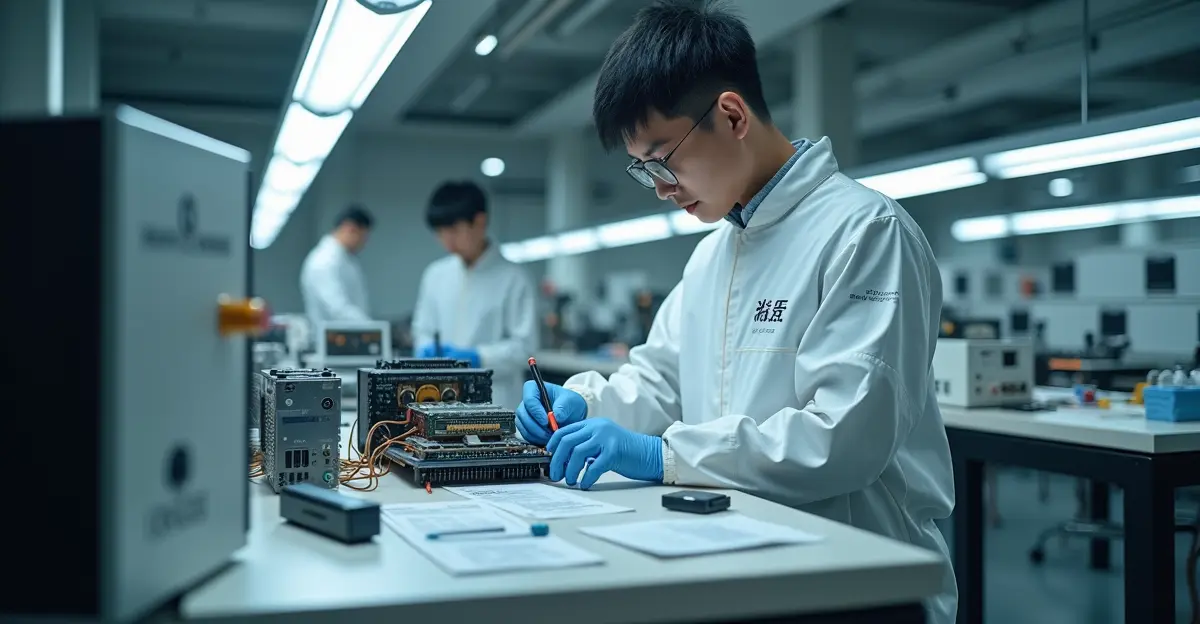
The restrictions raise fundamental questions about the future of international scientific collaboration. Quantum computing research has historically been a global endeavor, with breakthroughs often resulting from cross-border partnerships. The new controls could create parallel research tracks, with different countries pursuing similar goals in isolation. This fragmentation risks duplicating efforts, wasting resources, and potentially slowing overall progress in a field that promises transformative benefits for humanity.
Alternative Innovation Pathways
Countries targeted by the controls are already developing alternative innovation pathways. China, in particular, has announced ambitious plans to achieve quantum supremacy through indigenous research and development. The country has committed substantial resources to quantum technologies as part of its "Made in China 2025" initiative and subsequent strategic plans. Similar patterns are emerging in other regions, suggesting that the controls may accelerate rather than prevent technological development in rival nations, albeit through different technological approaches.
Expert Perspectives on the Regulatory Approach
Technology policy experts offer mixed assessments of the regulatory strategy. Some argue that targeted controls are necessary to protect national security and maintain competitive advantages. Others warn that overly broad restrictions could backfire by isolating U.S. researchers and companies from global innovation networks. "There's a delicate balance between protection and participation," observes Dr. Sarah Johnson, director of the Technology and Global Affairs Program at Georgetown University. "Complete isolation could leave the U.S. behind in areas where breakthroughs happen elsewhere. The key is smart, targeted controls that address genuine security threats without stifling beneficial collaboration."
Future Outlook and Policy Implications
The expanded export controls represent a new phase in technology competition, one where national security considerations increasingly shape innovation ecosystems. As quantum computing and advanced semiconductors become more strategically significant, similar regulatory approaches may emerge in other critical technology areas. The long-term success of these policies will depend on their ability to adapt to rapidly evolving technological landscapes while minimizing unintended consequences for scientific progress and economic growth.
Frequently Asked Questions
What specific quantum computing technologies are restricted?
The controls target quantum computing hardware (including qubit processors and cryogenic systems), specialized materials for quantum devices, quantum sensing technologies, and software tools for quantum algorithm development and simulation. The restrictions also cover technologies that could enable the development of quantum computers capable of breaking current encryption standards.
How do these controls differ from previous semiconductor restrictions?
While building on the October 2022 semiconductor controls, the new regulations specifically address quantum computing technologies and expand coverage to more advanced chip design tools and manufacturing equipment. They also create more comprehensive restrictions on technical assistance and knowledge transfer, affecting research collaborations and academic exchanges in addition to physical exports.
What are the compliance requirements for multinational companies?
Companies must conduct detailed due diligence on their supply chains, implement enhanced screening procedures for technical exchanges, obtain specific licenses for controlled technologies, and potentially restructure operations to separate controlled activities from other business functions. Compliance now extends to foreign-produced items that incorporate U.S. technology or software.
How will these controls affect academic research collaborations?
Academic collaborations involving quantum computing or advanced semiconductor research now require extensive compliance reviews and potentially export licenses. Universities are implementing new protocols for international partnerships, and some research areas may become effectively off-limits for collaboration with institutions in certain countries.
What are the potential long-term consequences for global innovation?
The controls risk creating parallel innovation ecosystems, potentially slowing overall progress through duplication of efforts and reduced knowledge sharing. However, they may also spur increased investment in alternative technological approaches and accelerate efforts to develop indigenous capabilities in targeted countries.



Follow Discussion