


 Deutsch
 English
 Español
 Français
 Nederlands
 Português


 Share
Share




What is the Nexperia Chip Crisis?
The global semiconductor industry faces renewed disruption as China warns of potential worldwide chip shortages following escalating conflicts between Dutch chipmaker Nexperia and its Chinese subsidiary. This critical situation threatens to destabilize supply chains for automotive, electronics, and industrial sectors that depend on Nexperia's essential components. The Chinese Ministry of Commerce issued a stark warning on Saturday, March 7, 2026, stating that 'new conflicts' between Nexperia's Netherlands headquarters and its Chinese operations could trigger another global semiconductor supply chain crisis.
Background: How Did We Get Here?
The current crisis traces back to October 2025 when the Dutch government seized control of Nexperia from its Chinese parent company Wingtech Technology, citing national security concerns under the Goods Availability Act. This unprecedented move by The Hague followed allegations that Nexperia planned to transfer critical semiconductor technology and production capabilities to China. In response, Beijing imposed export restrictions on Chinese-made Nexperia chips, disrupting global automotive production for several weeks.
While diplomatic negotiations temporarily eased the chip shortage, the underlying conflict has only intensified. The Dutch headquarters supports removing Wingtech's control, while the Chinese subsidiary demands its restoration. This corporate civil war has created a dangerous impasse with global implications, similar to the EU-US semiconductor trade tensions that have shaped recent industrial policy.
The Latest Escalation: Account Blockades and Accusations
The situation reached a new boiling point on Friday, March 6, 2026, when Nexperia's Chinese packaging division accused the Netherlands headquarters of blocking business accounts for all employees in China. According to the Chinese Ministry of Commerce, this action 'has caused new conflicts and created new difficulties and obstacles for business-to-business negotiations.'
In an official statement, the ministry declared: 'Nexperia Netherlands has seriously disrupted the normal production and operation of the company, and if this again leads to a global crisis in semiconductor production and supply chains, the Netherlands must bear full responsibility.'
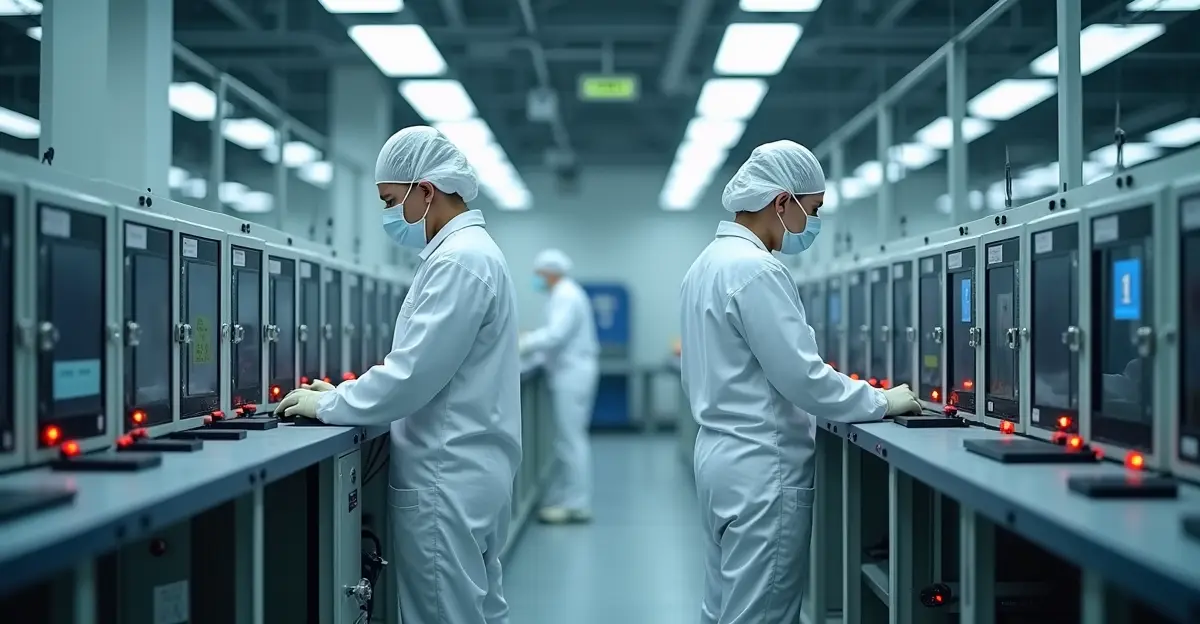
The Dutch entity of Nexperia, while not denying the IT action, disputed claims that it affected production at the company's assembly and testing facility in Guangdong province. This exchange represents the latest in a series of accusations that have characterized the conflict since September 2025, when the Chinese subsidiary declared independence from its Dutch parent following the loss of Wingtech's control.
Key Events in the Nexperia Conflict Timeline
- October 2025: Dutch government seizes Nexperia from Chinese parent Wingtech
- October 2025: China imposes export restrictions on Nexperia chips
- November 2025: Global automotive production disrupted by chip shortages
- September 2025: Chinese subsidiary declares independence from Dutch parent
- March 2026: Netherlands headquarters blocks Chinese employee accounts
- March 2026: China warns of potential global semiconductor crisis
Why Nexperia Chips Matter to Global Industries
Nexperia produces essential semiconductor components used extensively in automotive electronic systems, consumer electronics, and industrial applications. The company's chips are particularly critical for:
- Automotive Systems: Engine management, safety features, infotainment
- Consumer Electronics: Smartphones, tablets, home appliances
- Industrial Equipment: Power management, motor control systems
The company operates front-end factories in Hamburg, Germany, and Greater Manchester, England, with packaging facilities in China. This global footprint makes Nexperia particularly vulnerable to geopolitical tensions, much like the Taiwan semiconductor manufacturing challenges that have concerned industry analysts for years.
Failed Diplomatic Efforts and Growing Tensions
Attempts by Beijing, The Hague, and Brussels to broker a mediated solution have yielded minimal progress in breaking the impasse. China has accused the Netherlands of not doing enough to compel Nexperia's Dutch headquarters to compromise or end the legal proceedings in Amsterdam, where Wingtech's shares were transferred to a Dutch lawyer in October 2025.
'Both entities accuse each other of negotiating in bad faith,' according to industry analysts monitoring the situation. 'The Dutch headquarters has suspended wafer supply to the Guangdong plant, creating a production bottleneck that could ripple through global supply chains.'
Potential Global Impact and Industry Response
The renewed conflict comes as the global semiconductor industry was beginning to recover from previous shortages. Automotive manufacturers, who were hit hardest by the October 2025 disruptions, have been implementing strategies to build resilience, including:
- Increasing semiconductor stockpiles and buffer inventories
- Diversifying supplier networks beyond single-source dependencies
- Investing in regional chip manufacturing capabilities
- Developing alternative component designs where possible
However, these measures may prove insufficient if the Nexperia conflict triggers widespread production halts. The situation highlights broader vulnerabilities in global technology supply chains, reminiscent of the COVID-19 semiconductor shortage that exposed systemic weaknesses in just-in-time manufacturing models.
Frequently Asked Questions (FAQ)
What is Nexperia and why is it important?
Nexperia is a major semiconductor manufacturer headquartered in Nijmegen, Netherlands, with production facilities in Germany, England, and China. It produces essential chips for automotive, consumer electronics, and industrial applications.
Why did the Dutch government seize Nexperia?
The Dutch government invoked the Goods Availability Act in October 2025 to seize control from Chinese parent Wingtech, citing national security concerns and preventing technology transfer to China.
How could this affect car production?
Nexperia chips are critical components in automotive electronic systems. Previous disruptions in October 2025 forced temporary production halts at several major automakers.
What is China's position in this conflict?
China supports its domestic subsidiary and has warned that the Netherlands must bear full responsibility if the conflict triggers another global semiconductor crisis.
Are there diplomatic efforts to resolve this?
Yes, Beijing, The Hague, and Brussels have attempted mediation, but progress has been limited with both sides accusing each other of negotiating in bad faith.



Follow Discussion