


 Deutsch
 English
 Español
 Français
 Nederlands
 Português


 Share
Share




Breakthrough in Detecting Hidden Water Sources
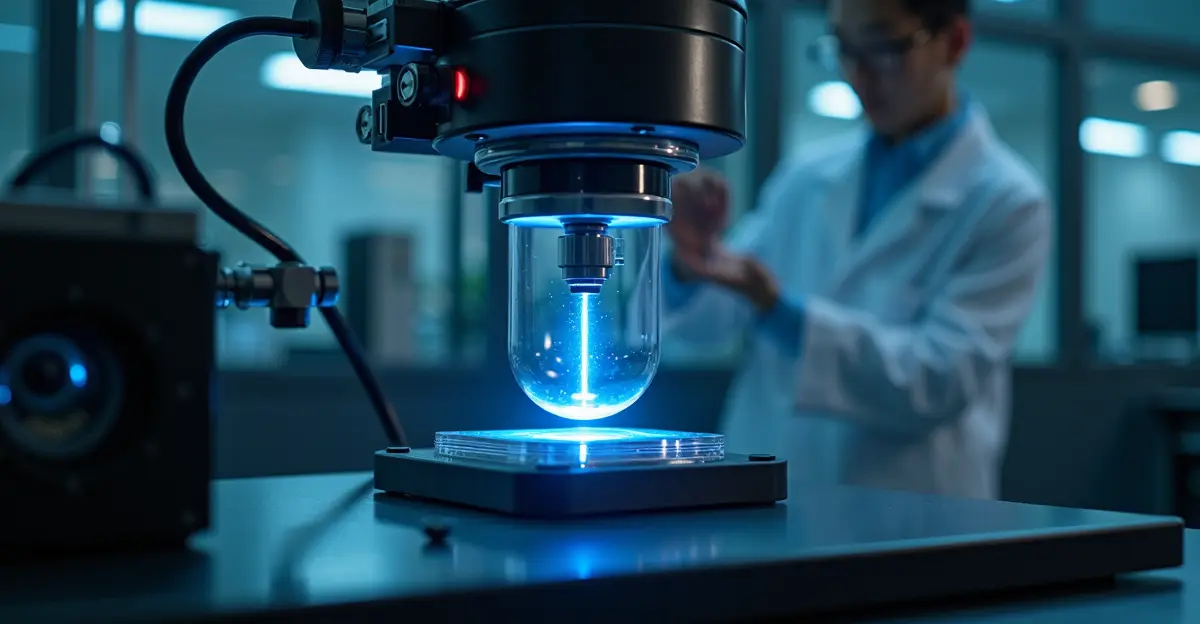
Researchers have developed quantum sensor arrays capable of precisely mapping underground water reserves, offering new hope for drought-prone regions. The technology uses quantum entanglement and interference principles to detect subtle gravitational variations caused by subsurface water deposits.
How Quantum Sensing Works
Unlike traditional sensors, quantum devices exploit quantum mechanical properties like superposition and entanglement. As explained in the Wikipedia Quantum Sensor entry, these sensors "utilize properties of quantum mechanics to optimize precision beyond classical limits." The 2025 study published in Advanced Science demonstrates how self-adaptive quantum kernel PCA processes data from sensor arrays, significantly improving detection accuracy while compressing data dimensions.
Field Applications
In Australia's drought-affected Murray-Darling Basin, prototype arrays have successfully mapped previously unknown aquifers at depths exceeding 300 meters. "This isn't just about finding water," explains lead researcher Dr. Elena Vargas. "It's about creating sustainable resource plans by understanding aquifer recharge rates and capacities." The technology enables:
- Non-invasive 3D groundwater mapping
- Real-time monitoring of reservoir levels
- Detection of saltwater intrusion in coastal aquifers
- Identification of optimal drilling locations
According to the recent study, quantum-processed data showed 37% better retention of critical information compared to classical methods when reducing seven sensor dimensions to two. This allows more accurate modeling with simpler hardware.
Global Implications
The technology arrives as UNESCO reports 2.3 billion people live in water-stressed countries. Pilot programs are launching in Kenya's Rift Valley and California's Central Valley, regions experiencing extreme drought cycles. The compact sensor arrays can be deployed on drones or ground vehicles, making them accessible for developing nations. "We've reduced power requirements by 60% compared to previous quantum field sensors," notes hardware engineer Rajiv Chaudhry. "This makes continuous monitoring feasible even in remote areas."
While current systems focus on groundwater, researchers anticipate adapting the technology for mineral exploration and earthquake prediction within five years.





Follow Discussion