Deutsch
 English
 Español
 Français
 Nederlands
 Português







NASA's Latest Lunar Contract Signals Growing Commercial Space Market
In a significant development for lunar exploration, NASA has awarded Firefly Aerospace a $176.7 million contract to deliver five scientific payloads to the Moon's south pole in 2029. This marks Firefly's fourth lunar mission and fifth NASA Commercial Lunar Payload Services (CLPS) award, highlighting the growing momentum in commercial space partnerships.
The Mission Details
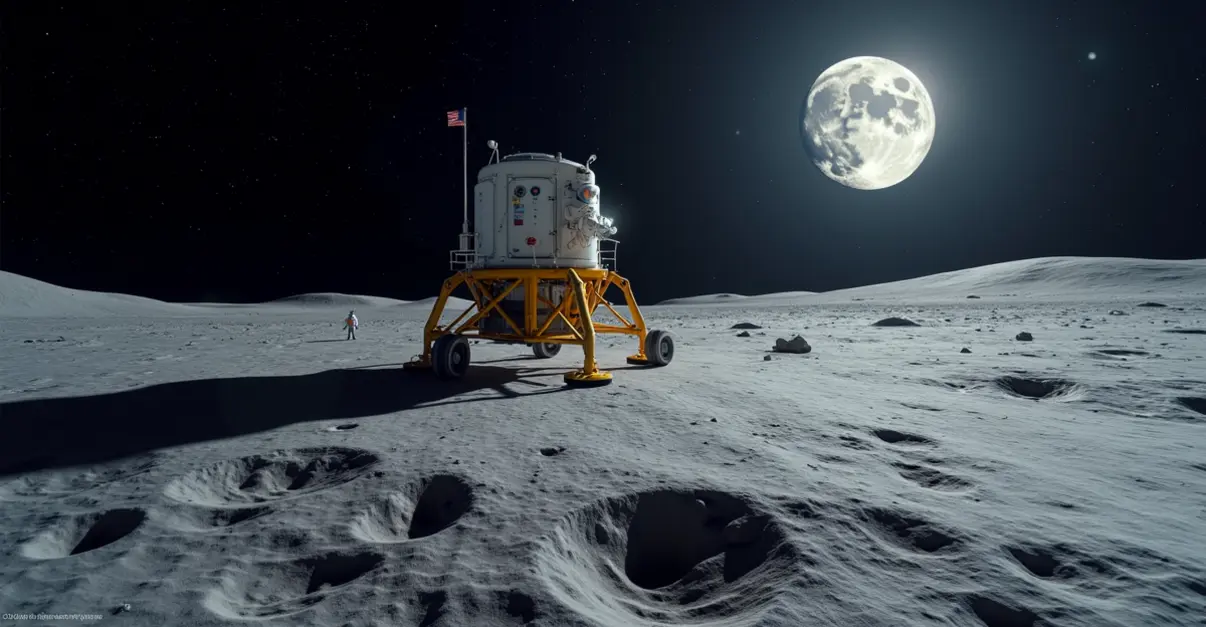
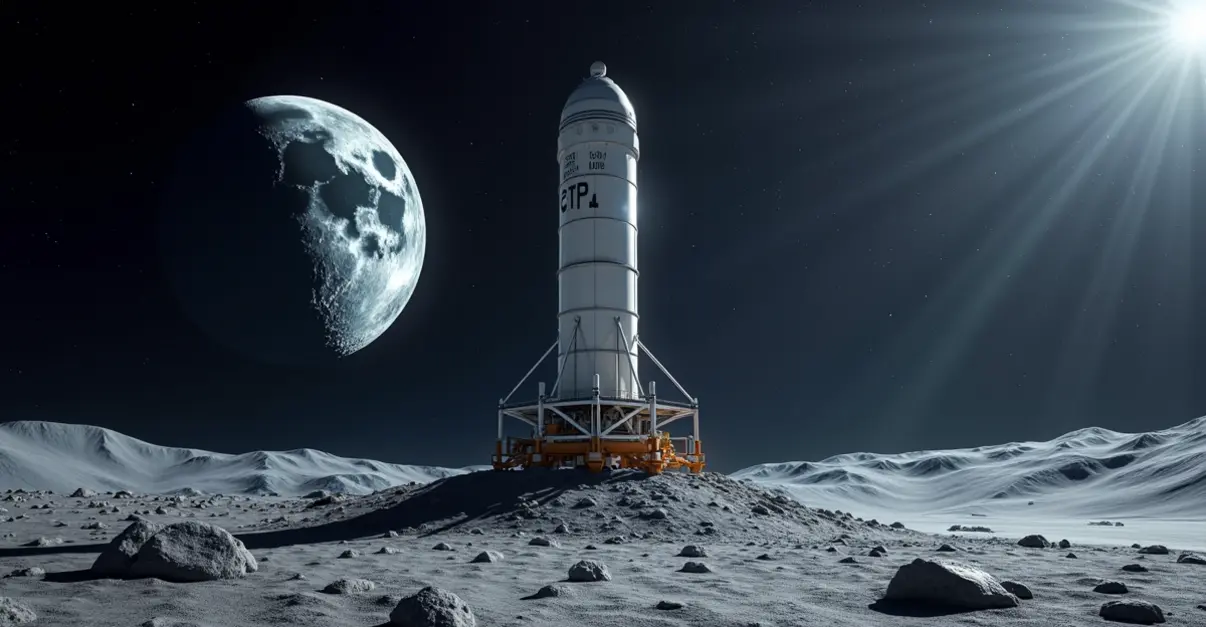
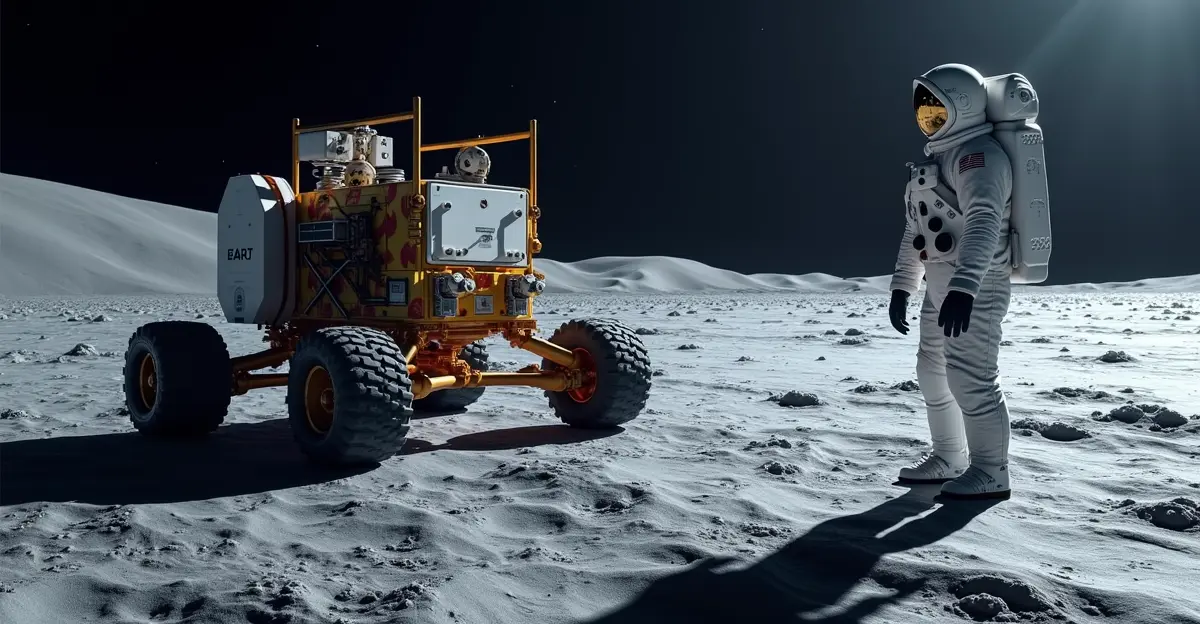
The mission will utilize Firefly's Elytra orbital vehicle and Blue Ghost lunar lander to operate two rovers and three scientific instruments. The payloads include the MoonRanger rover for hydrogen mapping, a Canadian Space Agency rover for ice detection, a Laser Ablation Ionization Mass Spectrometer (LIMS) for regolith chemistry analysis, a Laser Retroreflector Array (LRA) for lunar navigation, and Stereo Cameras for Lunar Plume Surface Studies (SCALPSS).
'This mission represents a crucial step in our Artemis campaign to establish sustainable lunar exploration,' said NASA Administrator Bill Nelson in a statement. 'By partnering with innovative companies like Firefly, we're accelerating our timeline for returning humans to the Moon while gathering essential scientific data.'
Commercial Lunar Payload Services Program
The CLPS program, established in 2018, represents NASA's innovative approach to lunar exploration through commercial partnerships. The program uses fixed-price contracts for end-to-end payload services from Earth to the lunar surface, supporting the Artemis lunar program by scouting for resources, testing in situ resource utilization concepts, and conducting lunar science.
According to Wikipedia, the program currently has 13 eligible American companies on contract, with 11 lunar deliveries awarded to five vendors carrying over 50 payloads. CLPS contracts are indefinite delivery, indefinite quantity agreements with a combined maximum value of $2.6 billion through November 2028.
Policy Implications and Market Growth
The timing of this contract aligns with recent policy developments, including Executive Order 14369 signed in December 2025, which establishes comprehensive space policy focused on ensuring American space superiority. The order outlines key priorities including returning Americans to the Moon by 2028 through the Artemis Program and establishing a permanent lunar outpost by 2030.
'The commercial space market is experiencing unprecedented growth,' noted Dr. Sarah Johnson, a space policy analyst at the Space Foundation. 'Contracts like this demonstrate how public-private partnerships are reducing costs and accelerating timelines for lunar exploration. We're seeing a shift from government-only missions to a thriving commercial ecosystem.'
The executive order, available on the Federal Register, sets specific implementation timelines and requires agencies to develop plans within 60-180 days to achieve space superiority objectives, including growing the commercial space economy with a goal of attracting $50 billion in investment by 2028.
Scientific Objectives and Community Impact
The south pole mission targets permanently shadowed regions where scientists believe water ice may exist in significant quantities. This resource could be crucial for future human exploration, providing potential sources of drinking water, oxygen for breathing, and hydrogen for rocket fuel.
The scientific community has welcomed the mission's focus. 'Understanding lunar resources is fundamental to sustainable exploration,' explained Dr. Michael Chen, a planetary scientist at the Lunar and Planetary Institute. 'The instruments on this mission will provide critical data about water ice distribution, radiation environments, and regolith composition that will inform future Artemis missions.'
The mission builds on Firefly's successful Blue Ghost Mission 1 landing in March 2025, demonstrating their proven capabilities for lunar exploration. This success has boosted confidence in commercial lunar delivery services and opened new opportunities for scientific research.
Economic and Strategic Implications
The contract award comes as the global space economy continues to expand rapidly. According to NASA's CLPS program page, the commercial approach offers an affordable pathway to test technologies and gather insights for future crewed missions, with each mission providing valuable lessons for improving future lunar exploration efforts.
The space industry has responded positively to the continued investment. 'This contract demonstrates the viability of commercial lunar services,' said Mark Thompson, CEO of Space Ventures Inc. 'We're seeing increased investor interest in space infrastructure companies, and contracts like this validate the business models that will support long-term lunar presence.'
As NASA prepares for the Artemis III crewed landing, scheduled for no earlier than 2026, commercial missions like Firefly's will play a crucial role in scouting landing sites, testing technologies, and gathering essential data about the lunar environment.
The international dimension is also significant, with the Canadian Space Agency's involvement highlighting growing global collaboration in lunar exploration. This partnership model may set precedents for future international commercial space cooperation.
Looking Ahead
With multiple CLPS missions scheduled through the late 2020s, the commercial lunar delivery market is poised for continued growth. The program's 'shots on goal' philosophy accepts higher risk for lower costs (typically $70-120 million per mission) to accelerate industrial development and technological advancement.
As the space economy evolves, contracts like the Firefly award signal a new era of space exploration where commercial companies play increasingly central roles in achieving national and international space objectives. The success of these missions will not only advance scientific knowledge but also establish the infrastructure and business models needed for sustainable lunar presence and eventual Mars exploration.