


 Deutsch
 English
 Español
 Français
 Nederlands
 Português


 Share
Share




International Space Station Science Module Receives Major Upgrades
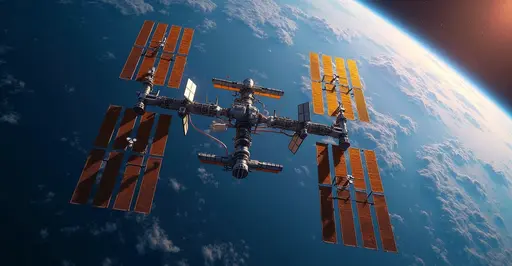
The International Space Station (ISS) has undergone significant upgrades to its science modules in 2025, enhancing research capabilities, life support systems, and crew training protocols. These improvements represent a crucial step forward in maintaining the station's operational efficiency and supporting long-duration space missions.
Enhanced Research Capabilities
The science modules aboard the ISS have been upgraded with advanced hardware and software to support cutting-edge research in microgravity. NASA astronauts have been actively maintaining and improving computer systems, including the Spaceborne Computer-2, which processes data faster to accelerate scientific insights. 'Upgrading our computing power allows us to analyze experimental data in real-time, which is vital for ongoing research,' said NASA Flight Engineer Jonny Kim during a recent maintenance session.
Additionally, new biomedical devices like the Blood Analyzer have been integrated, enabling astronauts to conduct health monitoring and research directly on the station. These upgrades facilitate studies in astrobiology, materials science, and human physiology, contributing to our understanding of space's effects on the human body.
Life Support System Enhancements
Life support systems on the ISS have seen substantial improvements to ensure crew safety and sustainability. Recent activities include testing humidity removal systems and installing Heat Transfer Host 2 hardware to study thermal management in microgravity. 'These advancements are essential for future missions to the Moon and Mars, where reliable life support is non-negotiable,' noted NASA astronaut Mike Fincke.
Crew members have also worked on carbon dioxide removal devices and upgraded Environmental Control and Life Support Systems (ECLSS) to handle extended missions. These efforts are part of a broader initiative to develop regenerative technologies that reduce reliance on Earth-based resupply.
Crew Training and Operational Readiness
With the upgrades, crew training has evolved to include hands-on experience with new equipment and protocols. Astronauts participate in simulations and real-time operations to master advanced systems, such as the Electrostatic Levitation Furnace for materials science experiments. 'Training with state-of-the-art tools ensures we're prepared for any scenario during our six-month stays,' shared JAXA astronaut Kimiya Yui.
The integration of commercial partnerships, like those with SpaceX, has also influenced training programs. For instance, crews now familiarize themselves with upgraded spacecraft systems, such as enhanced heat shields and life support cartridges, to ensure seamless transitions during missions.
Impact on Future Space Exploration
These upgrades not only bolster the ISS's current operations but also pave the way for future exploration. The research conducted in the enhanced modules provides valuable data for missions beyond low Earth orbit, including NASA's Artemis program. 'Every improvement we make here directly supports our goals of sustained human presence on the Moon and eventually Mars,' emphasized a NASA spokesperson.
As the ISS approaches its planned operational end in 2030, these upgrades ensure it remains a cornerstone of international space collaboration, driving innovation and inspiring the next generation of explorers.



Follow Discussion