


 Deutsch
 English
 Español
 Français
 Nederlands
 Português


 Share
Share




Virginia Court Overturns Redistricting Referendum in Heated Political Fight
A Virginia judge has struck down a referendum that would have redrawn the state's congressional districts, dealing a major blow to Democrats who hoped the changes would net them up to four additional seats. The ruling intensifies the ongoing gerrymandering battle between Democrats and Republicans ahead of the November midterm elections. Judge Jack Hurley ruled that the referendum violated multiple provisions of the Virginia constitution, citing insufficient notice and a 'flagrantly misleading' ballot question.
The decision marks the latest flashpoint in a nationwide redistricting war that has seen both parties aggressively redraw electoral maps to maximize their political advantage. As the US redistricting controversy continues, the Virginia case highlights the legal and political complexities surrounding the practice of gerrymandering.
What Is Gerrymandering and Why Does It Matter?
Gerrymandering is the practice of drawing electoral district boundaries to favor a particular political party or group. In the United States, redistricting occurs every ten years following the census. When one party controls the state legislature and governor's office, it can draw maps that concentrate opposition voters into a few districts (packing) or spread them thinly across many districts (cracking), thereby diluting their voting power.
The term originates from 1812 Massachusetts Governor Elbridge Gerry, who approved a salamander-shaped district. Today, advanced computing and detailed voter data allow for highly precise gerrymandering, making it a powerful tool for entrenching political power.
Background: How Did We Get Here?
Texas Sets the Precedent
The current wave of redistricting began when Republicans in Texas redrew congressional maps last year at the urging of then-President Donald Trump. That move potentially gave the GOP an additional five seats. The Texas redistricting controversy sparked a chain reaction, with Democrats in other states retaliating with their own map changes.
California's Democratic Response
Democrats in California responded by adjusting the state's electoral map, potentially stripping Republicans of up to five districts. This tit-for-tat strategy has escalated into a full-blown redistricting arms race.
Virginia's Proposed Changes
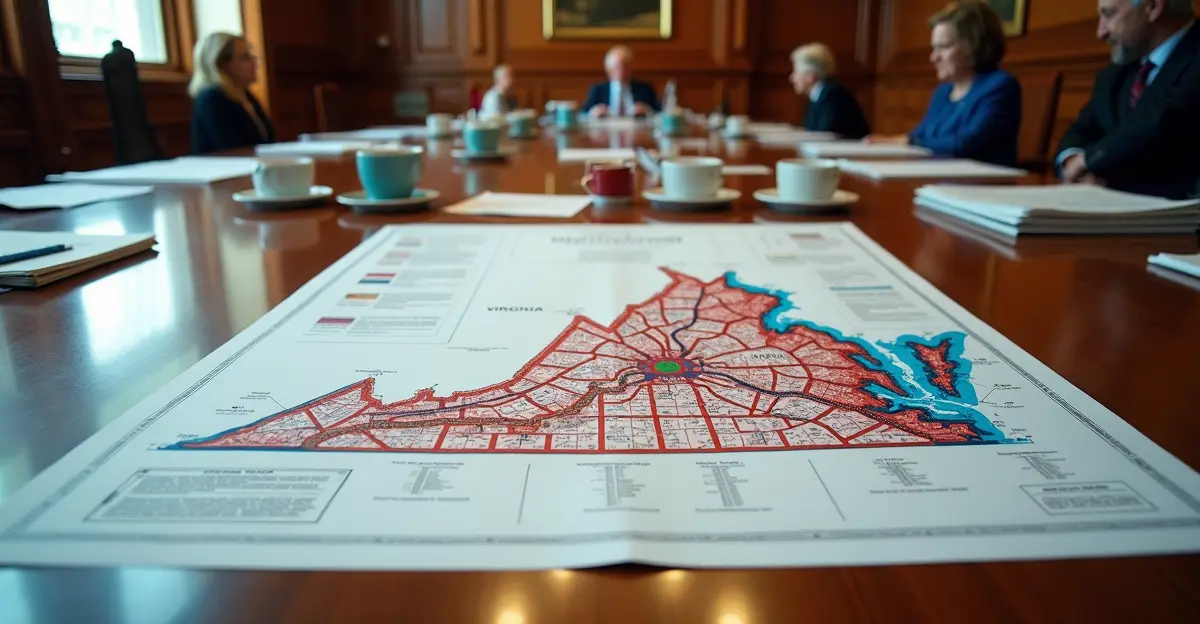
Virginia voters approved a referendum to redraw the state's congressional districts, a change that Democrats estimated would give them ten potentially winnable seats compared to nine for Republicans. However, Judge Hurley's ruling has now invalidated that vote.
Judge's Ruling: Key Legal Issues
Judge Jack Hurley, appointed by a former Republican governor, found that the referendum process was flawed in two critical ways:
- Insufficient Notice: The mandatory 90-day public notice period for the referendum was circumvented.
- Misleading Ballot Language: The question presented to voters was deemed 'flagrantly misleading,' failing to accurately describe the proposed changes.
Hurley's ruling echoes a January decision in which he found the redistricting plan likely violated state law. However, the U.S. Supreme Court later allowed the referendum to proceed, leading to this week's vote. Now, the judge's post-referendum ruling has thrown the results into doubt.
Political Reactions and Next Steps
Democrats have reacted furiously to the ruling. Virginia State Prosecutor Jay Jones called Hurley an 'activist judge' and announced plans to appeal. 'This is a clear case of judicial overreach that disenfranchises Virginia voters,' Jones said. 'We will fight this decision all the way to the Supreme Court if necessary.'
The appeal could reach the Virginia Supreme Court or even the U.S. Supreme Court, given the high stakes. If the ruling stands, the current district boundaries will remain in place for the November midterms, potentially costing Democrats several seats.
Republicans, meanwhile, have praised the decision. State GOP leaders argue that the referendum was a power grab by Democrats and that the court correctly upheld the rule of law.
Broader Implications for US Democracy
The Virginia ruling is part of a larger pattern of legal battles over redistricting across the country. In 2019, the U.S. Supreme Court ruled in Rucho v. Common Cause that federal courts cannot adjudicate partisan gerrymandering claims, leaving the issue to state courts and legislatures. This has led to a patchwork of state-level rulings, with some courts striking down maps and others allowing them.
The Supreme Court gerrymandering rulings have shifted the battlefield to state courts, making each state's judicial and political landscape crucial. Experts warn that without federal standards, the redistricting arms race will continue to erode public trust in elections.
FAQ: Understanding the Virginia Redistricting Ruling
What did the Virginia referendum propose?
The referendum would have redrawn Virginia's congressional districts in a way that Democrats believed would give them up to four additional seats in the U.S. House of Representatives.
Why did the judge block it?
Judge Hurley ruled that the referendum violated Virginia's constitution because the required 90-day public notice was not provided and the ballot question was misleading.
What happens next?
Democrats plan to appeal the ruling. If the appeal fails, the current district boundaries will remain in effect for the 2026 midterm elections.
How does this affect the national gerrymandering battle?
The ruling is a setback for Democrats in their nationwide effort to counter Republican gerrymandering in states like Texas and Florida. It highlights the importance of state courts in determining electoral maps.
What is the difference between partisan and racial gerrymandering?
Partisan gerrymandering aims to benefit a political party, while racial gerrymandering intentionally dilutes or concentrates the voting power of racial minorities. The Supreme Court has ruled racial gerrymandering unconstitutional but has left partisan gerrymandering largely to the states.



Follow Discussion