


 Deutsch
 English
 Español
 Français
 Nederlands
 Português


 Share
Share




Epstein Cover-Up Explained: Congress Subpoenas Bondi Over Missing Documents
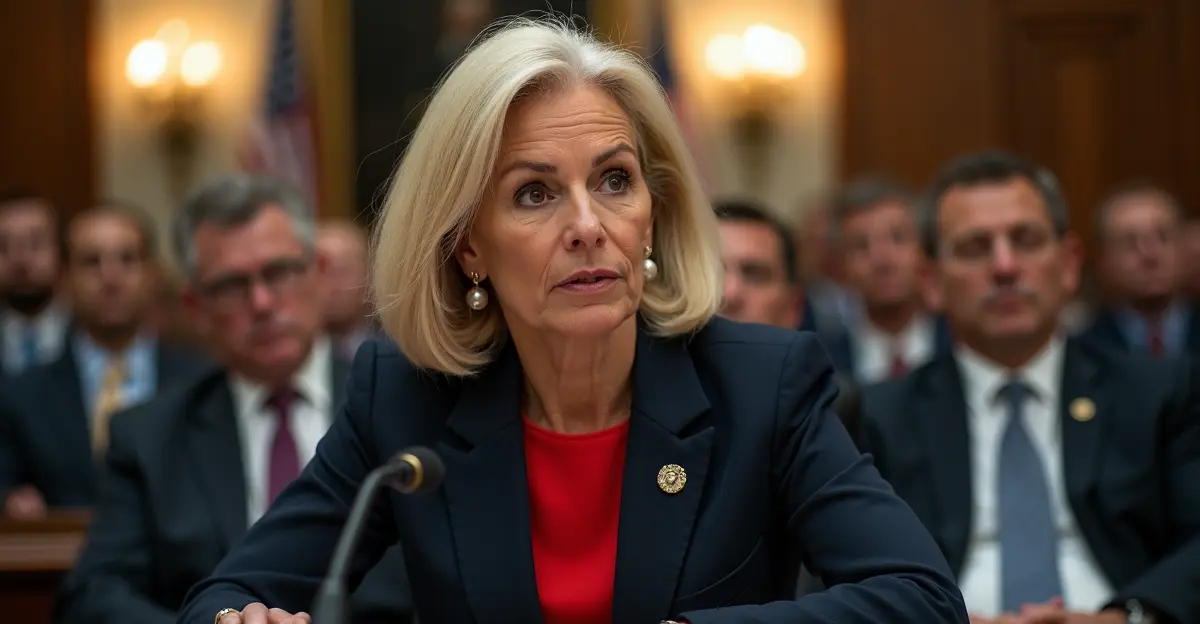
The U.S. Congress has taken decisive action against what lawmakers are calling "one of the greatest cover-ups in American history" by subpoenaing Attorney General Pam Bondi to explain why millions of Jeffrey Epstein documents remain unreleased despite a 2025 transparency law. In a bipartisan 24-19 vote on March 4, 2026, the House Oversight Committee authorized the subpoena following mounting evidence that the Department of Justice has withheld approximately 3 million pages of evidence related to the disgraced financier's global sex trafficking network.
What is the Epstein Files Transparency Act?
The Epstein Files Transparency Act represents a landmark piece of legislation signed into law by President Donald Trump on November 19, 2025. This bipartisan measure requires the Attorney General to release all unclassified documents related to Jeffrey Epstein's prosecution within 30 days. The law passed overwhelmingly with a 427-1 House vote and unanimous Senate consent, mandating that files be made publicly available in searchable format while protecting victim identities through limited redactions.
According to the legislation's requirements, the DOJ must provide unredacted lists of government officials and politically exposed persons named in the files to congressional judiciary committees. The law emerged from years of pressure following Epstein's 2019 death in custody while awaiting trial on federal sex trafficking charges involving minors.
The Missing Documents Controversy
Three Million Pages Still Withheld
Despite the DOJ's January 2026 release of approximately 3 million pages claiming to represent "all" Epstein files, congressional investigators discovered significant gaps. Deputy Attorney General Blanche recently admitted that roughly 3 million additional documents remain withheld for various reasons, including:
- Duplicates of already-released materials
- Attorney-client privileged communications
- Preparatory work documents
- Materials requiring additional victim protection redactions
Additionally, 47,635 files were temporarily removed from public access after being improperly censored and must be re-released with correct redactions. The missing materials reportedly include critical evidence such as video surveillance from Epstein's properties, audio recordings, server logs, and FBI interview summaries containing allegations against prominent figures.
Bipartisan Congressional Action
Republican Representative Nancy Mace spearheaded the subpoena effort, gaining support from four Republican colleagues and Democratic members. "Minister Bondi claims that Justice has released all Epstein files, but from overviews it's clear: that hasn't happened," Mace stated during committee proceedings. "The Epstein case is one of the greatest cover-up affairs in American history."
Democratic Representative Robert Garcia echoed these concerns: "Minister Bondi had a central role in the White House cover-up. She's not following our mandate to release the complete, uncensored files." This rare bipartisan cooperation highlights the seriousness of the transparency concerns surrounding the Jeffrey Epstein investigation.
Key Missing Evidence
Congressional investigators have identified several critical gaps in the released materials:
| Missing Evidence Type | Significance | Status |
|---|---|---|
| Video surveillance footage | Potential evidence from Epstein properties | Completely withheld |
| Audio recordings | Recorded conversations and interviews | Not released |
| Server logs | Digital communication records | Missing from database |
| FBI interview summaries | Allegations against public figures | Selectively redacted |
One particularly notable omission involves a woman's statement claiming she was sexually abused as a minor by Epstein and Donald Trump, which she reported to the FBI in 2019. The White House dismissed these as "false and sensational claims" intended to damage Trump during the 2020 election campaign.
Historical Context: The Epstein Case Timeline
Jeffrey Epstein's legal troubles began in 2005 when Palm Beach police investigated allegations he paid a 14-year-old girl for sexual acts. The investigation identified 36 victims aged 14-17, but resulted in a controversial 2008 plea deal where Epstein served only 13 months with work release. Following a 2018 Miami Herald investigation, federal prosecutors in New York brought new charges in 2019, but Epstein died in custody on August 10, 2019, in what was ruled a suicide.
The current controversy follows years of pressure from victims and transparency advocates who argue that powerful individuals in Epstein's network have been protected from accountability. The Ghislaine Maxwell conviction in 2021 for sex trafficking represented a partial victory, but many questions about Epstein's extensive connections remain unanswered.
What Happens Next?
Attorney General Bondi is expected to testify behind closed doors, with recordings to be released publicly afterward. This follows a contentious February hearing where Bondi accused committee members of political theater aimed at overshadowing President Trump's accomplishments. The deposition will focus on:
- The DOJ's compliance with the Epstein Files Transparency Act
- Justification for withholding approximately 3 million documents
- Timeline for releasing the 47,635 improperly redacted files
- Procedures for protecting victim identities versus shielding powerful individuals
Frequently Asked Questions
What is the Epstein Files Transparency Act?
The Epstein Files Transparency Act is a 2025 federal law requiring the Department of Justice to release all unclassified documents related to Jeffrey Epstein's prosecution within 30 days, with limited exceptions for victim protection.
How many Epstein documents are still missing?
Approximately 3 million pages remain unreleased according to congressional investigators, despite the DOJ's claim that "all" documents were released in January 2026.
Why is Congress subpoenaing Pam Bondi?
Congress is subpoenaing Attorney General Pam Bondi to explain why the DOJ hasn't complied with the transparency law and to account for missing evidence including videos, audio recordings, and logs.
What happens if Bondi refuses to testify?
If Bondi refuses the congressional subpoena, she could face contempt of Congress charges, though the administration might invoke executive privilege claims.
When will the remaining documents be released?
No specific timeline exists, but the DOJ has indicated the 47,635 improperly redacted files will be re-released soon, while the remaining 3 million pages require further review.


Follow Discussion