


 Deutsch
 English
 Español
 Français
 Nederlands
 Português


 Share
Share




What Happened to the Slavery Panels in Philadelphia?
In a landmark ruling that has reignited debates about historical preservation and political interference in American history, a federal judge has ordered the restoration of slavery panels at Philadelphia's President's House site that were removed by the Trump administration. The panels, which detail George Washington's ownership of nine enslaved people during his presidency, were taken down in January 2026 as part of President Trump's executive order titled 'Restoring Truth and Sanity to American History.' The court's decision represents a significant victory for historians, activists, and Philadelphia officials who argued that removing the educational displays constituted historical erasure.
Background: The President's House and Its Controversial History
The President's House in Philadelphia served as the executive mansion for Presidents George Washington and John Adams from 1790 to 1800, before the capital moved to Washington D.C. The outdoor exhibit, which opened in 2010 after years of advocacy by the Avenging the Ancestors Coalition, specifically documents the lives of nine enslaved individuals: Austin, Giles, Hercules, Joe, Moll, Paris, Richmond, Christopher Sheels, and Oney Judge. These individuals were brought to Philadelphia by Washington, despite Pennsylvania's gradual abolition law that should have granted them freedom after six months of residence.
The removal of these panels in January 2026 was part of a broader initiative by the Trump administration to review and potentially alter historical displays across federal properties. Similar actions have occurred at other sites, including the removal of panels about Black World War II soldiers at the Margraten American Cemetery in the Netherlands, which sparked international controversy. The administration's position, articulated during court proceedings, was that 'it is up to the government to determine what message is conveyed' about history.
Court Battle: Judge's Scathing Rebuke and Legal Reasoning
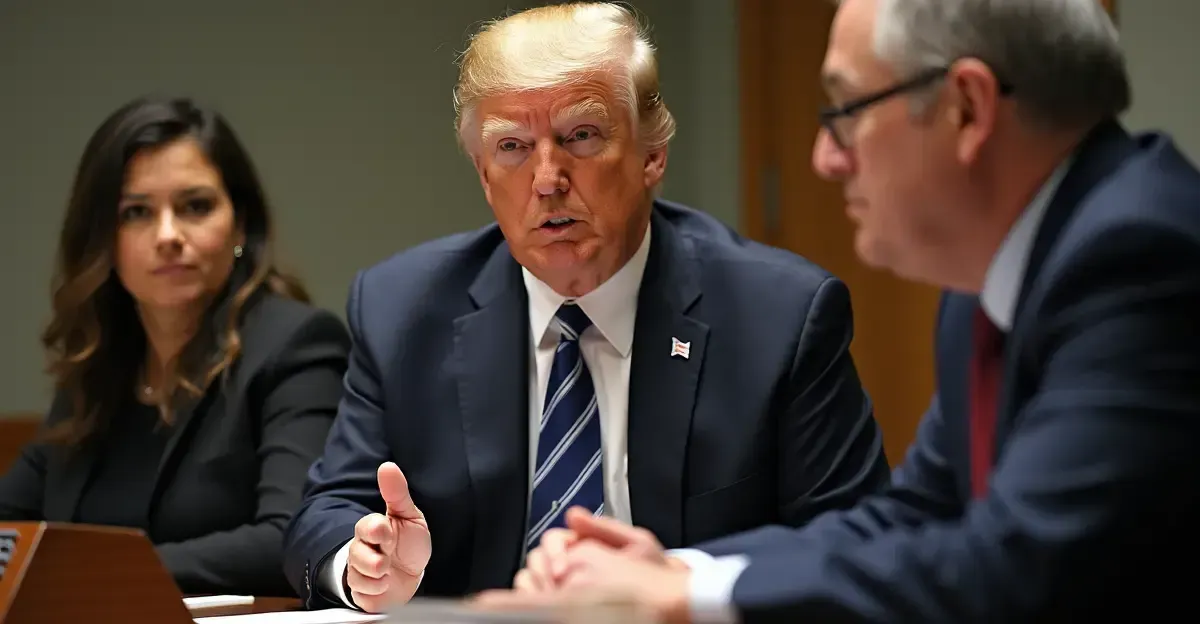
U.S. District Judge Cynthia M. Rufe issued a preliminary injunction on February 16, 2026, ordering the immediate restoration of the panels while litigation continues. In her ruling, Judge Rufe delivered a sharp rebuke to government attorneys, stating: 'That is a dangerous statement. Terrible to hear. May everything be adjusted to the whims of whoever leads the country? That's not what we vote for.' The judge emphasized that incomplete information at the President's House site 'does violence to history' and that visitors would receive 'a false version of our history' without learning about the slavery that existed when the nation was founded.
The legal battle began when the City of Philadelphia, which had financially contributed to the panels' creation, filed a lawsuit against the U.S. Department of Interior and National Park Service. Mayor Cherelle Parker, Philadelphia's first Black female mayor, personally oversaw the restoration work on February 19, 2026, thanking workers who rehung the panels. The city argued that the removal violated a 2006 cooperative agreement and threatened the integrity of historical education during America's 250th anniversary celebrations in 2026.
Key Elements of the Court Order
The injunction requires federal officials to:
- Restore the President's House site to its condition as of January 21, 2026
- Maintain all removed items safely while litigation proceeds
- Ensure public access to complete historical information about slavery at the site
- Refrain from further alterations to historical displays without proper review
Broader Implications: Historical Preservation vs. Political Agenda
This case represents a critical test of how historical interpretation is managed at federal sites. The Trump administration's executive order, signed in 2025, directs the removal of content deemed 'improper, divisive or anti-American ideology' from Smithsonian museums and other federal historical sites. However, critics argue this approach amounts to historical revisionism that whitewashes uncomfortable aspects of America's past.
Similar controversies have emerged regarding the National Museum of African American History and Culture, where exhibits about slavery and civil rights have faced scrutiny under the administration's policies. Historian Erin Thompson commented on the broader pattern: 'This approach attempts to gloss over darker aspects of American history that are essential to understanding our nation's complex development.'
The restoration of the Philadelphia panels comes at a particularly symbolic moment as the United States celebrates its 250th anniversary. Philadelphia, as the birthplace of American democracy, finds itself at the center of debates about how to honestly confront the nation's founding contradictions—particularly the institution of slavery that existed alongside declarations of liberty and equality.
Community Response and Future Outlook
Community groups, including the Avenging the Ancestors Coalition which originally advocated for the exhibit, have organized rallies and collected over 5,000 signatures demanding the panels' restoration. Michael Coard, an attorney and founding member of the coalition, stated: 'This isn't just about nine enslaved people. It's about telling the complete truth about American history, not a sanitized version that makes people comfortable.'
The Trump administration has appealed the injunction, setting the stage for potentially lengthy legal proceedings. However, the immediate restoration means visitors to Independence Mall can once again learn about the enslaved individuals who lived and worked at the President's House. The panels now hang alongside graffiti that appeared during their absence, including messages like 'slavery was real' and 'tell the whole history' that Philadelphia residents painted on the empty spaces.
As the legal battle continues, this case raises fundamental questions about who controls historical narrative at federal sites and whether political administrations can selectively edit uncomfortable historical truths. The outcome may establish important precedents for how America confronts its complex past in educational settings nationwide.
Frequently Asked Questions
What exactly was removed from the President's House site?
The National Park Service removed educational panels detailing George Washington's ownership of nine enslaved people during his presidency in Philadelphia. The outdoor exhibit included information about their lives, the conditions of their enslavement, and the legal contradictions of slavery in the early republic.
Why did the Trump administration remove the panels?
The removal was part of implementing Executive Order 14253, 'Restoring Truth and Sanity to American History,' which directs federal agencies to review and potentially remove content deemed 'improper, divisive or anti-American ideology' from historical sites and museums.
What was the judge's main reasoning for ordering restoration?
Judge Cynthia Rufe ruled that removing the panels created an incomplete and therefore false historical narrative. She emphasized that visitors deserve access to complete information about slavery at the site where America's government was founded.
Has this happened at other historical sites?
Yes, similar removals have occurred at other sites, including panels about Black WWII soldiers at the Margraten American Cemetery in the Netherlands and exhibits at the National Museum of African American History and Culture in Washington D.C.
What happens next in the legal process?
The Trump administration has appealed the injunction, meaning the case will proceed through higher courts. The panels will remain in place during litigation, which could take months or years to resolve fully.
Follow Discussion