


 Deutsch
 English
 Español
 Français
 Nederlands
 Português


 Share
Share




Humanitarian Convoy Access Report 2026: Policy, Markets & Community Impact Analysis
The 2026 Humanitarian Convoy Access Report reveals a critical juncture in global aid delivery, with unprecedented access restrictions threatening millions of vulnerable lives while reshaping humanitarian policy, markets, and community resilience worldwide. According to the Global Humanitarian Overview 2026, humanitarian funding has plummeted to 2016 levels, forcing critical service closures as 239 million people require assistance globally. This comprehensive analysis examines how convoy access challenges are transforming the humanitarian landscape, with particular focus on simultaneous famines in Gaza and Sudan - the first time in recorded history two famines have occurred at once.
What is Humanitarian Convoy Access?
Humanitarian convoy access refers to the ability of aid organizations to transport life-saving supplies through secure corridors to populations in crisis zones. These convoys face multiple barriers including security threats, bureaucratic restrictions, active conflict zones, and political interference. The ACAPS Humanitarian Access Overview for December 2025 documented escalating challenges across multiple regions, with aid workers reporting increased attacks and administrative obstacles that have reached crisis levels in 2026.
Current Global Access Crisis
The humanitarian access landscape in early 2026 represents one of the most challenging periods in modern history. According to recent data:
- 239 million people require humanitarian assistance worldwide
- 135 million people are targeted for aid delivery in 2026
- $33 billion total funding requirement, with $23 billion prioritized for immediate needs
- 98 million people reached in 2025 despite extreme challenges
- Two simultaneous famines occurring for the first time in recorded history
Regional Hotspots: Gaza and Sudan
The most severe convoy access crises are unfolding in Gaza and Sudan, where deliberate restrictions have created catastrophic conditions. In Gaza, Israel has blocked all humanitarian supplies since March 2, 2025 - the longest total siege the territory has ever experienced. According to Human Rights Watch reports, over two million Palestinians are living in famine conditions, with 92% of children under two and breastfeeding mothers lacking adequate nutrition.
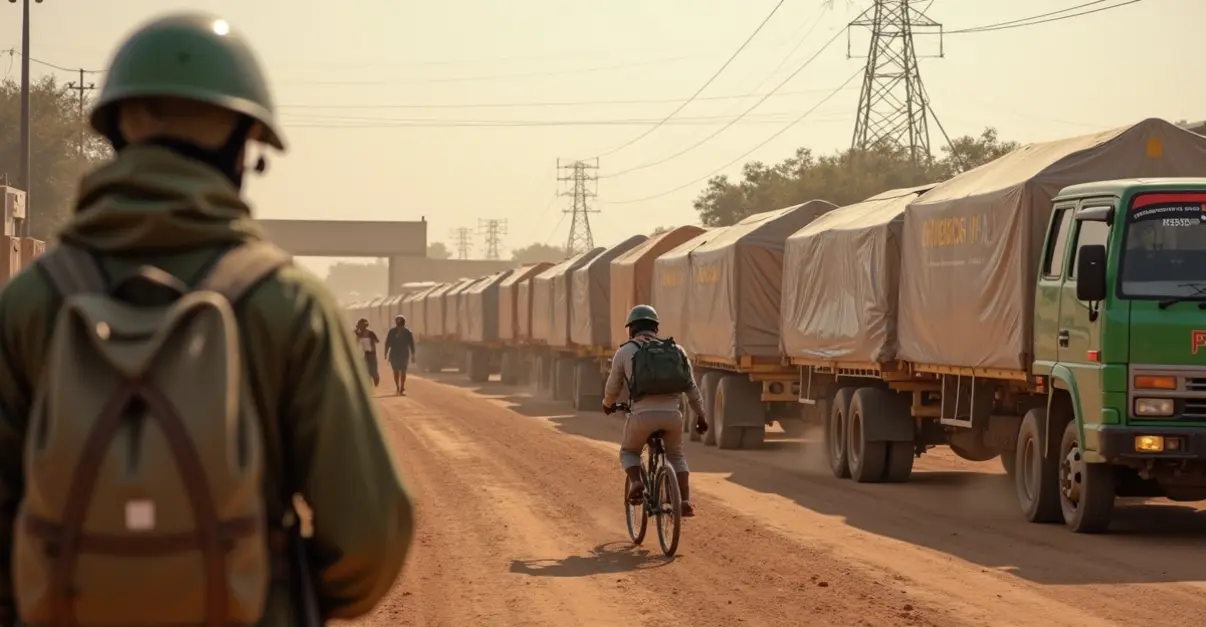
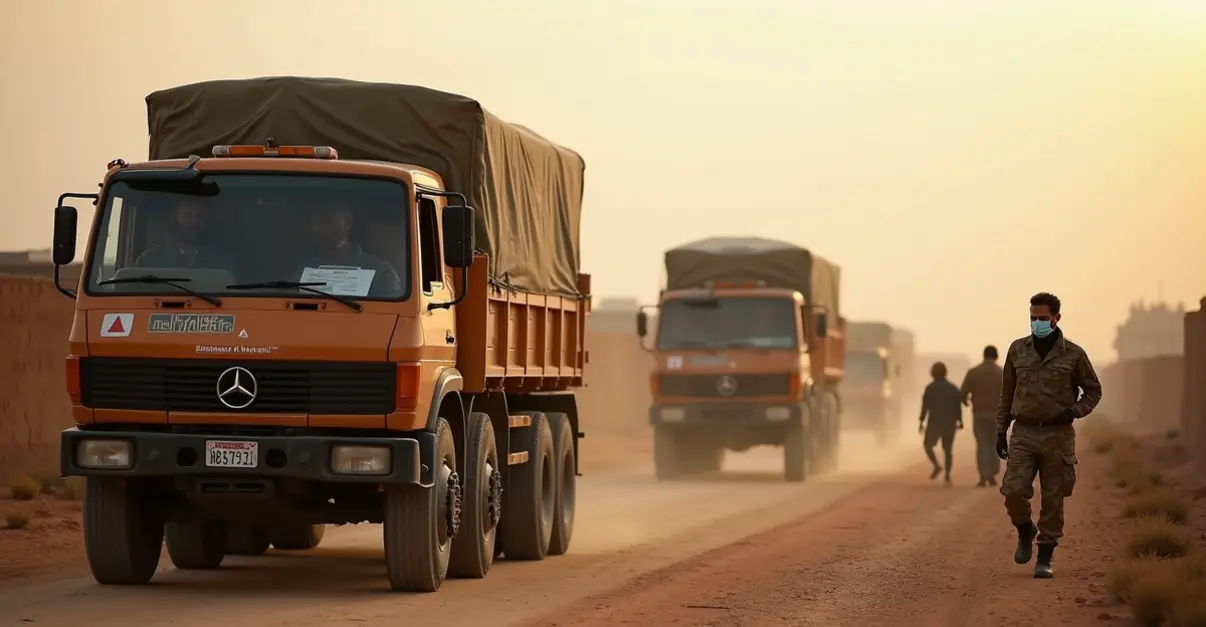
In Sudan, similar access restrictions have created famine conditions affecting millions. The UN humanitarian coordination system reports that despite over 3,000 aid trucks and 116,000 metric tonnes of food being ready for delivery, bureaucratic and security obstacles prevent their passage to vulnerable populations.
Policy Implications and Market Transformations
Humanitarian Policy Shifts
The convoy access crisis is forcing fundamental policy changes across the humanitarian sector. The Harvard Humanitarian Initiative's 2026 analysis reveals a sector undergoing profound structural disruption, with major funding cuts from traditional Western donors and the dismantling of USAID's role forcing NGOs and UN agencies to retract programs and reduce surge capacity. Traditional humanitarian principles of neutrality and impartiality are being tested by growing politicization of aid, particularly visible in Gaza where accusations of NGO complicity with military actors have emerged.
The future policy landscape may involve leaner regional response hubs, more politically literate agencies, and financing mechanisms that prioritize local decision-making over bureaucratic compliance. The humanitarian funding crisis has reached critical levels, with funding collapsing to 2016 levels in 2025, forcing closures of health centers, food rations, nutrition outreach, protection services, and water deliveries.
Market and Economic Impacts
Humanitarian convoy restrictions are creating significant market disruptions in affected regions:
| Impact Area | Consequences | Economic Scale |
|---|---|---|
| Local Markets | Supply chain disruptions, price inflation of basic goods | 300-500% price increases in crisis zones |
| Aid Economy | Reduced humanitarian spending, local procurement cuts | $23 billion funding gap for 2026 |
| Regional Trade | Border closures, transit restrictions, increased smuggling | 60-80% reduction in legal cross-border trade |
| Labor Markets | Displacement of skilled workers, aid worker security costs | 30% increase in security expenditures |
These market disruptions have created parallel economies in many conflict zones, with informal networks emerging to bypass official restrictions. The economic impact extends beyond immediate crisis areas, affecting regional stability and global commodity markets.
Community Resilience and Local Response
Despite these challenges, communities and local organizations are demonstrating remarkable resilience. In 2025, humanitarian organizations delivered life-saving assistance to nearly 98 million people (65% of targeted populations), with local and national actors playing a crucial frontline role. According to humanitarianaction.info, 55% of Country-Based Pooled Funds were allocated to local NGOs - the highest proportion ever recorded.
Key community-led achievements included:
- Responding to severe food insecurity crises, reaching 62 million people with food security assistance
- Addressing child malnutrition crises in countries like Yemen and DRC
- Providing WASH services to nearly 23 million people across 29 countries
- Developing innovative local supply chains to bypass official restrictions
The local humanitarian response capacity has proven essential in contexts where international access is severely restricted, demonstrating that community-driven initiatives can maintain aid flows even under extreme operational challenges.
Security Challenges and Protection Concerns
Humanitarian convoy security has deteriorated significantly in 2025-2026. The Insecurity Insight's 'Aid in Danger' news brief for January 21-February 3, 2026 documents escalating attacks on aid operations worldwide. UNICEF reported that their humanitarian convoy was attacked with live ammunition while attempting to deliver life-saving aid to north Gaza, highlighting the severe dangers facing aid workers.
Key security trends include:
- Increased targeting of aid convoys with direct violence
- Systematic bureaucratic obstruction by state and non-state actors
- Weaponization of humanitarian access for political objectives
- Growing impunity for attacks on humanitarian personnel and assets
Future Outlook and Recommendations
The humanitarian convoy access crisis requires urgent international action. The Global Humanitarian Overview 2026 emphasizes that this is not a resource problem but a priority problem, noting that full funding could be achieved if the global top 10% of earners gave just 20 cents daily. Key recommendations include:
- Immediate diplomatic pressure to open humanitarian corridors in Gaza, Sudan, and other crisis zones
- Enhanced protection mechanisms for aid convoys and personnel
- Strengthened local response capacity through increased funding to national NGOs
- Innovative financing mechanisms to address the $23 billion funding gap
- Political solutions to address root causes of conflicts driving access restrictions
The international humanitarian law compliance must be enforced to ensure safe passage for aid convoys, with states held accountable for blocking humanitarian access.
FAQ: Humanitarian Convoy Access Questions
What is causing the current humanitarian convoy access crisis?
The crisis stems from multiple factors: deliberate blockades in conflict zones like Gaza, bureaucratic restrictions by governments, security threats to aid workers, funding cuts reducing operational capacity, and growing politicization of humanitarian assistance.
How many people are affected by convoy access restrictions?
Approximately 239 million people require humanitarian assistance globally, with millions in Gaza, Sudan, Yemen, and other crisis zones directly affected by convoy access restrictions that prevent life-saving aid from reaching them.
What are the economic impacts of restricted humanitarian access?
Restricted access creates market disruptions including 300-500% price inflation for basic goods, reduced humanitarian spending in local economies, border trade reductions of 60-80%, and increased security costs for aid operations.
How are local communities responding to access challenges?
Local communities and NGOs are developing innovative solutions including alternative supply chains, community-based protection networks, and localized response mechanisms that have reached 98 million people despite extreme challenges.
What can be done to improve humanitarian convoy access?
Solutions include diplomatic pressure to open corridors, enhanced convoy protection, increased funding for local responders, innovative financing mechanisms, and political solutions to address root causes of conflicts.




Follow Discussion