Nederlands
 English
 Deutsch
 Français
 Español
 Português






New Humanitarian Airlift Corridor Revolutionizes Crisis Response
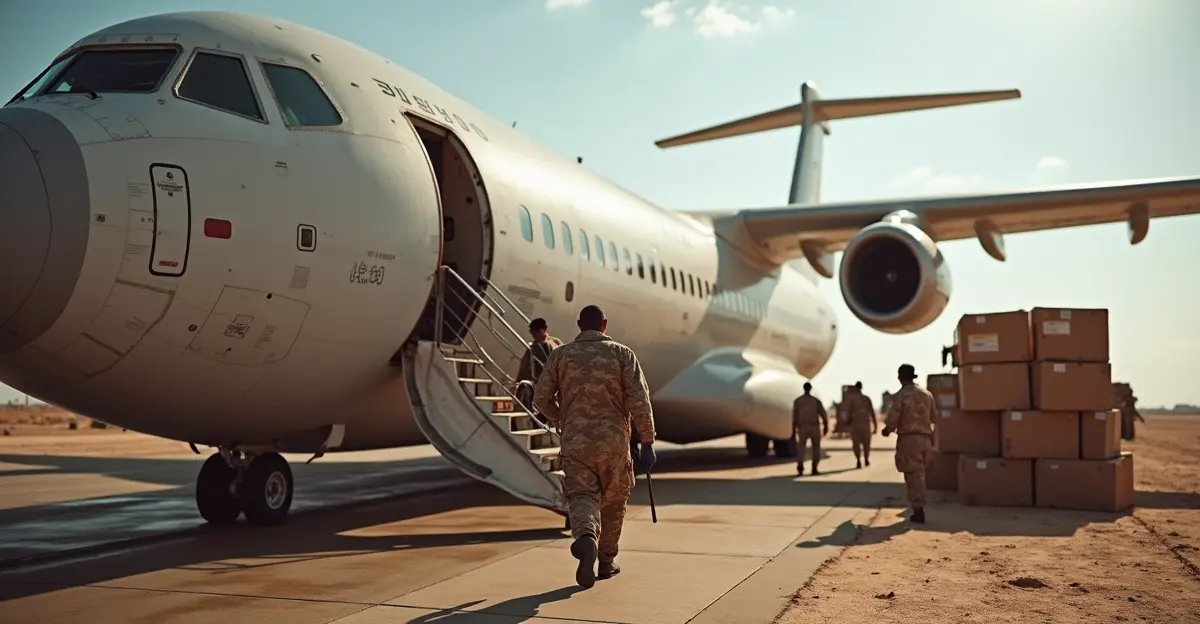
In a groundbreaking development for global humanitarian operations, a new airlift corridor has been established to address escalating crises worldwide. The corridor represents a sophisticated integration of operational logistics, security protocols, and beneficiary targeting systems designed to deliver aid more efficiently to populations in desperate need.
Operational Logistics: The Backbone of the Corridor
The newly established corridor builds on lessons from historical operations like the Berlin Airlift, which demonstrated the feasibility of sustained air operations during crises. Today's system incorporates advanced technologies and partnerships, including the Logistics Emergency Team (LET) that marks 20 years as a pioneering public-private partnership coordinating humanitarian aid globally. 'We've learned from decades of humanitarian operations that logistics isn't just about moving goods—it's about creating reliable systems that function under extreme pressure,' explains logistics expert Maria Chen from the World Economic Forum.
The corridor utilizes innovations like EDUARDO, an emergency dashboard using Google flight data to identify available cargo capacity in real-time. This system has proven crucial in recent responses including Gaza crisis support with warehouse operations in Jordan, Ukraine aid distribution, and comprehensive assistance after the 2023 Türkiye-Syria earthquake.
Security Protocols: Protecting Aid and Personnel
Security represents a critical component of the new corridor system. According to the DSCA Policy Memorandum 25-12 from February 2025, Combatant Commanders are authorized to use assigned air assets to transport Department of Defense humanitarian cargo, with strict protocols ensuring both security and cost-effectiveness. 'Security isn't just about protecting assets—it's about ensuring aid reaches the people who need it most without diversion or compromise,' states Colonel James Rodriguez, who oversees humanitarian air operations.
The system incorporates multiple verification layers, including the UN2720 Mechanism for Gaza which provides an integrated application portal and database system that enables humanitarian partners to register and track all planned aid consignments. This mechanism facilitates clearance processes by relevant authorities and systematically tracks aid flow to verify delivery to intended civilian destinations.
Beneficiary Targeting: Precision in Humanitarian Response
Perhaps the most innovative aspect of the new corridor is its sophisticated beneficiary targeting system. With 239 million people needing humanitarian assistance worldwide according to the Global Humanitarian Overview 2026, precision targeting has become essential. The system prioritizes the 135 million people targeted for aid, with $23 billion prioritized for 87 million people facing the most urgent needs.
'For the first time, we have systems that allow us to target assistance based on real-time needs assessment rather than broad geographic allocations,' explains Dr. Amina Hassan from OCHA. 'This represents a fundamental shift from blanket distribution to precision humanitarianism.'
The targeting system operates through multiple corridors including the Jordan Corridor, maritime routes via Ashdod Port and Cyprus Maritime Corridor, with plans to expand to the Egypt Corridor. Real-time pipeline visibility supports humanitarian prioritization by the Humanitarian Coordinator, with monitors deployed in Gaza, Jordan, and Cyprus to track aid delivery.
Addressing Unprecedented Global Needs
The establishment of this corridor comes at a critical moment. The Global Humanitarian Overview 2026 reveals that humanitarian funding plummeted to 2016 levels in 2025, forcing critical service closures including health centers, food rations, nutrition outreach, protection services, and water deliveries. For the first time in recorded history, two famines occurred simultaneously in Occupied Palestine Territory and Sudan.
Despite these challenges, humanitarians reached nearly 98 million people worldwide in 2025. The new corridor system aims to improve these numbers through enhanced efficiency. 'This isn't just about moving more aid—it's about moving the right aid to the right people at the right time,' says Anna Petrova, the corridor's lead architect. 'Every efficiency gain means more lives saved with limited resources.'
Future Implications and Challenges
The corridor faces significant challenges, including navigating complex political environments, securing sustainable funding, and maintaining security in conflict zones. However, its establishment represents a major step forward in humanitarian coordination.
As OCHA's Strategic Plan 2023-2026 emphasizes, the exponential rise in humanitarian needs driven by climate change, conflict, economic crises, inequality, and pandemics requires innovative solutions. The airlift corridor addresses six transformational priorities outlined in the plan, including coherent people-centered humanitarian response, systematic leadership on access, and durable solutions for internal displacement.
The corridor's success will depend on continued collaboration between governments, military organizations, private sector partners, and humanitarian agencies. With proper implementation, it could serve as a model for future crisis response systems, potentially transforming how the world addresses humanitarian emergencies in an increasingly complex global landscape.