


 Deutsch
 English
 Español
 Français
 Nederlands
 Português


 Share
Share




What is Trisulfide Metathesis?
In a groundbreaking discovery published in March 2026, researchers from Flinders University and international collaborators have identified a previously unknown chemical reaction called trisulfide metathesis that occurs spontaneously at room temperature. This revolutionary chemical process involves sulfur-sulfur bonds in trisulfide molecules (R-S-S-S-R) that rapidly rearrange themselves in specific solvents like dimethylformamide (DMF), establishing equilibrium in mere seconds without requiring heat, light, or external catalysts. The discovery, detailed in Nature Chemistry, represents a fundamental shift in how chemists understand sulfur bond dynamics and opens unprecedented opportunities for sustainable chemistry and pharmaceutical development.
The Science Behind the Discovery
The research team discovered that organic trisulfides undergo spontaneous S–S metathesis when exposed to certain polar aprotic solvents, a phenomenon that defies conventional chemical wisdom. Unlike disulfides (with two sulfur atoms) that require external stimuli to react, or tetrasulfides (with four sulfur atoms) that remain stable under similar conditions, trisulfides exhibit unique behavior. 'We were astonished to see these reactions occurring spontaneously at room temperature,' said lead researcher Dr. Michael Schmidt. 'Previous research from the 1960s showed trisulfide exchange at 80-150°C taking days, but our reaction completes in seconds with no byproducts.'
How the Reaction Works
The trisulfide metathesis mechanism involves an unusual thiosulfoxide intermediate and concerted S–S metathesis event. When two different trisulfide molecules come into contact in solvents like DMF, they spontaneously exchange their 'arms' – the organic groups attached to the sulfur chains – forming new combinations. This process occurs both inter- and intramolecularly, creating a dynamic equilibrium that can be manipulated for various applications. The reaction's exquisite selectivity means trisulfide bonds only react with other trisulfide bonds, enabling surgical precision in modifying complex molecules without affecting other functional groups.
Practical Applications and Implications
Revolutionizing Cancer Drug Development
One of the most immediate applications demonstrated by the research team involves modifying the anti-tumor drug calicheamicin γ1. This complex natural product contains a trisulfide unit crucial for its biological activity but also features other sensitive groups that must remain undisturbed. Using trisulfide metathesis, researchers successfully modified the drug's trisulfide component without damaging the rest of the molecule. This breakthrough is particularly significant for developing antibody-drug conjugates – targeted cancer therapies where drugs are attached to antibodies that deliver them specifically to tumor cells. The precision medicine approaches enabled by this reaction could lead to more effective cancer treatments with fewer side effects.
Creating Fully Recyclable Plastics
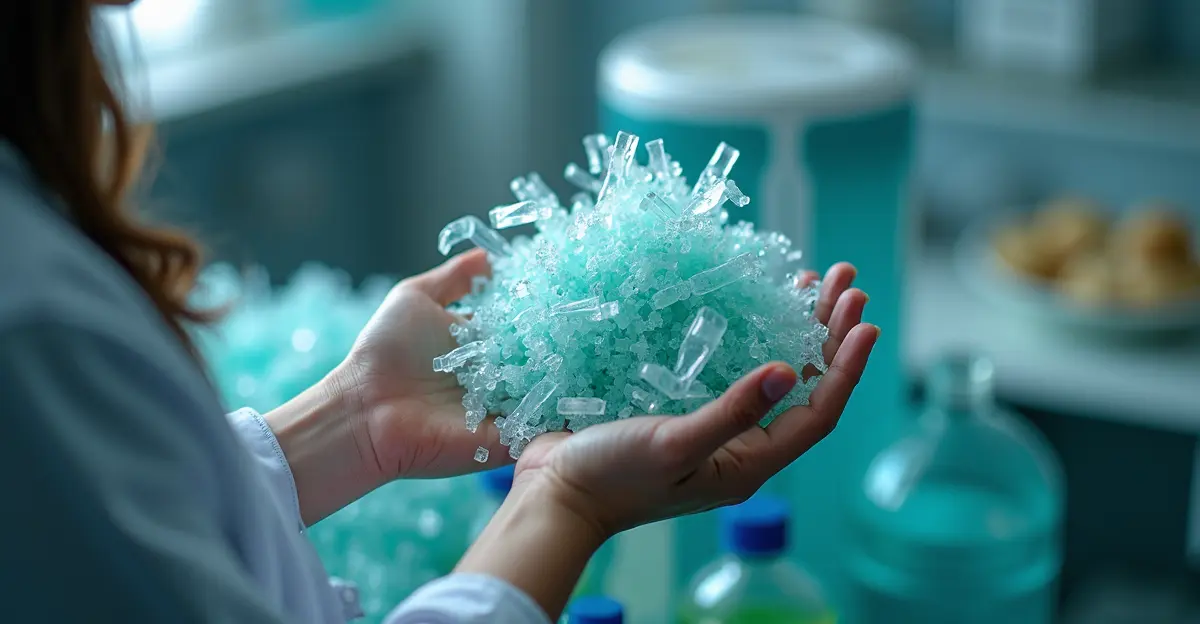
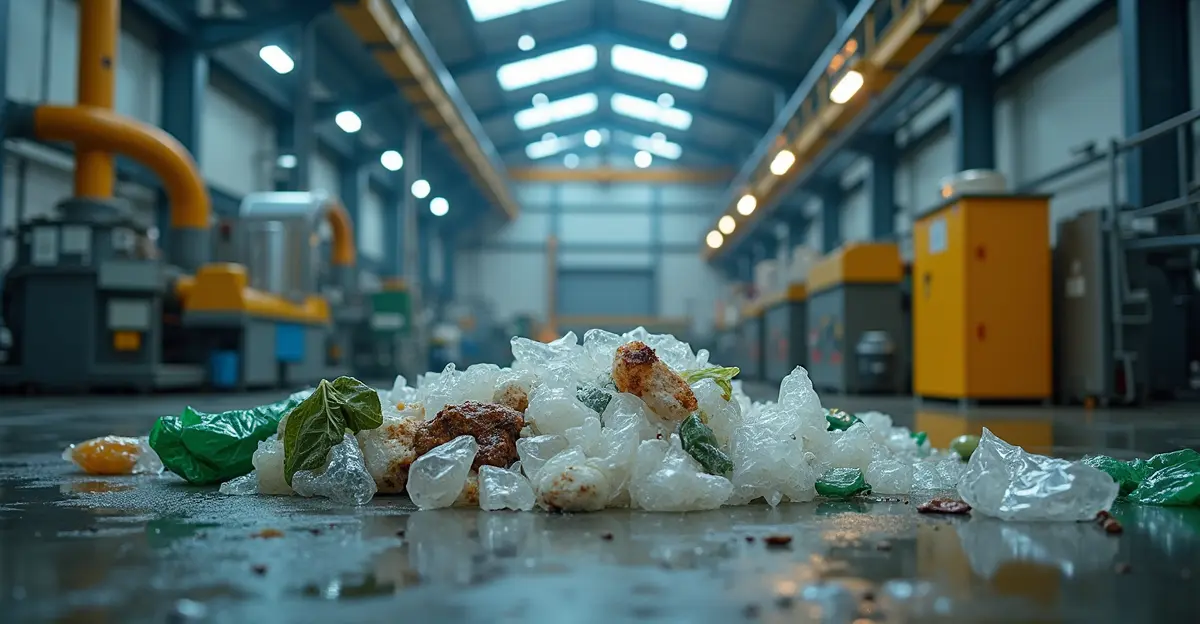
Perhaps the most transformative application lies in sustainable materials science. The research team created a novel polymer built entirely from trisulfide units that mimics the properties of polyethylene – the ubiquitous plastic used in bags and bottles. However, this new material has one crucial difference: when dissolved in DMF with excess dimethyl trisulfide, the entire polymer breaks down into its original building blocks within minutes. These monomers can then be purified and reused to create new plastic, achieving a closed-loop recycling system with over 90% recovery rates. Unlike conventional plastic recycling that causes downcycling and quality degradation, these circular economy polymers maintain their properties through unlimited cycles.
Why This Discovery Matters
The trisulfide metathesis reaction combines several properties rarely found together in chemistry: it's fast, selective, mild, and reversible. This unique combination makes it potentially applicable across multiple domains including drug discovery, biotechnology, protein science, and materials engineering. The reaction requires no expensive catalysts or specialized equipment, making industrial scaling economically feasible. Researchers have already filed multiple patent applications and are exploring additional applications in dynamic combinatorial library synthesis for drug discovery and protein engineering.
While the researchers remain cautious about immediate commercialization – noting that the recyclable plastic currently has lower tensile strength than conventional polyethylene and works best with specific solvents – the potential impact is substantial. The discovery addresses two critical global challenges: improving pharmaceutical development and solving the plastic waste crisis. As sustainable chemistry innovations continue to emerge, trisulfide metathesis represents a significant step toward greener industrial processes.
Frequently Asked Questions
What makes trisulfide metathesis different from other chemical reactions?
Trisulfide metathesis is unique because it occurs spontaneously at room temperature without requiring external energy sources, catalysts, or reagents. Traditional sulfur-sulfur bond reactions typically need high temperatures (80-150°C) and take hours or days to complete, while this reaction establishes equilibrium in seconds.
How does this help with plastic recycling?
The reaction enables creation of polymers that can be completely depolymerized back to their original building blocks using simple chemical treatment. This allows for true closed-loop recycling where plastic can be repeatedly broken down and remade without quality loss, unlike conventional recycling that causes downcycling.
What are the limitations of this discovery?
Current limitations include the need for specific solvents like DMF, lower mechanical strength in the recyclable polymers compared to conventional plastics, and the requirement for trisulfide-containing starting materials. Researchers are working to address these challenges through further optimization.
When might we see commercial applications?
The research team has filed patent applications and is collaborating with industrial partners. Pharmaceutical applications could emerge within 3-5 years, while recyclable plastics might take 5-10 years to reach commercial scale, depending on regulatory approvals and manufacturing optimization.
How does this compare to existing green chemistry approaches?
Trisulfide metathesis represents a significant advance in green chemistry by combining multiple desirable properties: it's energy-efficient (room temperature), atom-economical (no byproducts), and enables circular material flows. It complements rather than replaces existing approaches, offering new tools for sustainable chemical design.



Follow Discussion