


 Deutsch
 English
 Español
 Français
 Nederlands
 Português


 Share
Share




The Strategic Calculus of Friendshoring: How Geopolitical Alliances Are Reshaping Global Supply Chains in 2026
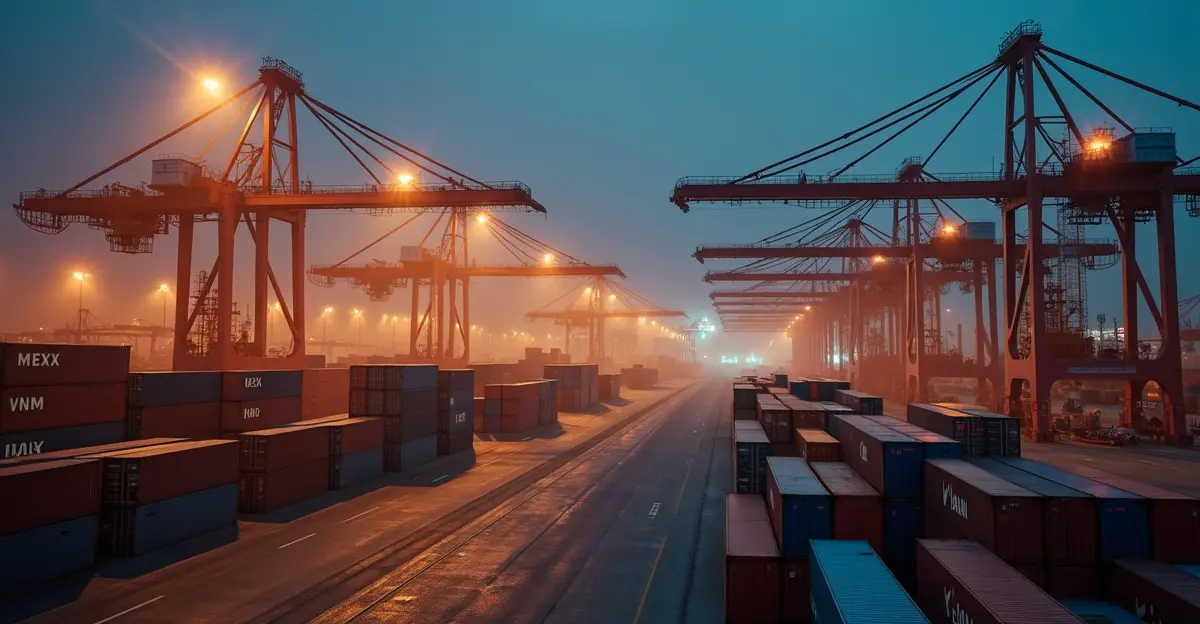
In 2026, a fundamental transformation is underway in global supply chains as geopolitical considerations increasingly override pure economic efficiency, driving nations and corporations toward security-focused 'friendshoring' strategies. This strategic shift represents a departure from decades of globalization where cost optimization dominated supply chain decisions, now replaced by a calculus that prioritizes political alignment and national security over price competitiveness. Recent analyses confirm that 2026 marks a pivotal inflection point where companies are actively implementing China+1 diversification strategies while governments deploy industrial policies to reshape global production networks along alliance lines.
What is Friendshoring?
Friendshoring, also known as allyshoring, is the strategic practice of manufacturing and sourcing from countries that are geopolitical allies, typically members of the same trade bloc or military alliance. The concept gained prominence during the COVID-19 pandemic when supply chain vulnerabilities became apparent, and was formally introduced by Treasury Secretary Janet Yellen in 2022. Unlike traditional offshoring that sought the lowest production costs regardless of political alignment, friendshoring deliberately prioritizes supply chain security and resilience by concentrating production within trusted geopolitical networks. This approach represents a middle ground between complete reshoring (bringing production home) and maintaining globalized supply chains vulnerable to geopolitical disruptions.
The Geopolitical Drivers Accelerating in 2026
The acceleration of friendshoring in 2026 stems from multiple converging geopolitical factors. According to the McKinsey Global Institute 2026 report, US-China trade has fallen by approximately 30% due to tariffs, with the US replacing about two-thirds of Chinese imports with alternative sources. Meanwhile, US tariff rates have reached their highest levels since World War II, with average effective rates jumping from 2.4% to 22% in early 2025. These structural shifts are creating parallel supply chains where the US, EU, and allied nations establish production networks that deliberately exclude geopolitical rivals.
Key Geopolitical Arenas Reshaping Trade
The BCG analysis identifies six emerging arenas of competition that are driving friendshoring: 1) Realignment in trade and foreign direct investment, 2) Supply chain security and resilience, 3) Industrial capabilities development, 4) Technological advancement and access, 5) Human capital development, and 6) Global market access. China now accounts for over 25% of industrial R&D spending and half of technology patent publications globally, creating strategic dependencies that Western nations seek to mitigate through friendshoring arrangements.
Economic Implications and Emerging Manufacturing Hubs
The economic consequences of friendshoring are profound and multifaceted. While enhancing supply chain security, this approach inevitably increases production costs and reduces efficiency compared to purely cost-optimized global networks. The International Monetary Fund estimates that trade barriers associated with friendshoring could lead to a 2% decrease in global economic output, with impacts spreading unevenly across different countries. In IMF simulations, friendshoring would lead to a drop of less than 1% of US GDP but as much as a 6% drop in other nations.
New Manufacturing Hubs Emerging
As production shifts along geopolitical lines, new manufacturing hubs are emerging in politically aligned countries. Mexico has replaced China as the largest exporter of goods to the United States in 2023, a trend that continues to accelerate through 2026. Southeast Asia has deepened its manufacturing role, with Vietnam, Thailand, and Malaysia becoming key nodes in Western-aligned supply chains. India is gaining ground in selected sectors, particularly technology and pharmaceuticals, while Brazil has expanded commodity exports to China as part of alternative trade networks. According to the DHL Global Connectedness Report 2026, US imports from China have plummeted from 22% in 2017 to just 9% in 2025, though analysis doesn't show clear decline in Chinese content in goods from other countries.
Corporate Strategies and China+1 Implementation
Corporations are actively implementing friendshoring strategies through what has become known as the 'China+1' approach. This involves maintaining some production in China while establishing parallel supply chains in politically aligned countries to mitigate geopolitical risks. The strategy represents a pragmatic response to geopolitical uncertainty that allows companies to balance cost considerations with security requirements. Major technology firms are leading this transition, particularly in semiconductor manufacturing where the US CHIPS Act has accelerated friendshoring of critical components.
Long-Term Strategic Consequences
The long-term implications of friendshoring extend beyond immediate supply chain adjustments to fundamentally reshape global trade patterns and economic blocs. As noted by former Reserve Bank of India governor Raghuram Rajan, "In a friendshoring model, a developing country could be denied beneficial opportunities simply due to its misalignment of values with other countries." This creates a world where economic opportunity becomes increasingly tied to political alignment rather than comparative advantage.
Three Key Long-Term Impacts
- Trade Fragmentation: The emergence of parallel supply chains creates de facto trade blocs that operate with different standards, regulations, and technological ecosystems.
- Increased Costs: Production in politically aligned but higher-cost countries leads to inflationary pressures and reduced consumer purchasing power.
- Innovation Divergence: Separate technological ecosystems develop in different geopolitical blocs, potentially slowing global innovation while increasing redundancy.
Expert Perspectives on the 2026 Inflection Point
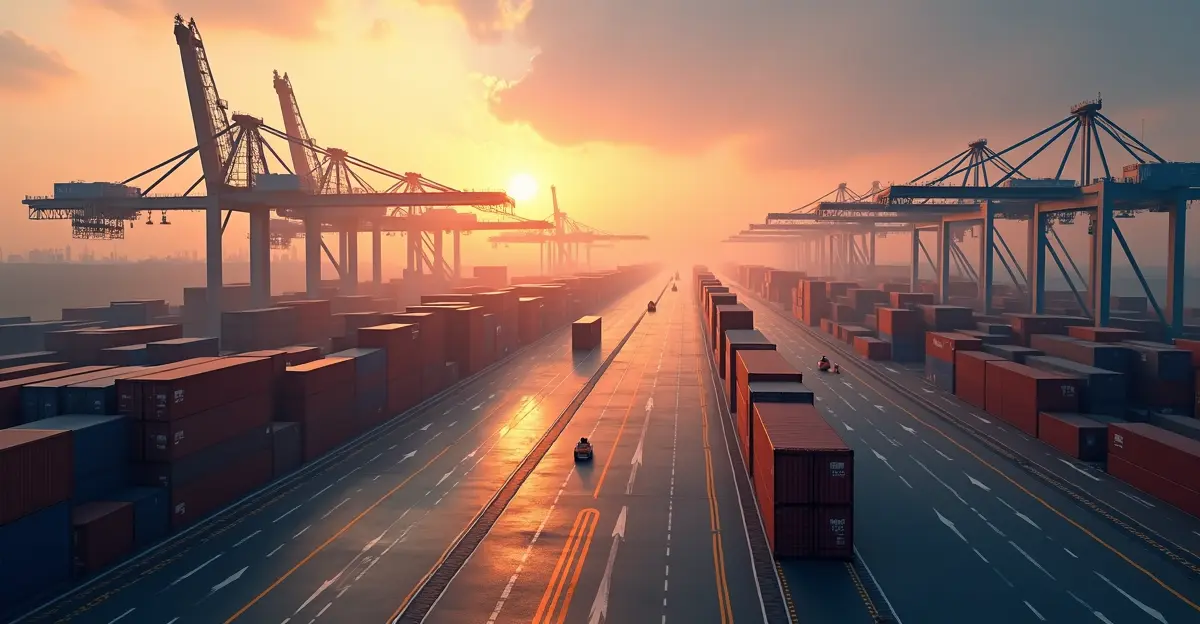
Supply chain experts emphasize that 2026 represents a critical juncture where friendshoring transitions from theoretical concept to operational reality. "We're witnessing the most significant restructuring of global production networks since the advent of container shipping," notes one industry analyst. The convergence of industrial policy initiatives across Western nations, combined with persistent geopolitical tensions, has created momentum that appears increasingly irreversible. While the world remains far from completely disconnected trade blocs—with only 4-6% of trade shifting from geopolitical rivals according to DHL data—the direction of travel is clear and accelerating.
FAQ: Friendshoring in 2026
What exactly is friendshoring?
Friendshoring is the strategic practice of manufacturing and sourcing from countries that are geopolitical allies rather than purely based on cost considerations. It prioritizes supply chain security over pure economic efficiency.
How does friendshoring differ from reshoring?
Reshoring brings production back to the home country, while friendshoring shifts production to politically aligned nations that may still offer cost advantages over domestic production but provide greater security than production in geopolitical rivals.
What are the main economic costs of friendshoring?
The IMF estimates friendshoring could reduce global economic output by 2%, with higher production costs leading to inflationary pressures and potentially reducing consumer purchasing power by 3-5% for affected goods.
Which countries are benefiting most from friendshoring trends?
Mexico, Vietnam, India, and Southeast Asian nations are emerging as key beneficiaries as production shifts from China to politically aligned alternatives in Western supply chains.
Is friendshoring reversible if geopolitical tensions ease?
While some aspects might be reversible, the structural investments in new manufacturing facilities and supply chain relationships create path dependencies that make complete reversal unlikely in the medium term.
Conclusion: The New Normal of Geopolitically-Aligned Supply Chains
As 2026 progresses, friendshoring has evolved from strategic concept to operational reality, fundamentally reshaping how nations and corporations approach global production. The shift from cost optimization to security-focused supply chains represents one of the most significant transformations in global trade since the dawn of globalization. While increasing costs and reducing efficiency in the short term, this realignment addresses critical vulnerabilities exposed during recent geopolitical crises. The emergence of parallel supply chains along political alliance lines appears set to define global trade patterns for the coming decade, creating both challenges and opportunities in an increasingly fragmented economic landscape.
Sources
McKinsey Global Institute 2026 Report, BCG Geopolitical Forces Analysis 2026, DHL Global Connectedness Report 2026, International Monetary Fund Research, World Economic Forum Global Value Chains Outlook 2026, Wikipedia Friendshoring Entry



Follow Discussion