


 Deutsch
 English
 Español
 Français
 Nederlands
 Português


 Share
Share




What Are China's October 2025 Rare Earth Export Controls?
On October 9, 2025, China announced sweeping new export controls on rare earth elements and associated technologies, representing the most extensive tightening of its rare earth regulatory framework to date. The measures add five critical elements—samarium, gadolinium, lutetium, europium, and ytterbium—to the controlled list and impose new 'foreign direct product' rules that extend China's regulatory reach to foreign companies using Chinese materials or equipment. This strategic move, coinciding with President Trump's announcement of 100% additional tariffs on Chinese goods effective November 1, 2025, transforms rare earths from economic assets into instruments of geopolitical leverage, creating unprecedented supply chain vulnerabilities for Western nations.
Background: China's Rare Earth Dominance
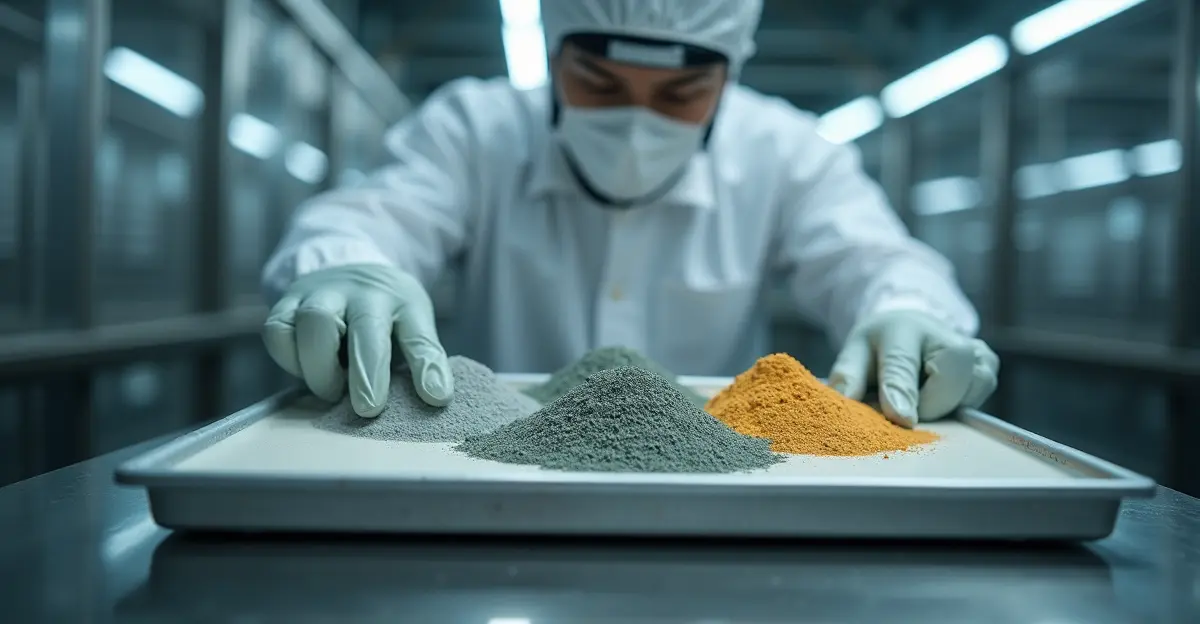
China has built overwhelming dominance in rare earth elements over four decades, controlling approximately 90% of global production and 98% of rare earth magnet manufacturing. The country's strategic industrial fortress includes not just mining but also processing expertise and integrated industrial ecosystems with massive economies of scale. According to The Diplomat analysis, China's control extends to Myanmar's gray-zone supply chain and state consolidation of the industry into two super-giants. This dominance gives Beijing substantial leverage over global supply and pricing, particularly for heavy rare earths like dysprosium and terbium essential for high-tech applications.
The New Regulatory Framework
Expanded Element Controls
The October 2025 controls establish a comprehensive system governing both physical resources and technical expertise transfer. The Ministry of Commerce (MOFCOM) issued coordinated announcements covering the entire rare earth value chain, with new licensing requirements taking effect on November 8, 2025, and additional regulations for foreign companies starting December 1, 2025. The five newly controlled elements—samarium, gadolinium, lutetium, europium, and ytterbium—are critical for specific applications: europium for red phosphors in displays, gadolinium for medical imaging and nuclear reactors, and lutetium for cancer treatment and petroleum refining.
Foreign Direct Product Rules
The most innovative aspect of the new controls is the 'foreign direct product' rules, which extend China's regulatory authority to foreign companies using Chinese materials, equipment, or technology. This creates a compliance notice regime allowing Beijing to adjust market access based on political priorities. As noted in SFA Oxford analysis, these measures represent a significant escalation from previous export restrictions, establishing China's ability to control global supply chains even beyond its borders.
Cascading Effects on Global Industries
Semiconductor Manufacturing
Rare earth elements are essential for semiconductor fabrication, particularly for polishing compounds, memory chips, and specialized alloys. The new controls threaten to disrupt the global semiconductor supply chain, which is already facing challenges from previous export restrictions. Europium and ytterbium are critical for semiconductor manufacturing processes, and their restricted availability could delay production of advanced chips needed for artificial intelligence, defense systems, and consumer electronics.
Electric Vehicle Production
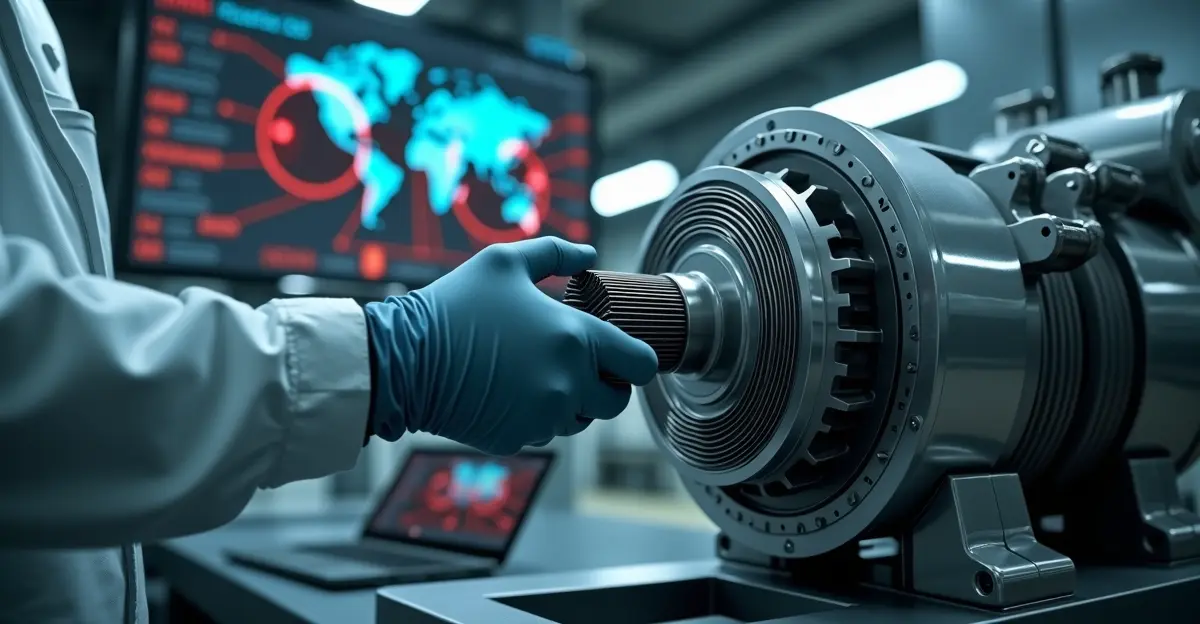
The electric vehicle industry faces immediate disruption, as rare earth magnets containing neodymium, dysprosium, and the newly controlled samarium are essential for EV traction motors. According to World Economic Forum analysis, Europe needs vast quantities of rare earths to meet its 2030 climate goals, including 18 million electric vehicles. The controls could force automakers to redesign motors or face production delays, potentially slowing the global transition to electric transportation.
Wind Turbine Deployment
Wind energy expansion faces similar challenges, as rare earth permanent magnets are critical for efficient turbine generators. The renewable energy transition depends on reliable access to these materials, with Europe needing 510 GW of wind capacity by 2030. The new controls threaten to increase costs and delay deployment of offshore wind projects, particularly those using direct-drive turbines that require significant rare earth content.
Defense Systems
Military applications face the most severe risks, as rare earths are essential for precision-guided weapons, radar systems, night vision equipment, and communication devices. The U.S. Department of Defense has identified rare earths as critical materials for national security, and the new controls could compromise defense supply chain resilience. Gadolinium and lutetium are particularly important for specialized defense applications, including radiation detection and stealth technology.
International Responses and Countermeasures
U.S. Defense Production Act Invocation
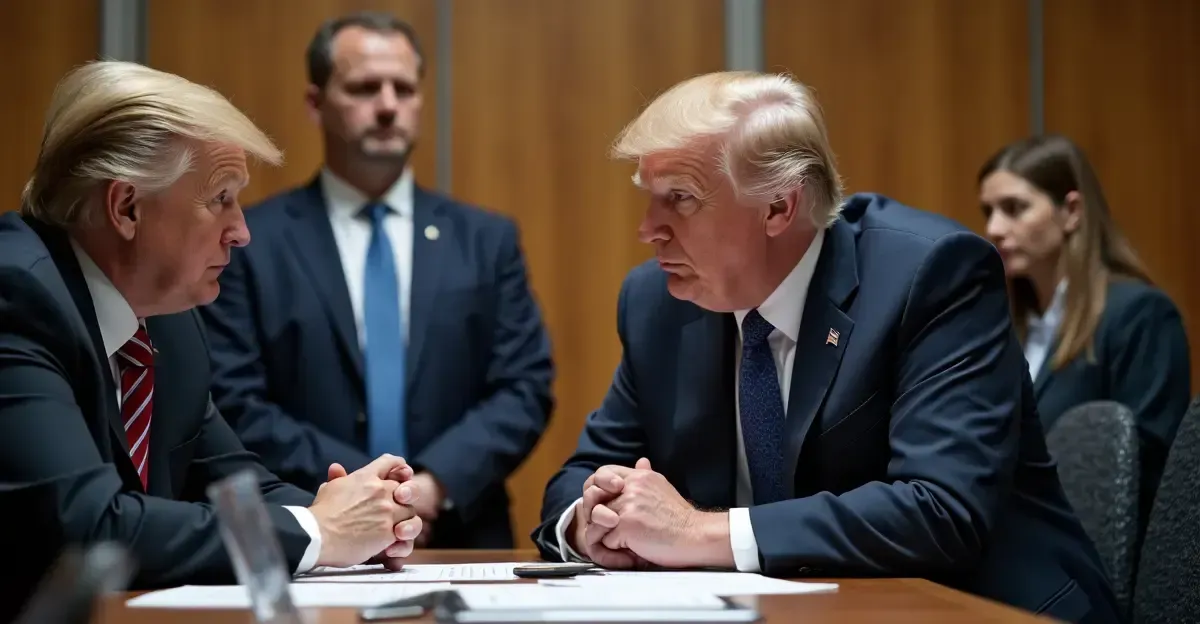
The United States responded with unprecedented measures, including the invocation of the Defense Production Act to accelerate domestic rare earth production and processing. President Trump's announcement of 100% additional tariffs on all Chinese goods, bringing total tariffs to approximately 130%, represents a dramatic escalation of the trade war. According to CNN reporting, the Trump administration views China's export controls as an effort to gain leverage ahead of a planned APEC summit meeting between Trump and Chinese leader Xi Jinping.
EU's Critical Raw Materials Act
The European Parliament adopted a resolution expressing serious concerns about China's export restrictions, calling them unjustified and coercive. MEPs urged accelerated implementation of the EU Critical Raw Materials Act to ensure secure, diversified access to raw materials. The resolution emphasizes activating domestic mining projects, assessing strategic stock levels, and establishing partnerships with countries meeting high sustainability standards. These concerns will be raised at the upcoming EU-China Summit.
Global Supply Chain Diversification
Countries worldwide are accelerating efforts to diversify rare earth supply chains, with Australia, the United States, Canada, and Brazil expanding mining operations. However, building alternative processing capacity remains a significant challenge, as China possesses decades of expertise and integrated industrial ecosystems. According to industry analysts, establishing competitive alternative supply chains requires 10-15 years and massive investment in technical expertise and infrastructure.
Expert Perspectives on Mineral Diplomacy
'China has transformed rare earths from an economic asset into an instrument of geopolitical leverage,' notes a senior analyst at SFA Oxford. 'The new foreign direct product rules represent a quantum leap in China's ability to control global supply chains, creating compliance regimes that extend Beijing's influence far beyond its borders.' Another expert observes that 'the West faces three key barriers: China controls 90% of heavy rare earth production, possesses decades of processing expertise, and has created integrated industrial ecosystems with massive economies of scale.'
FAQ: China's Rare Earth Export Controls
What elements are newly controlled under China's October 2025 regulations?
China added five elements to its controlled list: samarium, gadolinium, lutetium, europium, and ytterbium, expanding its regulatory reach to cover more specialized applications in defense, medical, and high-tech industries.
How do the 'foreign direct product' rules work?
These rules extend China's regulatory authority to foreign companies using Chinese materials, equipment, or technology, allowing Beijing to control supply chains even beyond its borders through compliance notice regimes and licensing requirements.
What industries are most affected by these controls?
Semiconductor manufacturing, electric vehicle production, wind turbine deployment, and defense systems face the most severe disruptions due to their dependence on specific rare earth elements for critical components.
How are Western countries responding?
The U.S. invoked the Defense Production Act and announced 100% additional tariffs, while the EU is accelerating implementation of its Critical Raw Materials Act and seeking supply chain diversification through partnerships and domestic projects.
Can alternative supply chains be developed quickly?
Building competitive alternative supply chains requires 10-15 years due to the need for technical expertise, processing infrastructure, and integrated industrial ecosystems that China has developed over decades.
Conclusion: A New Era of Mineral Diplomacy
China's October 2025 rare earth export controls represent a watershed moment in global geopolitics, establishing resource control as a primary instrument of state power. The combination of expanded element controls and innovative foreign direct product rules creates unprecedented leverage over Western clean technology, defense, and semiconductor industries. While international responses are accelerating diversification efforts, China's decades-long investment in integrated rare earth ecosystems ensures its dominance will persist for the foreseeable future. The geopolitical implications extend beyond trade, potentially reshaping alliances, technological development pathways, and the global balance of power in the clean energy transition era.


Follow Discussion