


 Deutsch
 English
 Español
 Français
 Nederlands
 Português


 Share
Share




Dramatic US Military Operation Captures Venezuelan President
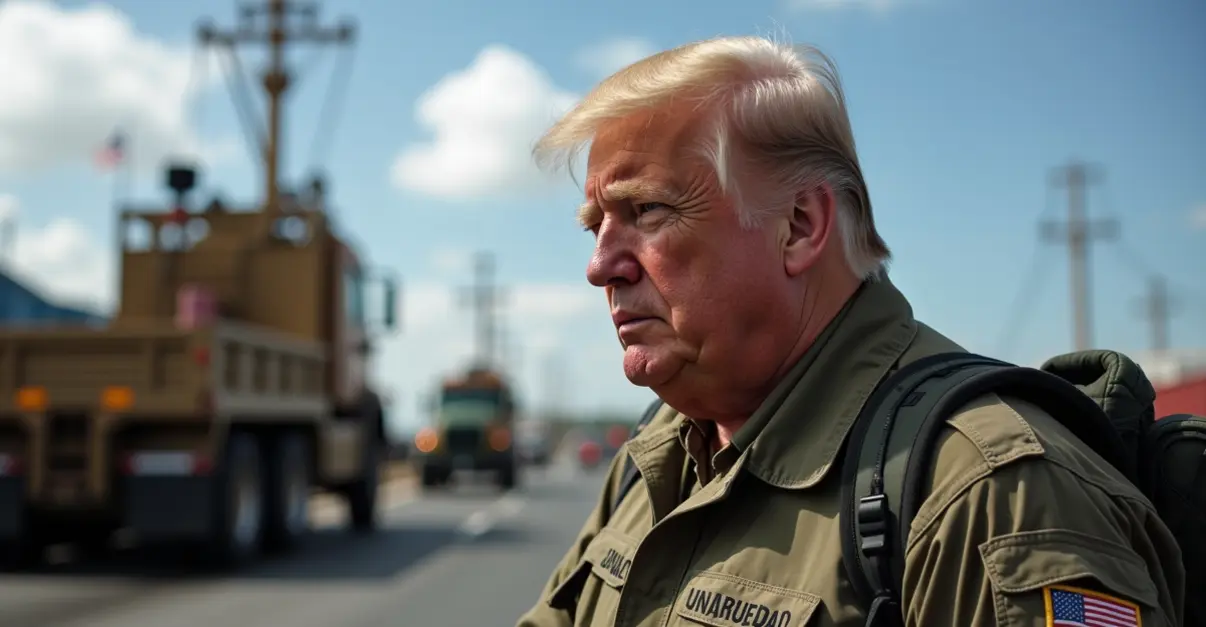
In a stunning escalation of tensions, US special forces have captured Venezuelan President Nicolás Maduro and his wife in a daring military operation. President Donald Trump confirmed the action in an interview with Fox News, stating that Maduro was taken from his residence and transported by helicopter to the US warship Iwo Jima. 'We followed the attacks in Venezuela and the kidnapping of President Maduro and his wife at his Mar-a-Lago residence,' Trump told the network.
Oil Interests at the Heart of the Operation
While Trump cited drug trafficking charges as justification for the operation, energy experts point to Venezuela's vast oil reserves as the primary motivation. Venezuela possesses the world's largest proven oil reserves at approximately 300 billion barrels, though production has collapsed from mismanagement and sanctions. 'This fits perfectly with the US national security strategy that views South and Central America as its backyard,' said energy expert Lucia van Geuns of The Hague Centre for Strategic Studies. 'The drug trafficking story is unbelievable—there are other countries where that plays a much bigger role. The US is aiming for regime change, wanting a more right-wing government.'
Trump explicitly acknowledged American oil interests, telling Fox News: 'We have the best oil companies in the world, the biggest, and we're going to play a very big role there.' He added that China, a major buyer of Venezuelan oil, would continue to receive shipments despite the operation.
International Outrage and Opposition Celebration
The operation has sparked immediate international condemnation. Russia's Foreign Ministry called it 'an act of armed aggression' and expressed solidarity with Venezuela's government. UN Secretary-General Antonio Guterres expressed 'deep alarm' and called the action a 'dangerous precedent.' EU Commission President Ursula von der Leyen offered a more measured response, stating support for 'a peaceful and democratic transition' that respects international law.
Meanwhile, Venezuelan opposition leader and 2025 Nobel Peace Prize winner María Corina Machado celebrated the development. 'Venezuelans, the time for freedom has come!' she wrote. 'Nicolás Maduro will stand trial starting today for the crimes he has committed. Because he refused to negotiate, the US has kept its promise to enforce the law.' Machado called for Edmundo Gonzalez Urrutia, who opposition claims won the 2024 election, to be installed as president.
Venezuela's Oil Industry in Crisis
Venezuela's oil production has plummeted from over 3 million barrels per day in the 2000s to under 500,000 barrels daily in recent years. The state oil company PDVSA has suffered from massive brain drain, corruption, and lack of investment. Currently, only Chevron operates significantly in Venezuela with about 150,000 barrels per day.
Van Geuns explained: 'Many oil fields in Venezuela are idle. The state oil company has been mismanaged since Chavez; there was a brain drain. Venezuela's heavy oil reserves would be a good complement to US oil production, which produces mainly light oil. But it could take a while before production can be ramped up due to lack of facilities and skilled workers.'
Political Vacuum and Regional Implications
With Maduro captured and Vice President Delcy Rodriguez reportedly in Russia, Venezuela faces a leadership vacuum. Rodriguez appeared on state television demanding proof that Maduro and his wife are still alive. Her brother, Jorge Rodriguez, parliament president, remains in Caracas according to Reuters sources.
Colombia has deployed troops to its border with Venezuela, anticipating potential refugee flows. The operation represents Trump's most aggressive foreign policy move, venturing into what analysts call 'uncharted territory' with direct military action against a foreign leader.
As the international community grapples with the implications, the future of Venezuela's oil-rich but economically devastated nation hangs in the balance between American strategic interests and the will of its people for democratic change.
Follow Discussion