


 Deutsch
 English
 Español
 Français
 Nederlands
 Português


 Share
Share




Maduro Trial Explained: Venezuela's Ex-President Faces US Narcoterrorism Charges in 2026
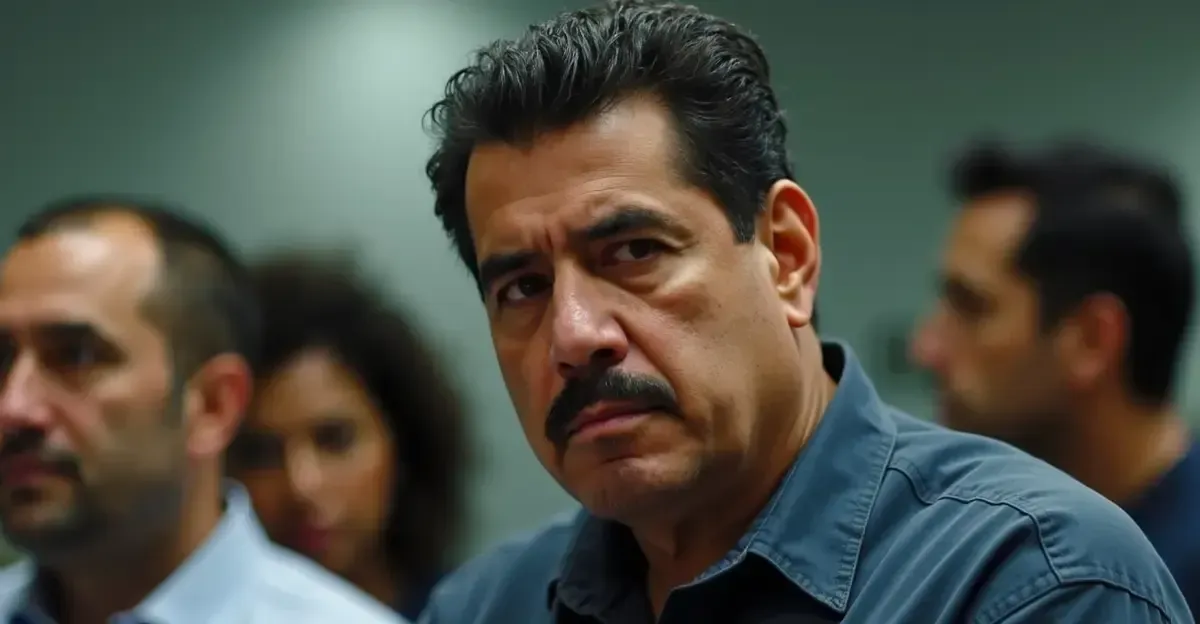
Former Venezuelan President Nicolás Maduro appeared in a Manhattan federal courtroom on March 26, 2026, marking his first court appearance since being captured by U.S. forces in January. The high-profile trial represents a critical test of U.S. narcoterrorism laws and has left Venezuela in a state of political uncertainty as the nation grapples with leadership changes and economic reforms.
What is the Maduro Trial About?
The Maduro trial centers on allegations that the former Venezuelan president and his wife, Cilia Flores, orchestrated a massive international drug trafficking operation while in power. Prosecutors have charged the couple with four primary offenses: (1) conspiracy to commit narcoterrorism, (2) conspiracy to import cocaine into the United States, (3) possession of machine guns and explosives, and (4) conspiracy to possess machine guns and explosives. The charges cover activities allegedly spanning from 1999 to 2025, representing nearly the entire duration of Maduro's political career.
According to the 25-page indictment, Maduro and Flores are accused of facilitating cocaine shipments from Venezuela to the United States and ordering violence against those who interfered with their drug operations. The case represents one of the most significant applications of the U.S. narcoterrorism law since its enactment in 2006, testing whether prosecutors can successfully prove that a foreign head of state knowingly facilitated operations benefiting terrorist organizations.
The Legal Battle in New York
Court Proceedings and Defense Challenges
During the March 26 hearing before Judge Alvin Hellerstein, Maduro's defense team argued that U.S. sanctions preventing Venezuela from funding his legal defense violate his constitutional rights. 'The government cannot simultaneously block access to funds and claim the defendant has adequate representation,' argued lead defense attorney José Pertierra. Prosecutors countered that Maduro shouldn't be allowed to use Venezuelan government funds after allegedly plundering the country's wealth for years.
The judge expressed concerns about Maduro's access to adequate legal defense but refused to dismiss the charges. 'The constitutional right to defense should be paramount,' Judge Hellerstein noted during the hearing, suggesting he might allow some Venezuelan funds to be used for legal expenses despite U.S. sanctions. The case has drawn international attention as it navigates the complex intersection of international law, sovereignty, and criminal prosecution.
What is Narcoterrorism?
Narcoterrorism refers to the use of drug trafficking proceeds to fund terrorist activities or the collaboration between drug cartels and terrorist organizations. The U.S. law requires prosecutors to prove not just drug trafficking but that the defendant knowingly facilitated operations benefiting a terrorist group. In Maduro's case, prosecutors allege he coordinated with the Revolutionary Armed Forces of Colombia (FARC), which the U.S. designated as a terrorist organization in 1997.
Venezuela's Political Transition
While Maduro faces trial in New York, Venezuela has undergone significant political changes under interim President Delcy Rodríguez. Since taking office on January 5, 2026, Rodríguez has implemented several reforms that mark a departure from Maduro's policies:
- Political Prisoner Releases: Over 621 political prisoners have been released since January, according to human rights organization Foro Penal
- Oil Sector Overhaul: Rodríguez signed a landmark law opening Venezuela's oil industry to privatization, ending the state-owned PDVSA's monopoly
- Diplomatic Relations: The U.S. Embassy in Caracas reopened for the first time since 2019
- Economic Reforms: The government has reduced royalties and income taxes to attract foreign investment
However, many Venezuelans remain skeptical about these changes. 'We can only speak of real change when there are institutional reforms, like free elections,' said a 28-year-old Venezuelan woman who spoke anonymously to the NOS. The Venezuelan political crisis continues to affect millions who have endured years of economic hardship.
Economic Implications and Oil Industry
The Trump administration has made clear that access to Venezuelan oil was a core motivation for the intervention. Since Maduro's capture, the U.S. has:
- Lifted sanctions on Venezuelan oil trade
- Issued licenses for companies to trade Venezuelan oil
- Announced a 50-million-barrel oil supply deal with Venezuela
- Facilitated American energy companies to invest $100 billion in Venezuela's decaying oil infrastructure
Venezuela, which holds the world's largest proven oil reserves, currently produces about 1 million barrels per day, down from 3.5 million barrels in 1999. The new privatization law allows private companies to take control of production and sales while the government retains control of hydrocarbon reserves. This represents a significant shift from the socialist policies that have governed Venezuela for over two decades.
International Reactions and Legal Controversy
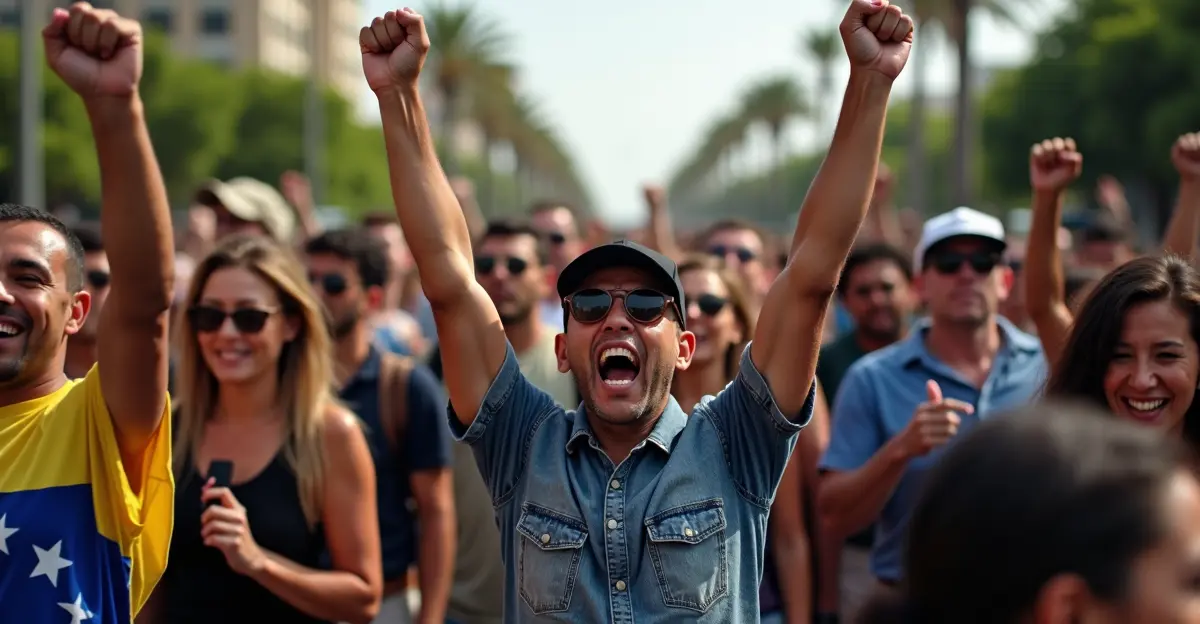
The U.S. operation to capture Maduro has sparked international debate about sovereignty and international law. United Nations officials and international law experts have criticized the raid as violating the UN Charter and Venezuela's sovereignty. However, the operation has been celebrated by many in the Venezuelan diaspora who have long opposed Maduro's regime.
The legal proceedings also raise questions about the extraterritorial application of U.S. law and the prosecution of foreign heads of state. If convicted, Maduro and Flores face life in prison, making this one of the highest-stakes international criminal cases in recent history.
What Happens Next?
The trial is expected to be lengthy and complex, relying heavily on cooperating witnesses including two former Venezuelan generals. Their credibility could determine the trial's outcome. Meanwhile, in Venezuela, interim President Rodríguez continues to implement reforms while the country prepares for potential elections, though no timeline has been established.
For ordinary Venezuelans, the situation remains precarious. 'Economically, none of us are better off,' said a 60-year-old Venezuelan man who spoke anonymously. 'We're worse off. Access to dollars is increasingly difficult and only available to a small group.' The country continues to grapple with hyperinflation, food shortages, and security concerns that have plagued it for years.
Frequently Asked Questions
What charges does Maduro face?
Maduro faces four main charges: conspiracy to commit narcoterrorism, conspiracy to import cocaine, possession of machine guns and explosives, and conspiracy to possess machine guns and explosives.
When was Maduro captured?
Maduro was captured on January 3, 2026, during a U.S. military operation codenamed "Operation Absolute Resolve."
Who is leading Venezuela now?
Delcy Rodríguez serves as Venezuela's interim president after being sworn in on January 5, 2026, following Maduro's capture.
What is narcoterrorism?
Narcoterrorism involves using drug trafficking proceeds to fund terrorist activities or collaboration between drug cartels and terrorist organizations.
How has Venezuela's oil policy changed?
Venezuela has opened its oil sector to privatization, ending PDVSA's monopoly and allowing private companies to control production and sales with reduced royalties and taxes.

Follow Discussion