Nederlands
 English
 Deutsch
 Français
 Español
 Português





Europe's Diplomatic Dilemma: Frozen Assets and Peace Negotiations
As peace negotiations for Ukraine gain momentum, the European Union finds itself in a precarious position—desperately seeking a seat at the negotiating table while grappling with internal divisions over how to use frozen Russian assets to support Kyiv. The situation has reached a critical juncture in December 2025, with the United States pushing forward with its own peace initiatives while European leaders scramble to assert their influence.
The US Peace Plan and European Concerns
The United States' 28-point peace proposal, which would require Ukraine to withdraw from territory it still controls in the Donetsk region and effectively recognize Russian control over Donetsk, Crimea, and Lugansk, has sent shockwaves through European capitals. 'It could be a pivotal week for diplomacy,' said EU foreign policy chief Kaja Kallas, arriving at a meeting of EU defense ministers in Brussels. 'It is clear that Russia does not want peace, and therefore we need to make Ukraine as strong as possible.'
Ukrainian President Volodymyr Zelenskyy has been actively seeking support from European allies, who fear the US plan—drafted without input from Kyiv or Europe—reads like a wishlist for Moscow. 'It's not fair to exclude European allies from Ukraine reconstruction talks,' Zelenskyy stated on Monday, as efforts to settle the war with Russia went into full swing.
The Frozen Assets Conundrum
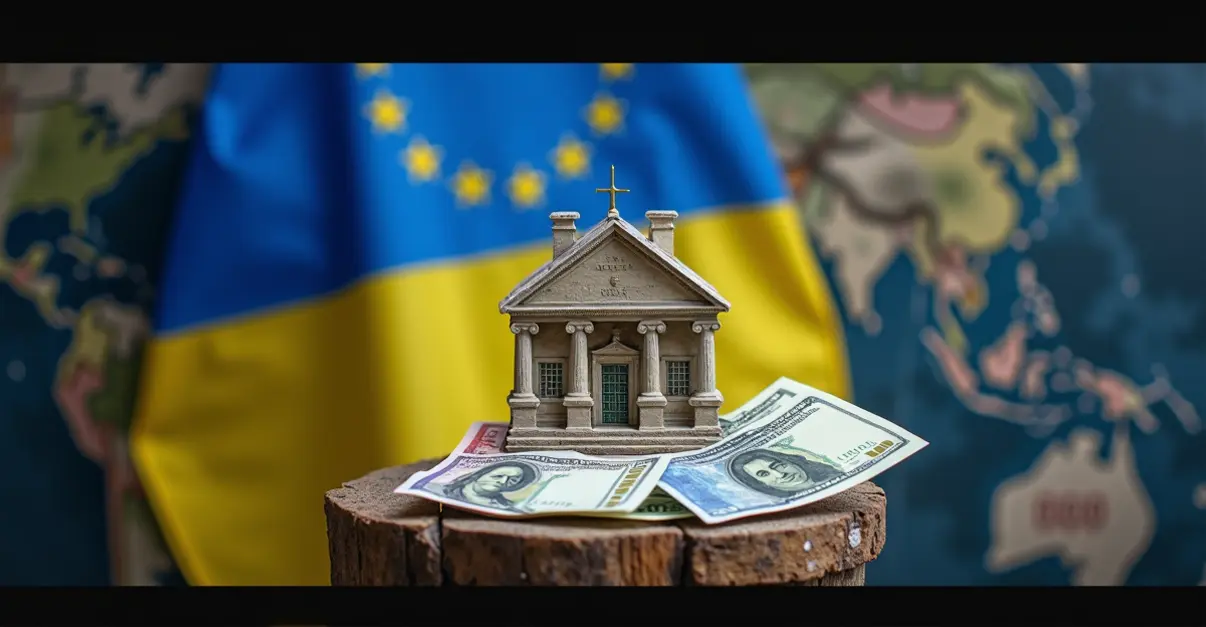
At the heart of the EU's dilemma lies approximately €210 billion in frozen Russian central bank assets, most of which are held by Euroclear in Brussels. The European Commission has proposed a "reparations loan" that would use these immobilized assets to provide Ukraine with €140 billion in financing—a plan that has exposed deep divisions within the bloc.
Belgian Prime Minister Bart De Wever has emerged as the most vocal opponent, warning that using the assets would violate 'a fundamental principle of international law' and create instability in global financial markets. In a letter to European Commission President Ursula von der Leyen, De Wever called the loan scheme 'fundamentally wrong' and warned of possible Russian retaliation targeting Euroclear and Belgium specifically.
'We are prepared to make sacrifices, but not the impossible,' De Wever has stated, reflecting Belgium's position that any plan must include clear guarantees and risk-sharing among all 27 EU member states.
European Unity Under Strain
The debate over frozen assets has revealed significant fault lines within the EU. While France and Germany are leading the push for European input in peace negotiations, countries like Belgium remain cautious. French President Emmanuel Macron has emphasized that 'a plan between Russia and Ukraine to end hostilities can only be finalised with the involvement of Kyiv and European powers.'
Meanwhile, the European Central Bank has added another layer of complexity, stating it cannot backstop the EU plan as it would likely violate treaties prohibiting monetary financing. This has cast further doubt on efforts to reach agreement this month.
Despite these challenges, several EU members are pushing forward. Portugal's Finance Minister Joaquim Miranda Sarmento confirmed his government 'supports, from a general point of view' the creation of a loan based on frozen Russian assets, while acknowledging technical aspects need resolution. Spanish Prime Minister Pedro Sánchez has also announced support for using Russian frozen assets for Ukraine's reconstruction.
The Path Forward
EU leaders are set to discuss the frozen assets issue at a summit on December 18, where they must decide whether to proceed with the reparations loan or find alternative ways to support Ukraine. The stakes couldn't be higher—with Russia making its biggest advances in Ukraine since November 2024 according to analysis by AFP, and Ukraine facing both military pressure and internal political challenges.
As Denmark's Defense Minister Troels Lund Poulsen noted, 'Even though peace negotiations are underway, I see no signs of Russia's willingness to stop the hostilities in Ukraine. This must be taken into account so that Europe is not left behind on the sidelines looking naive.'
The coming weeks will test European unity and diplomatic skill as the bloc navigates between supporting Ukraine, managing relations with the United States, and addressing legitimate concerns about the legal and financial implications of using frozen Russian assets. The outcome will not only shape Ukraine's future but also define Europe's role in the post-war international order.