


 Deutsch
 English
 Español
 Français
 Nederlands
 Português


 Share
Share




The Future of High-Speed Transportation
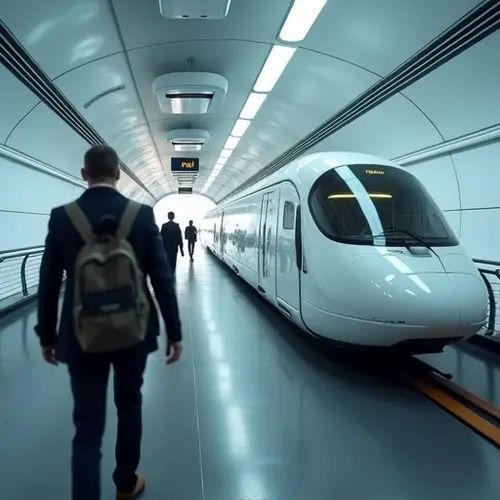
Imagine traveling from Mumbai to Pune in just 25 minutes instead of 3.5 hours. That's the promise of hyperloop technology, which could fundamentally reshape global transportation networks. Recent market projections show the hyperloop sector exploding from $3.8 billion in 2025 to $59.3 billion by 2034, with major projects advancing worldwide.
How Hyperloop Outperforms Planes
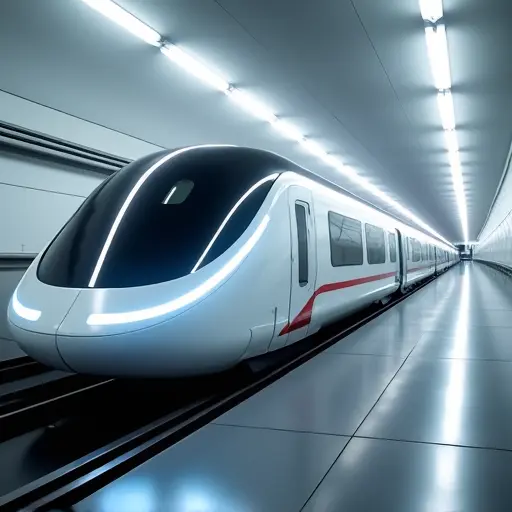
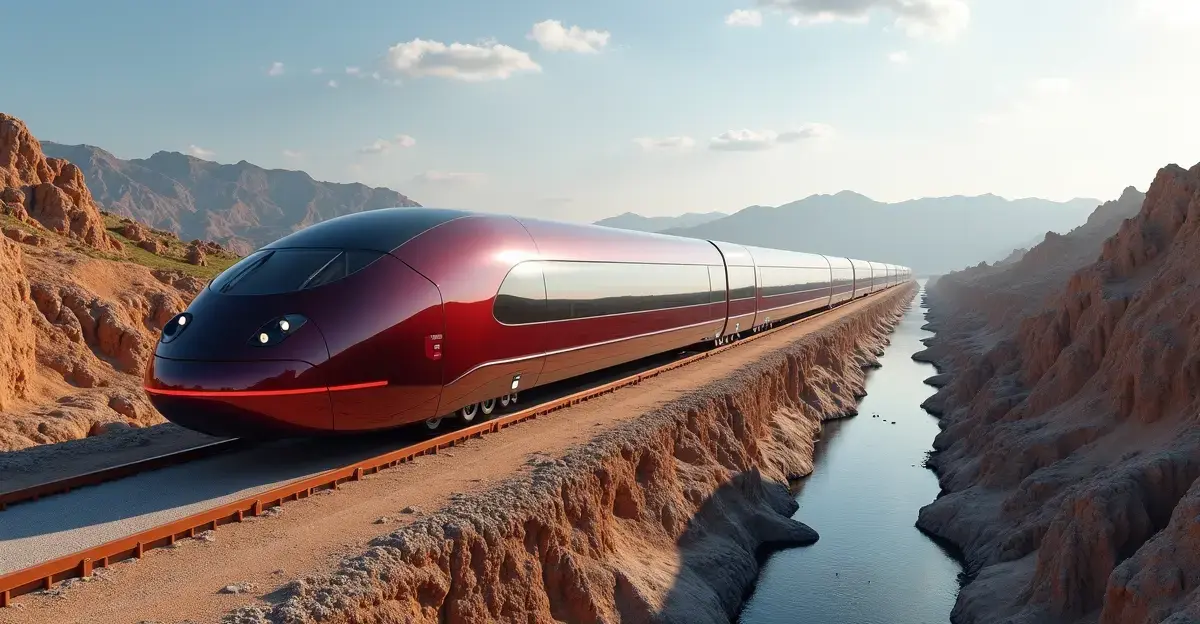
Hyperloop systems propel passenger pods through low-pressure tubes at near-supersonic speeds (up to 750 mph) using magnetic levitation. Unlike airplanes, they produce zero direct emissions during operation and consume significantly less energy. Research indicates hyperloop could reduce carbon emissions by up to 58% compared to regional flights for routes under 600 miles.
Global Projects Taking Shape
India's Mumbai-Pune corridor leads development with feasibility studies completed. Virgin Hyperloop projects in Missouri and the Ohio-Chicago corridor show North American momentum. Technical University of Munich holds the speed record at 463 km/h, while companies like Zeleros Hyperloop advance vacuum tube innovations.
Environmental Tradeoffs
While operational emissions are minimal, construction raises questions. Concrete pylons, rare-earth magnets, and lithium batteries create upstream environmental impacts. Engineers are developing solar-panel-lined tubes and regenerative braking to offset energy use. "We're designing systems that age gracefully," says Virgin Hyperloop's Kristen Hammer.
The Aviation Challenge
Hyperloop's strongest case exists for regional routes where it competes directly with short-haul flights. Major airlines monitor developments cautiously, though aviation retains advantages for transoceanic travel. Industry analysts predict hyperloop could capture 30% of regional air travel markets by 2040 if safety certification hurdles are cleared.


Follow Discussion