


 Deutsch
 English
 Español
 Français
 Nederlands
 Português


 Share
Share




Quantum Computing's Ticking Clock: How the Pentagon is Racing Against 2030's Cryptographic Collapse
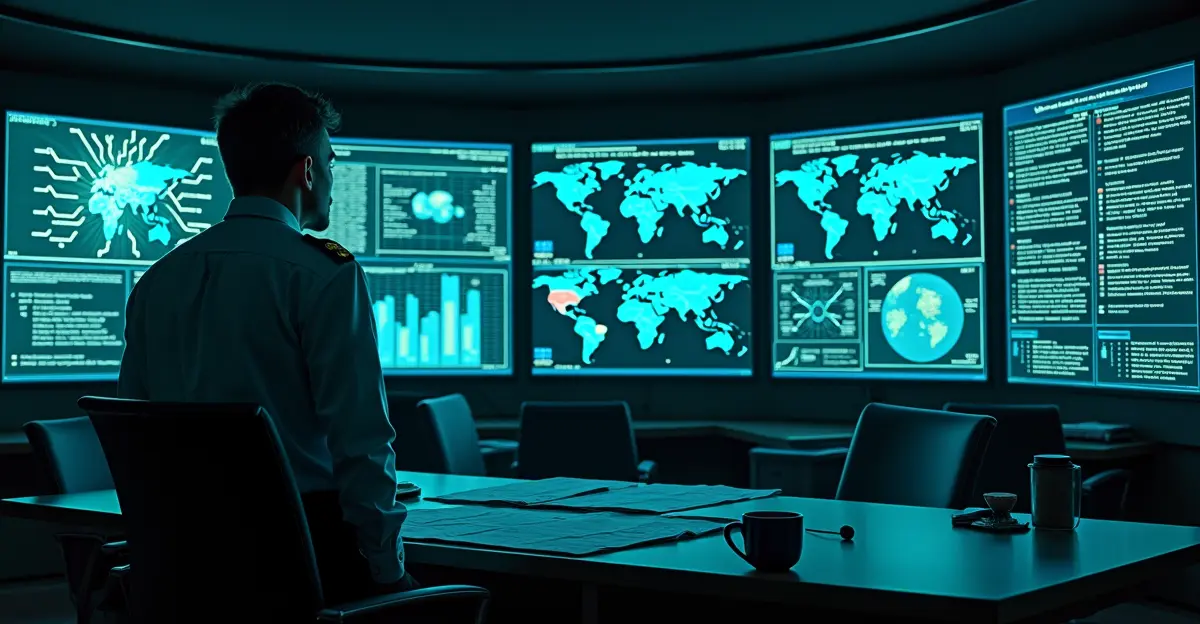
The U.S. Defense Department is engaged in a high-stakes race against time, with Pentagon officials warning that current encryption standards could be broken by quantum computers as early as 2030, potentially collapsing the cryptographic foundations of national security infrastructure. According to the Defense Intelligence Agency's 2025 Worldwide Threat Assessment, quantum technologies are rapidly approaching battlefield relevance, creating an urgent timeline for the military to overhaul its entire security architecture before adversaries gain quantum supremacy.
What is Quantum Computing's Cryptographic Threat?
Quantum computing represents a fundamental shift in computational power that threatens to break the public-key encryption systems protecting everything from military communications to financial transactions. The most vulnerable algorithm is RSA-2048, which secures approximately 90% of global internet traffic. Recent analysis suggests quantum computers with 1,000-1,400 logical qubits could factor RSA-2048 encryption in about a week, a capability expected to emerge around 2030 based on current development trajectories. This cryptographic collapse, often called "Q-Day," would expose decades of classified military communications and sensitive intelligence data.
The Pentagon's Quantum Resilience Roadmap
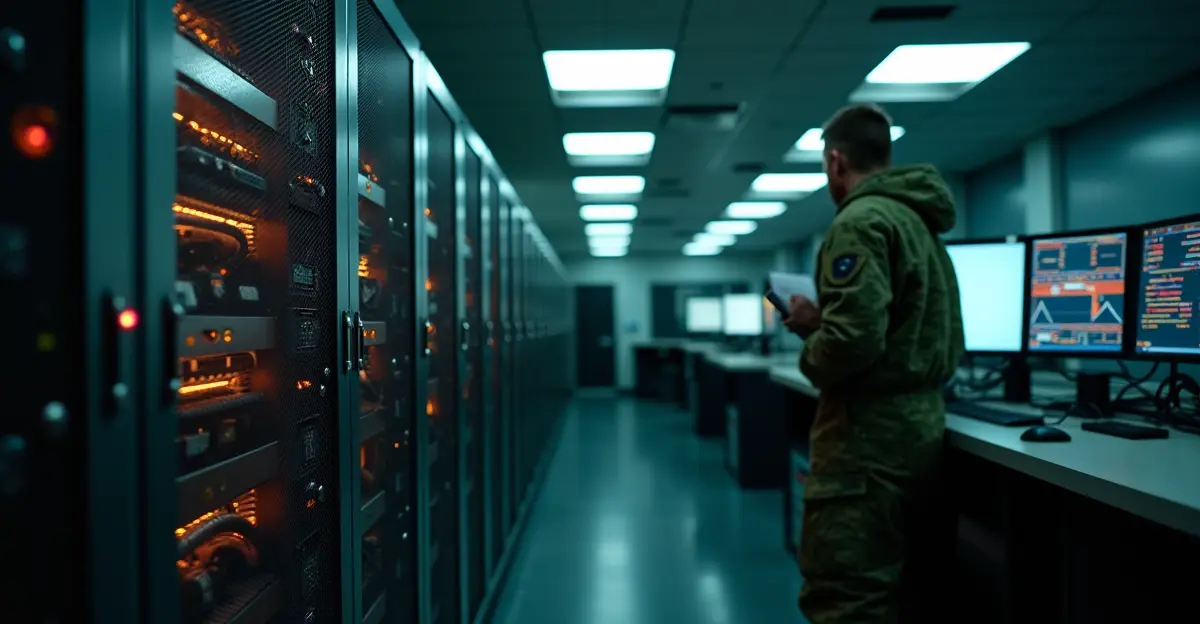
The Department of Defense has established an aggressive migration timeline with three critical phases. The first phase (2025-2026) focuses on post-quantum risk modeling and inventory assessment, requiring all DoD components to identify vulnerable systems and designate migration leads within 20 days. The U.S. cybersecurity infrastructure faces unprecedented challenges as the Pentagon's new PQC Directorate, led by Dr. Britta Hale, coordinates this massive transition.
The second phase (2027-2028) mandates PQC compliance requirements, with legacy cryptographic approaches facing a hard sunset by December 31, 2030. This includes everything from national security and weapons systems to cloud computing, mobile devices, and IoT devices. The Pentagon has specifically banned several technologies including Quantum Key Distribution (QKD) and quantum networking for security purposes, signaling that NIST-approved PQC algorithms are becoming mandatory baselines rather than optional upgrades.
China's $5 Billion Quantum Investment
While the U.S. races to defend its systems, China is aggressively pursuing quantum dominance through massive state-directed investment. Beijing has committed approximately $5 billion to quantum research, with Alibaba investing $15 billion and the National Laboratory for Quantum Information Science receiving $10 billion specifically for military applications. China currently leads in quantum communications and is making rapid progress in quantum computing and sensing, having deployed city-scale quantum networks using quantum key distribution for secure communications.
According to the U.S.-China Economic and Security Review Commission, China's approach is highly centralized and closely aligned with national security goals, creating what experts describe as a "quantum arms race" between the two superpowers. The global technology competition has intensified as both nations recognize that quantum supremacy will determine 21st-century warfare rules.
Quantum Sensors: The Stealth Game-Changer
Perhaps more immediately concerning than quantum computing's cryptographic threat are quantum sensors that could bypass traditional stealth and GPS systems. These technologies detect atomic-scale interactions in gravity, magnetism, and light, potentially exposing previously undetectable weapon systems like submarines and advanced aircraft. The DIA warns that quantum sensors are progressing faster than quantum computing itself and could erode American strategic advantages within the next few years.
Quantum magnetometers could track submarines by detecting minute magnetic anomalies, while quantum gravimeters might identify underground structures and tunnels. Quantum inertial sensors offer GPS-denied navigation capabilities, creating what military planners call "quantum positioning systems" that could function in environments where traditional GPS is jammed or unavailable.
EU's Quantum Flagship 2.0 Initiative
Europe is not sitting idle in this technological race. The EU's Quantum Flagship 2.0 initiative represents a €1 billion investment over 10 years, coordinating research across quantum computing, communication, sensing, and simulation technologies. Recent activities include funding calls for quantum key distribution microsatellites and development of quantum-enhanced NMR spectrometers for medical diagnostics. The European technology strategy aims to establish the continent as a global leader in quantum technologies, though it faces challenges matching the scale of U.S. and Chinese investments.
Strategic Implications and Geopolitical Race
The convergence of quantum technologies with artificial intelligence and electronic warfare creates unprecedented military capabilities that could reshape global power dynamics. Quantum supremacy will provide the first country to achieve it with transformative advantages in encryption, materials science, energy production, medical research, and intelligence collection. The Pentagon's urgency reflects growing concern that quantum advances are creating risks of technological surprise due to their difficult-to-detect nature.
Military analysts warn that the first country to operationalize quantum sensing for defense could reshape nuclear deterrence and conventional warfare by eliminating the stealth advantage of current military platforms. This has led to what some describe as a "second quantum revolution" with profound implications for national security. The future of warfare technology is being rewritten in quantum laboratories around the world.
Expert Perspectives on the Quantum Timeline
Dr. Britta Hale, head of the Pentagon's PQC Directorate, emphasized the urgency in recent congressional testimony: "We're not talking about theoretical threats decades away. Quantum sensors are already being tested in operational environments, and the cryptographic timeline has accelerated dramatically. The 2030 deadline isn't arbitrary—it's based on concrete technological trajectories we're tracking daily."
Meanwhile, quantum computing researchers note that three recent breakthroughs have accelerated the timeline: IBM's roadmap targeting 200+ logical qubits by 2029 with a path to 1,000+ by early 2030s; Gidney's May 2025 paper showing RSA-2048 can be factored with only 1,000-1,400 logical qubits; and Oxford's record-breaking quantum gate error rate of 1×10⁻⁷, which reduces physical qubit overhead.
Frequently Asked Questions
What is Q-Day and when is it expected?
Q-Day refers to when quantum computers can break current encryption standards like RSA-2048. Recent analysis suggests this could occur around 2030, based on quantum computing development trajectories showing capability for 1,000-1,400 logical qubits needed to factor RSA encryption.
How is China advancing in quantum technology?
China has invested approximately $5 billion in quantum research, leads in quantum communications with city-scale networks, and is making rapid progress in quantum computing and sensing. Their state-directed approach focuses on military applications and national security goals.
What are quantum sensors and why are they concerning?
Quantum sensors detect atomic-scale interactions in gravity, magnetism, and light. They could bypass traditional stealth systems by tracking submarines, identifying underground structures, and providing GPS-denied navigation, potentially eroding current military advantages.
What is the Pentagon's migration timeline?
The Pentagon has established three phases: post-quantum risk modeling (2025-2026), PQC compliance requirements (2027-2028), and complete migration by December 31, 2030, with legacy cryptographic approaches facing a hard sunset.
How does the EU's Quantum Flagship compare?
The EU's Quantum Flagship 2.0 is a €1 billion, 10-year initiative focusing on quantum computing, communication, sensing, and simulation, though it faces challenges matching U.S. and Chinese investment scales.
Conclusion: The Quantum Countdown
The race against quantum computing's cryptographic collapse represents one of the most urgent national security challenges of our time. With the Pentagon's 2030 deadline looming and adversaries advancing rapidly in quantum technologies, the United States faces a critical window to secure its digital infrastructure. The convergence of quantum computing, AI, and electronic warfare is creating new military capabilities that could fundamentally alter global power dynamics, making quantum resilience not just a technical challenge but a strategic imperative for 21st-century security.



Follow Discussion