
 English







Climate Emergency Explained: Earth Holds More Heat Than Ever, WMO Warns
The Earth is experiencing an unprecedented climate crisis as the planet retains more heat energy than at any point in recorded history, according to the World Meteorological Organization's (WMO) latest annual report. The global energy imbalance reached its highest level in 2025, with scientists warning that the consequences will be felt for centuries to come, potentially even thousands of years.
What is Earth's Energy Imbalance?
Earth's energy imbalance refers to the growing difference between the amount of solar energy reaching our planet and the amount of thermal energy radiating back into space. In a stable climate system, these two energy flows remain approximately equal. However, human activities—primarily the burning of fossil fuels—have dramatically increased greenhouse gas concentrations to their highest levels in at least 800,000 years, trapping unprecedented amounts of heat within Earth's climate system.
"The state of the global climate is experiencing an emergency," says United Nations Secretary-General António Guterres. "All major climate indicators are flashing red."
Record-Breaking Heat Retention in 2025
The WMO has been tracking energy imbalance since 1960, with the most significant increases occurring over the past two decades. While 2025 wasn't the hottest year on record, it marked the peak of Earth's heat retention capacity, representing a critical tipping point in the climate crisis.
How the Energy Imbalance Works
The process occurs in four key stages:
- Solar radiation reaches Earth's atmosphere
- Greenhouse gases trap increasing amounts of this energy
- The imbalance grows as more heat is retained than released
- This excess energy manifests as rising temperatures across land, oceans, and atmosphere
"Human activity is increasingly disrupting the natural balance, and we will have to live with the consequences for hundreds and thousands of years," explains WMO Secretary-General Celeste Saulo.
Ocean Absorption: The Hidden Climate Buffer
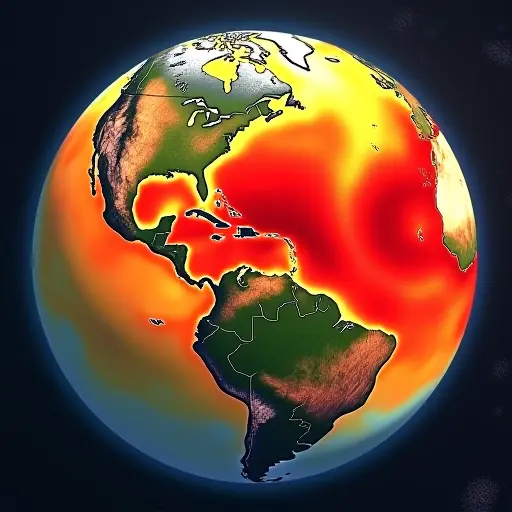
Remarkably, 91% of the excess heat is absorbed by the world's oceans, which act as a massive thermal buffer that tempers land-based temperature increases. Only 5% of the energy is absorbed by land, while a mere 1% warms the atmosphere directly. This means humans experience only a fraction of the actual warming occurring in Earth's climate system.
The ocean's role as a heat sink comes at a tremendous cost. For nine consecutive years, ocean temperatures have set new records, placing marine ecosystems under severe stress and accelerating biodiversity loss. The warming waters also serve as fuel for more intense tropical storms and hurricanes, creating a feedback loop that exacerbates extreme weather events.
Additional Ocean Impacts
- Ocean acidification from absorbed CO2 damages marine life
- Coral bleaching events become more frequent and severe
- Sea level rise accelerates through thermal expansion
- Marine heatwaves disrupt fisheries and coastal communities
Global Consequences and Human Impact
The WMO report documents how extreme weather events in 2025—including heatwaves, wildfires, droughts, tropical cyclones, storms, and floods—resulted in thousands of deaths and affected millions worldwide. The organization has integrated data showing how weather extremes impact global food security and refugee movements, with climate-related disasters costing billions annually.
Hestress has emerged as a particularly concerning issue, with approximately 1.3 billion workers—more than one-third of the global workforce—facing annual exposure to dangerous heat conditions. Alarmingly, only half of countries have heat warning systems, and even fewer incorporate heat information into public health policies.
Glacier Melt and Sea Ice Decline
The report confirms continued acceleration of glacier melt, particularly in Iceland and North America, where exceptional ice loss occurred in 2025. Arctic sea ice reached its lowest or second-lowest extent on record, while Antarctic sea ice registered its third-lowest level, following only 2023 and 2024.
These changes in the cryosphere have far-reaching implications for global sea levels, coastal communities, and the polar climate feedback loops that could accelerate warming trends.
Long-Term Implications and Climate Justice
The WMO's findings underscore that climate change is not a future threat but a present reality with consequences that will persist for generations. The organization emphasizes that while immediate action can prevent the worst outcomes, some changes are now irreversible on human timescales.
"On a daily basis, our weather has already become more extreme," notes Secretary-General Saulo. "The impacts we're seeing today are just the beginning of changes that will reshape our planet for centuries."
Frequently Asked Questions
What is Earth's energy imbalance?
Earth's energy imbalance is the difference between incoming solar radiation and outgoing thermal radiation. When more energy is retained than released, the planet warms.
Why is 2025 significant in climate records?
While not the hottest year, 2025 marked the highest level of heat retention ever recorded, representing a peak in Earth's energy imbalance.
How long will climate change impacts last?
According to the WMO, some consequences—particularly ocean warming and sea level rise—will persist for hundreds to thousands of years.
What percentage of excess heat do oceans absorb?
Oceans absorb 91% of excess heat, acting as Earth's primary thermal buffer against more rapid atmospheric warming.
What are the main human impacts of climate change?
Extreme weather events, food insecurity, displacement, health risks from heat exposure, and economic losses totaling billions annually.
Sources
World Meteorological Organization (2026). State of the Global Climate 2025. Geneva: WMO.
United Nations Climate Reports (2025-2026).
NASA Climate Data and Observations.
Intergovernmental Panel on Climate Change (IPCC) Assessment Reports.




Follow Discussion