Nederlands
 English
 Deutsch
 Français
 Español
 Português





Water Crisis Deepens in Agricultural Heartlands
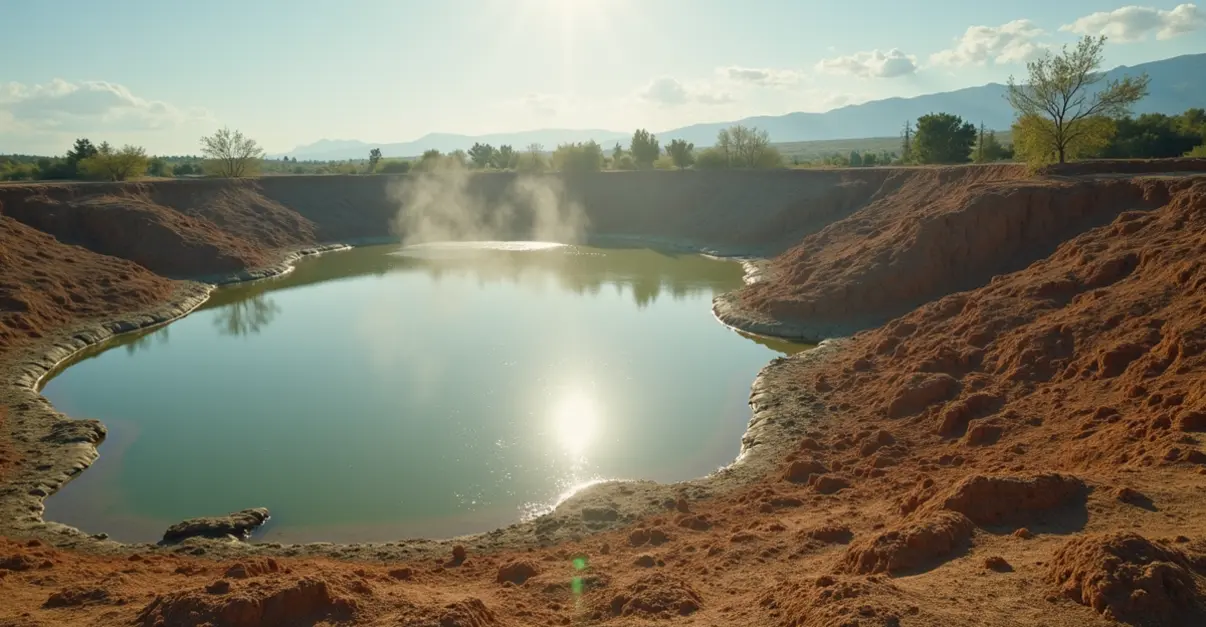
Major farming regions across the United States are confronting an unprecedented water crisis as reservoir levels drop to critically low levels, forcing widespread irrigation restrictions and threatening national crop production. The situation is most severe in California's Central Valley, where groundwater levels are dropping 7-10 feet annually and water allocations have been reduced by 35-60%, according to recent reports from agricultural water monitoring sources.
Irrigation Restrictions Force Tough Choices
Farmers are facing impossible decisions as water allocations shrink. 'We're having to fallow fields that have been productive for generations,' says Central Valley farmer Maria Rodriguez. 'Some of my neighbors are reconsidering water-intensive crops like almonds altogether. This isn't just about this season - it's about whether our communities can survive.'
The crisis extends beyond California. A new study published in Geophysical Research Letters reveals that major U.S. water reservoirs are experiencing longer, more severe, and more variable periods of low water storage due to climate change. Researchers analyzed 250 large reservoirs from 1981-2020 and found the most severe problems in western and central U.S., though eastern and southeastern reservoirs are also affected.
Crop Forecasts Turn Grim
Agricultural economists are revising crop forecasts downward as the water situation worsens. Nationally, irrigation accounts for 47% of freshwater withdrawals, with irrigated land generating over 50% of total U.S. crop sales value despite representing less than 17% of harvested cropland. The disconnect between water availability and agricultural productivity is becoming increasingly apparent.
A study evaluating drought impacts on agricultural production, published in Agricultural Water Management, shows that reduced water availability significantly negatively affects both evapotranspiration and crop yields. Under least restrictive scenarios, yield reductions reached up to 18% in some regions, while more severe restrictions caused decreases of 48% in the hardest-hit areas.
Emergency Relief Measures Mobilize
Federal and state agencies are scrambling to provide emergency relief. The IRS has issued significant tax relief for farmers and ranchers affected by drought conditions across 49 states, the District of Columbia, and other regions. Under Notice 2025-52, eligible farmers and ranchers who sold or exchanged livestock due to drought can now defer taxes on capital gains from these forced sales.
The USDA has activated multiple assistance programs, including the Emergency Assistance for Livestock, Honeybees, and Farm-Raised Fish Program (ELAP), the Livestock Forage Disaster Program (LFP), and the Tree Assistance Program (TAP). 'These programs are a lifeline, but they're not enough to compensate for lost crops and income,' notes agricultural policy expert Dr. Robert Chen. 'We need systemic changes to how we manage water in agriculture.'
Technological Solutions and Policy Changes
Farmers are increasingly adopting technological solutions like drip irrigation, precision agriculture, and solar-powered desalination systems to cope with water scarcity. Arizona has implemented groundbreaking bipartisan legislation targeting a 20% reduction in urban water use while addressing agriculture's consumption of 70% of the state's water.
In California, the U.S. Department of the Interior's December 2025 Record of Decision adopting Action 5 represents a significant shift in Central Valley Project (CVP) and State Water Project (SWP) operations. According to agricultural analysis, Action 5 aims to increase water deliveries by up to 180,000 acre-feet for CVP and 220,000 acre-feet for SWP compared to previous assumptions.
The Road Ahead
The crisis highlights fundamental challenges in water management infrastructure. Many reservoirs were designed decades ago under different climate assumptions and are now struggling to adapt. The California Farm Water Coalition has pointed out that despite Lake Shasta being at 110% of year-to-date average and Lake Oroville at 99% capacity, agricultural contractors receive only 55% of contracted amounts while other CVP users get 100%.
'We're at a crossroads,' says water policy analyst Sarah Johnson. 'Either we invest in modernizing our water infrastructure and management practices, or we accept that some of our most productive agricultural regions may become unsustainable. The choices we make now will determine food security for decades to come.'
As the 2026 growing season approaches, farmers, policymakers, and communities are watching reservoir levels with increasing anxiety, knowing that the coming months could determine the future of agriculture in some of America's most vital farming regions.