Nederlands
 English
 Deutsch
 Français
 Español
 Português





Air Quality Emergency Disrupts Education Nationwide
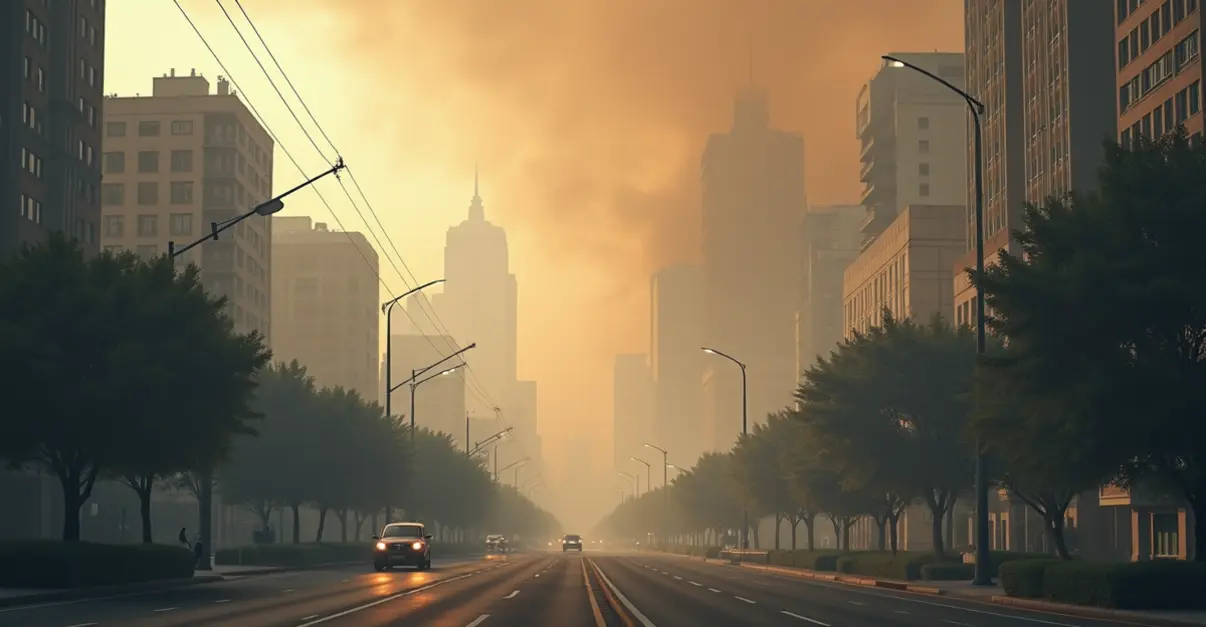
A severe air quality crisis has forced school closures in multiple cities across the United States, as dangerous pollution levels triggered widespread health advisories and emergency protective measures. The situation, which began earlier this week, has affected educational institutions from California to the Midwest, with authorities scrambling to implement emissions mitigation strategies while protecting vulnerable populations.
Unprecedented School Disruptions
In Los Angeles County alone, over 100 schools in the LA Unified School District were forced to close their doors as wildfire smoke from three fast-spreading fires created hazardous conditions. 'The PM2.5 levels we're seeing are absolutely alarming,' said Dr. Maria Rodriguez, a public health official with the California Department of Public Health. 'At 483.7 micrograms per cubic meter in Chinatown, we're dealing with levels more than 13 times the federal daily limit. This isn't just unhealthy air - this is an immediate health emergency.'
The closures come as part of a broader pattern affecting multiple states. According to recent reports, wildfire smoke from uncontrolled fires in California, Oregon, and British Columbia has triggered air quality alerts across numerous regions, with Air Quality Index readings exceeding 150 (Unhealthy for everyone) in many areas. States from the West Coast through the Midwest to the Eastern U.S. have been affected, including Washington, Idaho, Montana, Colorado, and major cities like Chicago, Detroit, and Cleveland.
Health Impacts and Protective Measures
The American Lung Association's State of the Air 2025 report highlights the ongoing challenges with air pollution, noting that despite progress since 1970, pollutants continue to harm public health. Fine particulate matter (PM2.5) and ground-level ozone remain key concerns, causing premature death, cardiovascular problems, and respiratory issues including asthma attacks.
'What we're seeing is a perfect storm of environmental factors,' explained environmental scientist Dr. James Chen. 'Climate change has intensified wildfire seasons, while urban emissions continue to contribute to baseline pollution levels. When these combine, we get the kind of crisis situations that force school closures and disrupt entire communities.'
Health advisories across affected regions urge people to stay indoors, use air purifiers, and wear N95 masks when outside. The Washington State Department of Health has released comprehensive wildfire smoke guidance for schools, including protocols for monitoring air quality, implementing protective measures, and establishing communication plans.
Long-term Solutions and Emissions Mitigation
Beyond immediate protective actions, authorities are emphasizing the need for long-term emissions mitigation strategies. The American Lung Association's January 2026 report, 'A Win-Win for Lung Health', provides ten research-based recommendations for improving indoor air quality in schools while increasing energy efficiency. These include requiring IAQ management plans and annual assessments, implementing ventilation standards and air filtration, testing for radon, prohibiting vehicle idling on school grounds, and establishing comprehensive health safety protocols.
'Clean indoor air is foundational for learning,' stated Sarah Johnson, Director of Environmental Health at the American Lung Association. 'We need to move beyond reactive measures like school closures and implement proactive systems that protect our children's health every day, not just during emergencies.'
The EPA continues to work with states to implement regulations through emissions standards for vehicles, power plants, and industrial facilities. However, as noted in their air pollution challenges report, many areas still exceed national air quality standards, requiring ongoing state implementation plans and technological improvements.
Community Response and Economic Impact
The school closures have created significant challenges for families and disrupted education across multiple districts. Businesses are also suffering economic impacts from canceled events and worker absences as parents stay home with children. Communities are responding with clean air shelters and distribution of protective equipment as they adapt to more intense environmental conditions.
'This isn't just an environmental issue - it's an economic and social crisis,' said Mayor Elena Martinez of a affected Midwestern city. 'When schools close, it affects working parents, local businesses, and most importantly, our children's education. We need comprehensive solutions that address both immediate protection and long-term prevention.'
As climate change continues to intensify wildfire seasons and urban pollution challenges persist, experts warn that such air quality emergencies may become more frequent. The current crisis serves as a stark reminder of the interconnected nature of environmental health, public safety, and educational continuity in an era of changing climate patterns.