


 Deutsch
 English
 Español
 Français
 Nederlands
 Português


 Share
Share




Revolutionary Traffic Management Strategy Shows Early Success
Major cities worldwide are implementing dynamic congestion pricing systems as a bold strategy to combat both traffic gridlock and air pollution. The approach, which charges drivers variable fees to enter high-traffic urban areas during peak hours, is demonstrating significant environmental and transportation benefits in early trials.
New York Leads the Way in U.S. Implementation
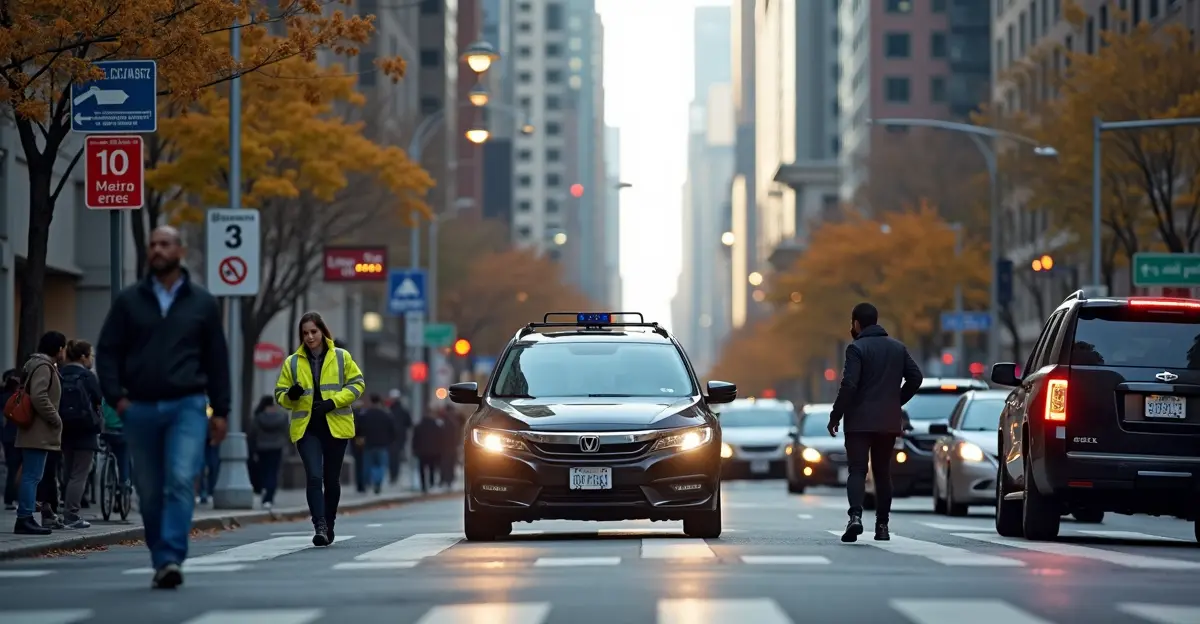
New York City became the first American city to implement congestion pricing in January 2025, charging drivers a base toll of $9 during peak hours to enter Manhattan below 60th Street. The results have been dramatic: 'Traffic is down. Congestion is down. And revenues are up,' declared Governor Kathy Hochul in a recent announcement. The program has reduced traffic by 11% in the congestion zone, with 67,000 fewer vehicles daily and over 10 million fewer vehicles compared to the previous year.
The environmental benefits are equally impressive. According to Forbes analysis, similar programs in Stockholm and London have shown measurable air quality improvements. Stockholm's 2007 program led to cleaner vehicles rising from 3% to 14% of the fleet, while London's extensive schemes reduced city center traffic by 18% on weekdays.
Equity Measures and Revenue Distribution
One of the most critical aspects of modern congestion pricing is ensuring equity in implementation. The revenue generated—New York's program is on track to generate $500 million in 2025—is being strategically reinvested in public transportation improvements. 'The program is funding $15 billion in transit improvements including updated subway signaling, new electric buses, and structural repairs,' explained an MTA spokesperson.
The Cornell Law Review analysis highlights that successful programs must address concerns about disproportionate impacts on lower-income commuters. Many cities are implementing targeted measures such as discounted transit passes, improved bus services in underserved neighborhoods, and direct subsidies for essential workers who must drive.
Commuter Behavior Transformation
The psychological impact of congestion pricing is driving significant behavioral changes. 'When people see the direct cost of driving during peak hours, they naturally seek alternatives,' noted transportation economist Dr. Maria Rodriguez. New York has seen subway ridership increase by 7%, bus ridership by 12%, and Access-A-Ride services by 21% since implementation.
According to New York Times data, traffic speeds have increased by 15% inside the congestion zone, with the greatest improvements during peak commute hours (over 20% faster during 3-7 PM). Local bus speeds improved by 3.2%, and express buses through the Lincoln Tunnel became 24% faster.
Environmental Monitoring and Health Benefits
The New York City Department of Health is conducting comprehensive air quality monitoring through the NYC Community Air Survey. 'We're tracking fine particles (PM2.5) because long-term exposure contributes to approximately 2,000 excess deaths annually in NYC from lung and heart disease,' stated a department representative.
The expanded monitoring effort will analyze air quality changes in the Central Business District and six highway corridors that have historically faced high pollution levels. Initial findings from the two-year evaluation are expected in early 2026.
Global Context and Future Outlook
Singapore pioneered congestion pricing in 1975, followed by successful implementations in London, Stockholm, Milan, and Gothenburg. The economic theory behind congestion pricing, first proposed by economist William Vickrey in 1952, has gained renewed relevance as cities grapple with climate change and urban density challenges.
Despite political challenges—including the Trump administration's attempt to terminate New York's program—the evidence suggests congestion pricing represents a sustainable solution to urban transportation problems. As cities continue to grow and climate concerns intensify, dynamic congestion pricing may become a standard tool in the urban planner's toolkit worldwide.



Follow Discussion