


 Deutsch
 English
 Español
 Français
 Nederlands
 Português


 Share
Share




Historic Sustainable Aviation Fuel Agreement Paves Way for Cleaner Skies
In a landmark move that could reshape the future of air travel, Future Energy Global (FEG) and Montana Renewables, LLC (MRL) have signed a multi-year offtake agreement covering 15 million gallons of Sustainable Aviation Fuel (SAF) environmental attributes. Announced on May 6, 2025, this partnership represents one of the most significant SAF procurement deals of the year and signals a major acceleration in aviation's decarbonization efforts.
Breaking Down the Book and Claim Revolution
The agreement's innovative structure uses a Book and Claim system that separates environmental benefits from physical fuel delivery. This allows airlines and corporate customers worldwide to reduce CO2 emissions even when physical SAF isn't available at their airports. 'This partnership unlocks global demand for SAF by making environmental attributes accessible anywhere in the world,' said a Future Energy Global spokesperson. 'We're creating a market mechanism that accelerates emissions reduction without requiring massive infrastructure changes at every airport.'
Montana Renewables, the largest western SAF producer in 2024, will supply the environmental attributes, with deliveries scheduled to begin later in 2025. The agreement covers both Scope 1 (direct emissions from fuel combustion) and Scope 3 (indirect emissions from business travel) attributes, providing comprehensive carbon reduction solutions for the aviation industry.
Policy Landscape Driving Market Transformation
This deal arrives amid a rapidly evolving regulatory environment. The European Union's ReFuelEU Aviation initiative mandates 2% SAF blends in 2025, increasing to 6% by 2030 and 70% by 2050. Meanwhile, the U.S. SAF Grand Challenge aims to produce 3 billion gallons of SAF annually by 2030. According to the U.S. Chamber of Commerce's 2025 SAF whitepaper, such policy frameworks are critical for creating market certainty and driving investment in SAF production.
'Regulatory mandates are creating the floor, but innovative agreements like this are building the ceiling,' noted aviation sustainability expert Dr. Elena Rodriguez. 'The Book and Claim model addresses one of SAF's biggest challenges: distribution. Not every airport can handle SAF logistics, but every airline needs to reduce emissions.'
Market Implications and Economic Realities
The SAF market is experiencing explosive growth, with airlines having entered forward purchase agreements worth $45 billion by November 2023. United Airlines alone holds over a quarter of the total volume. However, challenges remain significant. A 2026 SAF market outlook reveals that feedstock availability represents the most significant constraint, with intensifying competition for low-carbon feedstocks limiting scalability.
Currently, 85% of contracted SAF volume uses HEFA (Hydroprocessed Esters and Fatty Acids) production methods, which have limited scalability due to feedstock constraints. SAF pricing remains well above conventional jet fuel, with economics heavily dependent on incentives and corporate willingness to pay premiums for sustainability.
Community and Environmental Impact
Beyond corporate boardrooms, SAF development creates ripple effects across communities. The growing demand for SAF is creating premium markets for waste materials like used cooking oil from restaurants. As industry reports show, this creates new revenue streams for food service businesses while diverting waste from landfills.
Environmental benefits are substantial too. According to Wikipedia's aviation biofuel data, SAF can lower CO2 emissions by 20–98% compared to conventional jet fuel, depending on the feedstock and production method. The International Air Transport Association (IATA) projects global SAF demand to double from 300 to 600 million liters in 2025.
The Road to Net-Zero Aviation
This agreement supports the aviation industry's goal of achieving net-zero CO2 emissions by 2050. The ICAO SAF Offtake Agreements dashboard tracks such developments as part of broader clean energy initiatives. '2026 will serve as a proving ground for whether the market's foundations are strong enough to support future scale,' predicts market analyst James Chen. 'Agreements like FEG-Montana demonstrate that innovative business models can overcome infrastructure limitations.'
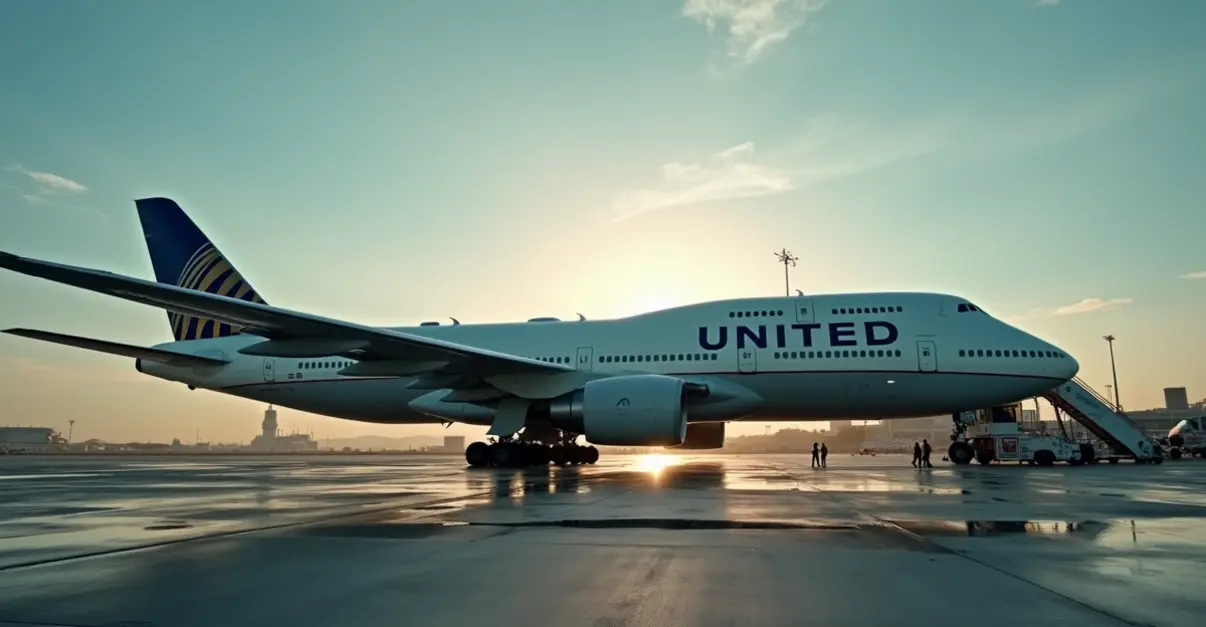
As airlines like KLM, Delta, United, and Lufthansa increasingly blend SAF on scheduled routes, and corporate programs drive demand through initiatives like Airbus purchasing SAF bundles for employee travel, the aviation industry appears poised for a green transformation. The FEG-Montana agreement represents not just a business deal, but a blueprint for how market mechanisms can accelerate environmental progress in one of the hardest-to-abate sectors of the global economy.


Follow Discussion