Deutsch
 English
 Español
 Français
 Nederlands
 Português






Sustainable Aviation Fuel Offtakings Announced by Airlines
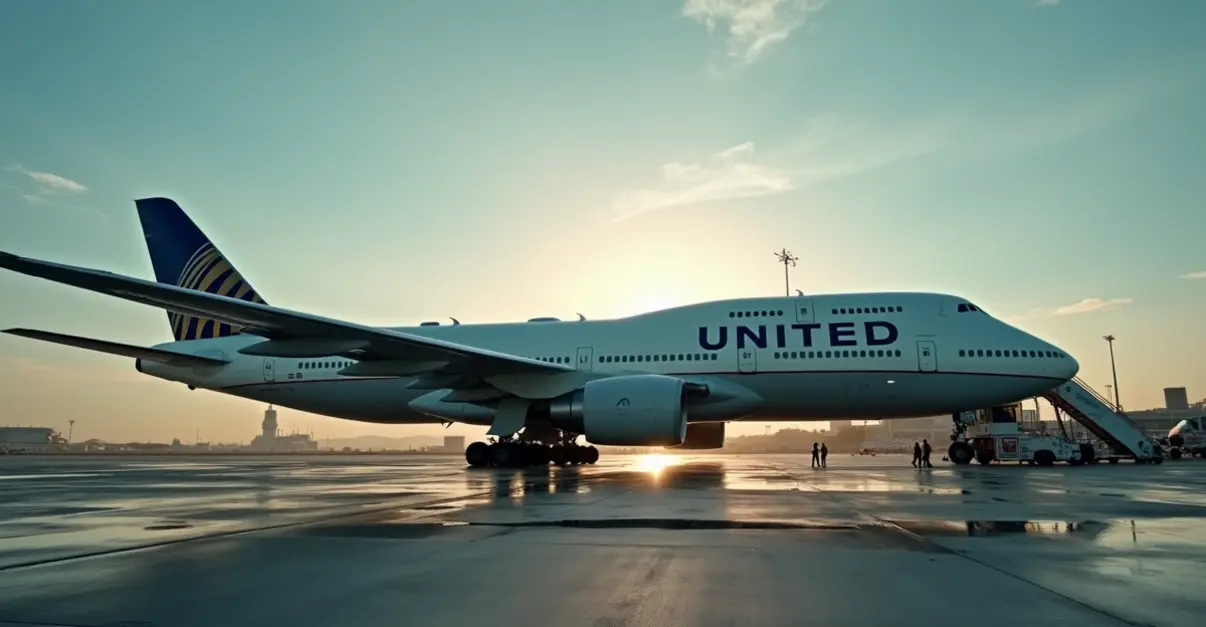
In a significant move toward decarbonizing air travel, major airlines have announced substantial offtake agreements for Sustainable Aviation Fuel (SAF) in 2025, while new analyses reveal critical insights into feedstock sourcing costs and lifecycle emissions. The aviation industry's push toward net-zero emissions by 2050 has accelerated, with carriers like Delta, United, KLM, and Lufthansa securing forward purchase agreements worth billions of dollars.
Feedstock Sourcing and Cost Structure Analysis
Recent studies show that feedstock availability is not the primary barrier to scaling SAF production, contrary to common perception. According to an IATA study conducted with Worley Consulting, sufficient sustainable feedstocks exist to produce the required 500 million tonnes of SAF annually needed for aviation's decarbonization goals. Biomass sources could generate over 300 million tonnes, with power-to-liquid (PtL) technology needed for the remaining 200 million tonnes.
The real bottleneck lies in production technology rollout, particularly PtL systems that require access to low-cost renewable electricity, hydrogen, and carbon capture infrastructure. 'The main challenge isn't finding enough sustainable feedstocks—it's building the production facilities fast enough,' explains aviation analyst Maria Chen. 'Current commercial SAF production relies heavily on HEFA technology using used cooking oil, but we need diverse pathways to reach scale.'
Cost analysis reveals significant variations in production economics. Research published in ScienceDirect shows first-generation SAF from A-molasses was most cost-effective at $1.87-2.05 per liter, comparable to international SAF prices. Second-generation SAF via Fischer-Tropsch processing could be cost-competitive ($2.00-2.25/L) using novel supply-chain configurations with small-scale gasification plants linked to central refineries.
Major Airline Offtake Agreements
The SAF offtake market has experienced explosive growth, with airlines entering forward purchase agreements worth approximately $45 billion globally. United Airlines holds over a quarter of total contracted volume, according to CleanBridge analysis.
Key agreements include Delta's 200 million gallon deal with Cosmo Oil, United's 260 million gallon agreement with Twelve, and KLM's 75 million gallon contract with SkyNRG. 'These offtake agreements provide the demand certainty that fuel producers need to justify billion-dollar investments in new facilities,' says sustainability director James Wilson. 'Without these long-term commitments, the capital simply wouldn't flow into SAF production.'
At least a dozen major carriers now blend SAF on scheduled routes, with KLM operating regular Amsterdam to Los Angeles flights with a 30% SAF blend. United blends SAF at Los Angeles and San Francisco airports, while Delta secured its first Asia Pacific SAF delivery in March 2025. Lufthansa powers all domestic Airbus staff trips with SAF, demonstrating corporate commitment to the transition.
Lifecycle Emissions Analysis
Lifecycle emissions analysis reveals SAF's substantial environmental benefits. Biofuels derived from sustainable feedstocks can lower CO2 emissions by 20–98% compared to conventional jet fuel, depending on the feedstock and production pathway. The SABA SAF Sustainability Framework establishes rigorous environmental criteria for SAF procurement, addressing greenhouse gas emissions reductions, feedstock sustainability, and land use impacts.
However, not all SAF pathways are created equal. 'We must be careful about indirect land use change and ensure feedstocks don't compete with food production,' warns environmental scientist Dr. Elena Rodriguez. 'Advanced pathways using waste materials and power-to-liquid technologies offer the greatest emissions reductions without these trade-offs.'
Regulatory mandates are driving adoption. The EU's ReFuelEU Aviation initiative requires 2% SAF blends in 2025, increasing to 6% by 2030 and 70% by 2050. Similar programs in the US and Canada create consistent demand signals across major aviation markets.
Market Challenges and Future Outlook
Despite progress, significant challenges remain. Approximately 85% of contracted SAF volume uses HEFA production methods, which have limited scalability due to feedstock constraints. Production costs remain high compared to conventional jet fuel, though policy incentives like tax credits help bridge the gap.
The market also lacks harmonized global standards and sufficient market depth, with most contracts based on one-on-one negotiations rather than a liquid spot market. 'We're building this market from scratch,' notes fuel procurement specialist Thomas Reed. 'It will take years to develop the infrastructure, standards, and trading mechanisms that conventional fuels enjoy.'
Looking ahead, the industry must accelerate technology deployment, particularly for PtL pathways that offer the greatest scalability. Enhanced supply chain infrastructure and coordinated investment from governments, energy producers, and the aviation sector will be crucial. As airlines continue to announce offtake agreements and refine their sustainability strategies, 2025 marks a pivotal year in aviation's journey toward decarbonization.