


 Deutsch
 English
 Español
 Français
 Nederlands
 Português


 Share
Share




Offshore Wind Development at a Crossroads
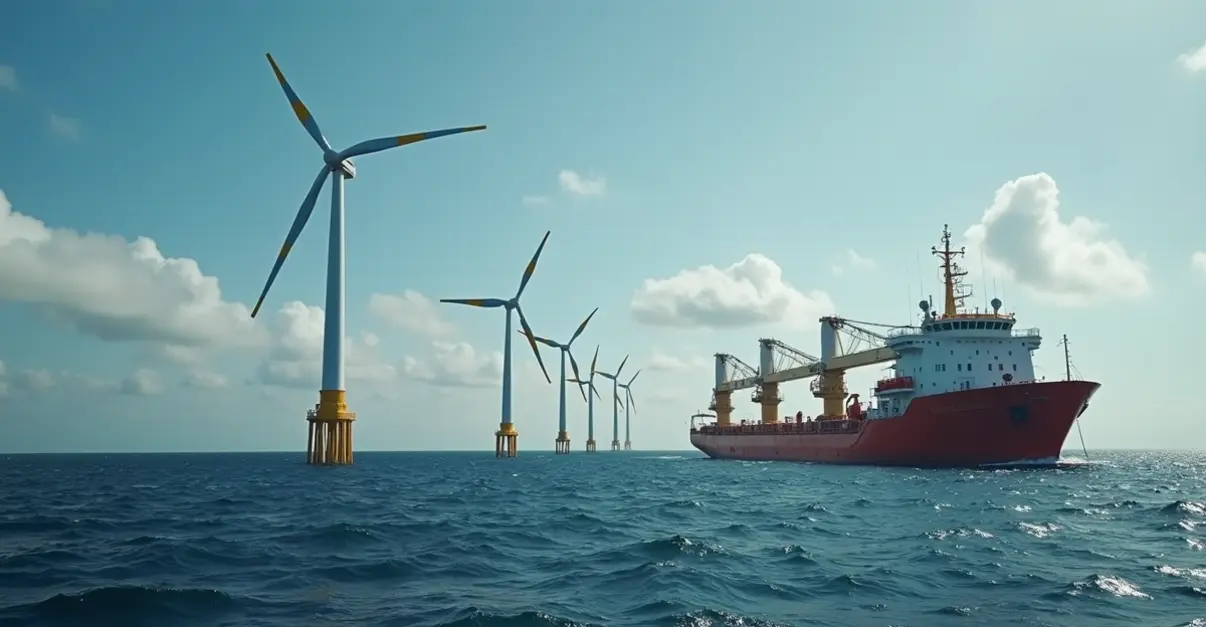
The offshore wind industry is navigating a complex landscape of regulatory approvals, supply chain investments, and environmental reviews as governments worldwide push for clean energy expansion. With ambitious targets like the U.S. goal of 30 gigawatts by 2030 and European nations seeking energy independence, the sector faces both unprecedented opportunities and significant challenges.
Permitting Battles and Legal Challenges
In the United States, offshore wind development has become entangled in political and legal battles. In January 2025, President Trump issued a memorandum withdrawing offshore wind leasing areas and pausing approvals, which was later vacated by a federal court in December 2025 for violating the Administrative Procedure Act. However, the administration then paused leases for five major East Coast projects, creating uncertainty for developers and investors.
'Multiple lawsuits have been filed challenging these stop-work orders, with project developers alleging arbitrary and capricious actions,' according to the Harvard Environmental and Energy Law Program tracker. Major projects like Coastal Virginia, Empire Wind, Vineyard Wind, Sunrise Wind, and Revolution Wind are caught in this regulatory crossfire, with courts granting preliminary injunctions against enforcement of stop-work orders in several cases.
Supply Chain Investments and Job Creation
Despite regulatory hurdles, the offshore wind sector is driving significant economic development. A January 2025 report from the Oceantic Network titled 'Offshore Energy at Work' documents a $25 billion wave of supply chain investments that has fueled growth in shipbuilding and steel production across 40 states. The report highlights nearly 2,000 supplier contracts spanning a national supply chain.
'The industry has created thousands of skilled jobs, with examples like Gulf shipbuilder Edison Chouest employing 600 Americans to build innovative vessels,' the report notes. Other success stories include Nexans increasing its workforce by over 200% due to offshore wind contracts, and steel fabricator LJUNGSTRÖM growing its payroll by 87% after a $15 million facility investment.
In the United Kingdom, the Great British Energy Supply Chain Fund for Offshore Wind and Networks launched in December 2025, offering up to £300 million in capital grants to build UK manufacturing capacity for critical components. The fund aims to mobilize over £1 billion in investment while creating thousands of jobs.
Environmental Reviews and Marine Impacts
Environmental assessments remain a critical component of offshore wind development. NOAA Fisheries plays a key role in assessing impacts on marine life, providing Biological Opinions under the Endangered Species Act and reviewing applications under the Marine Mammal Protection Act.
A comprehensive review in Nature Reviews Biodiversity examines the complex effects of offshore wind farms on marine ecosystems. 'OWFs present both risks and benefits: they can cause noise pollution, habitat alteration, and physical barriers affecting fish, invertebrates, seabirds, and marine mammals, while simultaneously acting as artificial reefs that enhance local biodiversity,' the study notes.
Researchers emphasize the need for coordinated international approaches and emerging technologies like DNA-based monitoring to better understand these impacts. A study on decommissioning scenarios for the Horns Rev 1 wind farm in the North Sea found that partial removal strategies yield the lowest environmental impacts due to recycling benefits, though public preferences strongly favor full removal.
Grid Integration Challenges
Beyond permitting and environmental reviews, grid integration presents another major hurdle. Offshore wind projects require substantial transmission infrastructure to deliver power to population centers. The intermittent nature of wind energy also necessitates grid upgrades and energy storage solutions.
Europe is pursuing offshore wind energy agreements as a strategic hedge against reliance on US natural gas imports, representing a significant energy policy shift aimed at enhancing European energy security. This development aligns with broader European Union efforts to diversify energy sources and accelerate the transition to renewable energy.
Future Outlook
The offshore wind industry stands at a pivotal moment. With global installed capacity reaching 64.3 gigawatts as of 2022 and continued growth projected, the sector must navigate complex regulatory environments while addressing environmental concerns and building robust supply chains.
As the world seeks to meet climate goals and enhance energy security, offshore wind will play an increasingly important role. However, success will depend on balanced approaches that consider economic development, environmental protection, and community interests. The coming years will test whether governments, industry, and environmental stakeholders can collaborate effectively to harness this promising renewable energy source.
Follow Discussion