
 Deutsch
 English
 Español
 Français
 Nederlands
 Português







The AI-Driven Trade Revolution: How Semiconductor and Data Center Exports Are Reshaping Global Economic Architecture in 2026
In a seismic shift reshaping global commerce, AI-related trade—specifically semiconductors and data-center equipment—has emerged as the primary engine of global trade growth, accounting for one-third of total expansion while traditional trade patterns fragment. According to McKinsey's 2026 update, this structural transformation represents the most significant realignment of global economic architecture since the dawn of globalization, with AI hardware becoming the new 'oil' of the digital economy. The US-China decoupling in this critical sector has accelerated regional realignments, creating new economic dependencies and forcing nations to reconsider industrial policies amid geopolitical tensions and tariff policies.
What is the AI Trade Revolution?
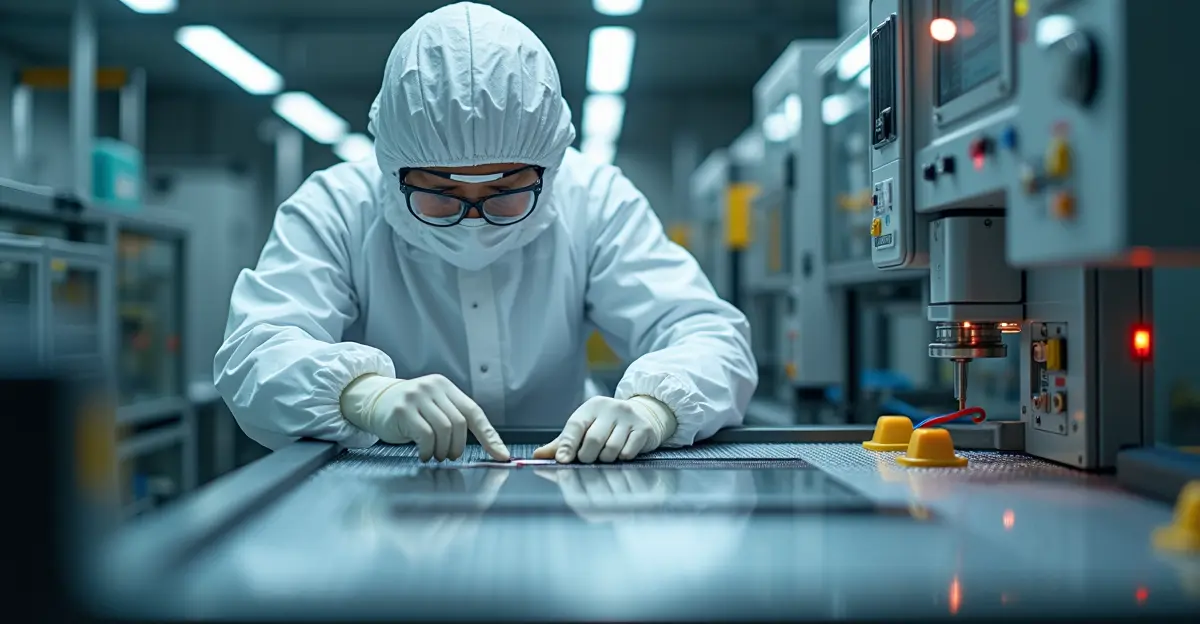
The AI trade revolution refers to the dramatic surge in global commerce of artificial intelligence infrastructure components, primarily semiconductors and data-center equipment. Unlike traditional trade patterns focused on consumer goods or commodities, this new trade architecture centers on the hardware enabling AI computation. According to Federal Reserve research, AI-related trade drove nearly half of merchandise trade growth in the first half of 2025, despite representing only about 15% of total trade. This disproportionate impact stems from the semiconductor industry's exponential growth, projected to reach $975 billion in annual sales in 2026 with 26% growth fueled by AI infrastructure.
The Strategic Implications of AI Hardware Dominance
US-China Decoupling Creates Bifurcated Ecosystems
The US-China chip war has evolved into a structural realignment of the $600 billion global semiconductor market by 2026. While the US initially restricted advanced chip exports to China, a January 2026 policy reversal allowed NVIDIA to sell H200 AI processors to Chinese customers with strict conditions, including a 25% tariff that makes sales economically challenging. China has made significant domestic progress despite restrictions: SMIC has achieved 5nm-class manufacturing capabilities without EUV lithography, Huawei's Ascend AI chips are gaining traction as NVIDIA alternatives, and China has implemented a "50% Mandate" requiring domestic fabs to source half their equipment locally. This conflict has created a bifurcated global chip ecosystem where both sides are building independent supply chains and incompatible AI infrastructure.
Southeast Asia's Emerging Manufacturing Hub
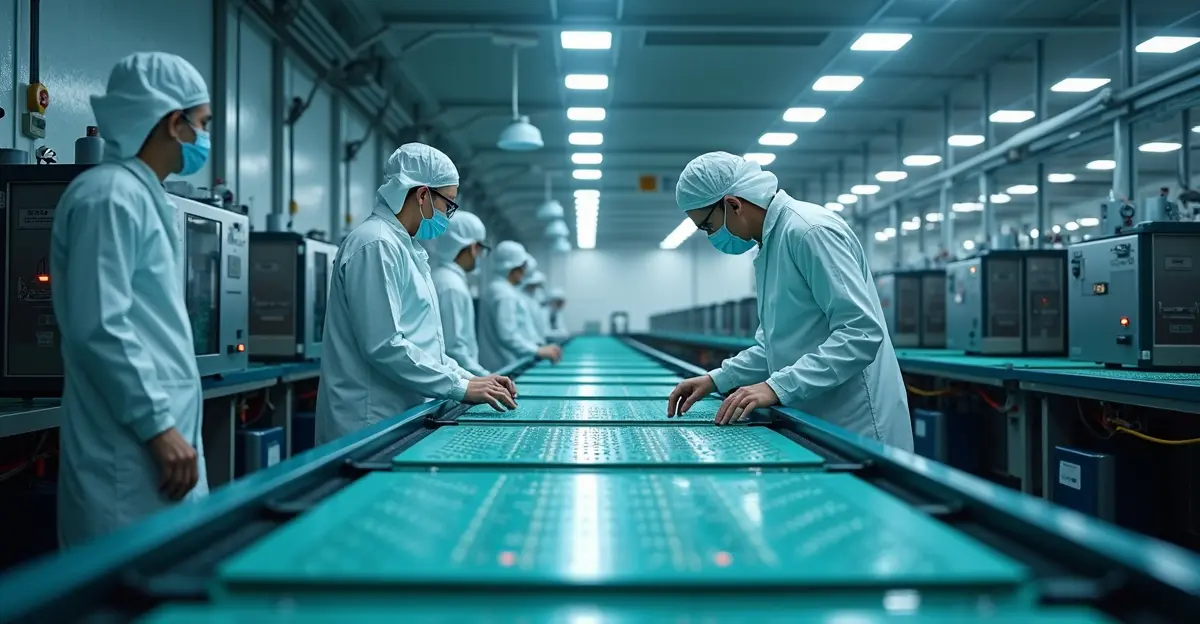
Southeast Asia has deepened its manufacturing role in the AI hardware supply chain, becoming a critical node in the global trade realignment. As US-China trade fell by 30% due to tariffs, the US replaced about two-thirds of Chinese imports with other sources, with Southeast Asian nations capturing significant market share. The region's strategic positioning between major markets, combined with established electronics manufacturing ecosystems, has made it an attractive alternative for companies diversifying supply chains away from China. This shift represents a fundamental reconfiguration of global manufacturing geography, with implications for economic development across the ASEAN region.
Europe's Struggle for Technological Sovereignty
Europe is undergoing a strategic transformation in AI chip manufacturing to achieve semiconductor sovereignty. Led by Germany's €30 billion Intel mega-fab in Magdeburg and supported by the European Chips Act's €43 billion investment, the EU aims to double its semiconductor market share to 20% by 2030. Key players include Germany's Infineon Technologies, Franco-Italian STMicroelectronics, and the Netherlands' ASML, which produces essential EUV lithography machines for cutting-edge chips. While the UK focuses on design with ARM and Graphcore, Europe leverages its engineering excellence and policy-driven innovation to address past underinvestment and geopolitical dependencies.
Geopolitical Consequences and Economic Dependencies
The transformation of AI hardware into the digital economy's equivalent of oil has profound geopolitical implications. Nations controlling semiconductor manufacturing capabilities—particularly Taiwan, South Korea, the Netherlands, and increasingly the United States—wield unprecedented economic power. The concentration of advanced chip production in a few geographic locations creates strategic vulnerabilities, as evidenced by recent supply chain disruptions. According to McKinsey's analysis, US tariff rates reached their highest level since WWII, with China facing average effective tariffs of 31%, accelerating the fragmentation of global trade into competing spheres of influence.
Expert Perspectives on the Structural Shift
Industry analysts note that decisions made today will define competitive positions through 2035. "We're witnessing the most significant realignment of global economic architecture since the containerization revolution of the 1960s," says Amelia Johansson, author of the McKinsey analysis. "AI hardware has become the critical input for economic competitiveness, creating dependencies that rival those of traditional energy markets." The Federal Reserve research emphasizes that the boom in AI-related computing capacity is expected to accelerate further through 2030, with the U.S. maintaining a leading position while other economies in Asia and the Middle East also plan notable expansions.
Future Outlook and Policy Implications
The structural shifts in AI trade, emerging market growth, and China's manufacturing focus are expected to persist despite ongoing geopolitical uncertainties. Governments worldwide are implementing industrial policies to secure their positions in the AI hardware value chain, from the EU's Chips Act to national semiconductor initiatives across Asia and the Americas. The concentration risks are significant, with the top three chip companies accounting for 80% of the $9.5 trillion market capitalization, creating both economic opportunities and systemic vulnerabilities that policymakers must address.
Frequently Asked Questions
What percentage of global trade growth comes from AI-related exports?
AI-related trade accounts for one-third of global trade growth, with semiconductors and data-center equipment driving this expansion despite representing only about 15% of total trade volume.
How has US-China trade in semiconductors changed?
US-China trade in semiconductors fell by 30% due to tariffs, leading to significant realignment. The US replaced about two-thirds of Chinese imports with other sources, while Chinese exporters cut prices by 8% to find new markets.
What is Europe's strategy for semiconductor sovereignty?
Europe aims to double its semiconductor market share to 20% by 2030 through the European Chips Act's €43 billion investment, major manufacturing projects like Germany's Intel mega-fab, and leveraging existing strengths in semiconductor equipment manufacturing.
Why is AI hardware compared to oil?
AI hardware has become the critical input for economic competitiveness in the digital age, creating strategic dependencies and geopolitical leverage similar to traditional energy markets, with control over production conferring significant economic power.
What role does Southeast Asia play in the AI supply chain?
Southeast Asia has emerged as a critical manufacturing hub in the AI hardware supply chain, capturing market share as companies diversify away from China and benefiting from strategic positioning between major markets.
Sources
McKinsey Global Institute: Geopolitics and the Geometry of Global Trade 2026 Update
Federal Reserve: The Global Trade Effects of the AI Infrastructure Boom
Deloitte: 2026 Global Semiconductor Industry Outlook
TechTimes: Europe's Quiet Revolution in AI Chip Manufacturing




Follow Discussion