Nederlands
 English
 Deutsch
 Français
 Español
 Português






Public Transport Ridership Rebounds in Capitals
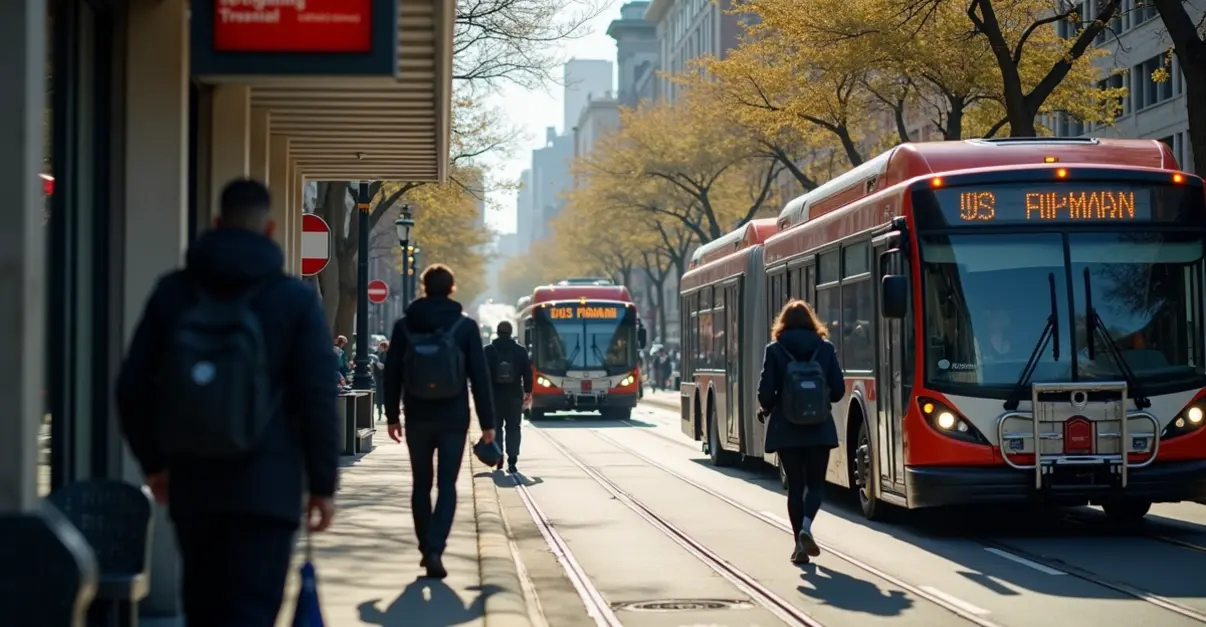
Public transportation systems in major capital cities worldwide are experiencing a significant rebound in ridership, with recovery rates reaching 85% of pre-pandemic levels in many regions. According to recent reports from the American Public Transportation Association (APTA), U.S. public transit agencies delivered 7.7 billion passenger trips in 2024—an increase of 491 million from the previous year. This recovery significantly outpaces office occupancy rates, which stand at just 52-54% in many cities.
Route Optimization Driving Recovery
Transit agencies are leveraging advanced route optimization strategies to adapt to new travel patterns. 'We're seeing agencies move away from simply trying to return to pre-pandemic operations and instead optimizing their networks for how people actually travel today,' says transportation analyst Maria Chen. 'This means more frequent service on high-demand corridors, better integration with other mobility options, and data-driven adjustments to schedules.'
European capitals are leading this transformation, with cities like Berlin, Paris, and Amsterdam implementing dynamic routing systems that respond to real-time demand. The Eurocities 2025 Monitor reveals that 60% of European cities are prioritizing network expansion, while 48% focus on improving affordability and multimodal connections.
Revenue Recovery Profiles
Financial sustainability remains a critical challenge, with 57% of European cities reporting insufficient funding for expansion and maintenance. However, innovative revenue models are emerging. 'Transit agencies are exploring new revenue streams beyond traditional fare collection,' explains Paul P. Skoutelas, President of APTA. 'This includes mobility-as-a-service partnerships, data monetization, and real estate development around transit hubs.'
According to a Kearney analysis, public transportation delivers $5 in economic output for every $1 invested, highlighting its broader economic value. Smaller cities with populations under 100,000 are achieving the highest recovery rates at 88%, suggesting that nimble operational adjustments can yield significant benefits.
Operational Capacity Challenges
Despite the positive trends, transit systems face substantial operational hurdles. Workforce shortages affect 35% of European cities, while aging infrastructure remains a barrier for 22%. Safety concerns are also rising, with increasing assaults on operators prompting agencies to implement de-escalation training and enhanced security measures.
'The workforce challenge is real—we need to attract and retain drivers, mechanics, and technical staff in a competitive labor market,' notes transport commissioner David Müller. 'This requires better working conditions, competitive compensation, and investment in training programs.'
Regional Variations in Recovery
Recovery patterns vary significantly by region. Bloomberg analysis indicates that Asian and European capitals are leading the global rebound, while North American cities show more mixed results. Bus ridership has recovered more strongly than rail, reaching 86% of 2019 levels in the U.S., compared to 72% for rail modes.
Demand-response services show the highest recovery rate at 93%, indicating that flexible, on-demand options are meeting evolving passenger needs. 'Public transportation now serves diverse purposes beyond traditional commuting,' Skoutelas emphasizes. 'People are using transit for travel to work, school, healthcare, and community events—the system has fundamentally evolved.'
Future Outlook
Looking ahead, transit agencies must balance multiple priorities: expanding service to meet growing demand, implementing sustainable technologies like electric buses, and maintaining financial viability. The integration of artificial intelligence for predictive maintenance and optimized scheduling represents a major opportunity, though funding uncertainties persist.
'The recovery we're seeing isn't just about numbers—it's about reimagining what public transportation can be,' concludes Chen. 'Cities that invest in smart, adaptable systems will be better positioned to serve their communities and meet climate goals.' With proper support and innovation, public transport in capitals worldwide appears poised for a resilient future.