


 Deutsch
 English
 Español
 Français
 Nederlands
 Português


 Share
Share




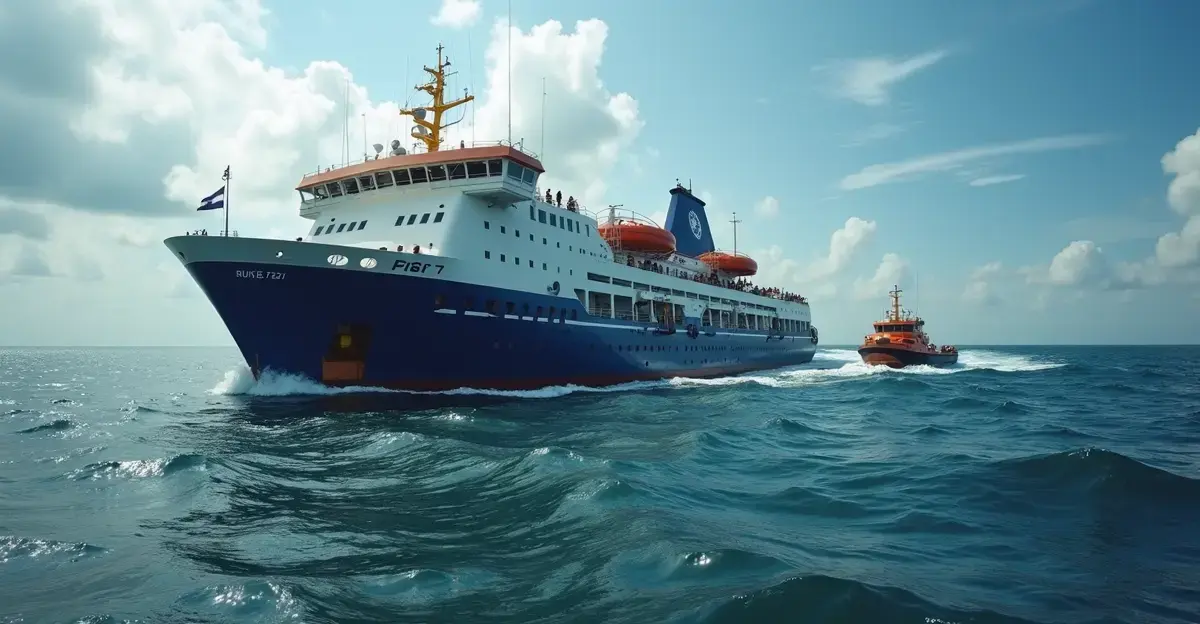
Indonesian search and rescue teams are racing against time to locate 129 missing passengers after the ferry Virgo Transport 8 sank in the Java Sea early Sunday, 13 September 2026. The Indonesia ferry sinking has so far left six people dead and 108 rescued, according to Basarnas, the national search and rescue agency. The vessel was travelling from Surabaya on Java to Banjarmasin on Borneo when it capsized in rough weather, prompting one of the largest maritime rescue operations in the region this year.
What happened to the Virgo Transport 8?
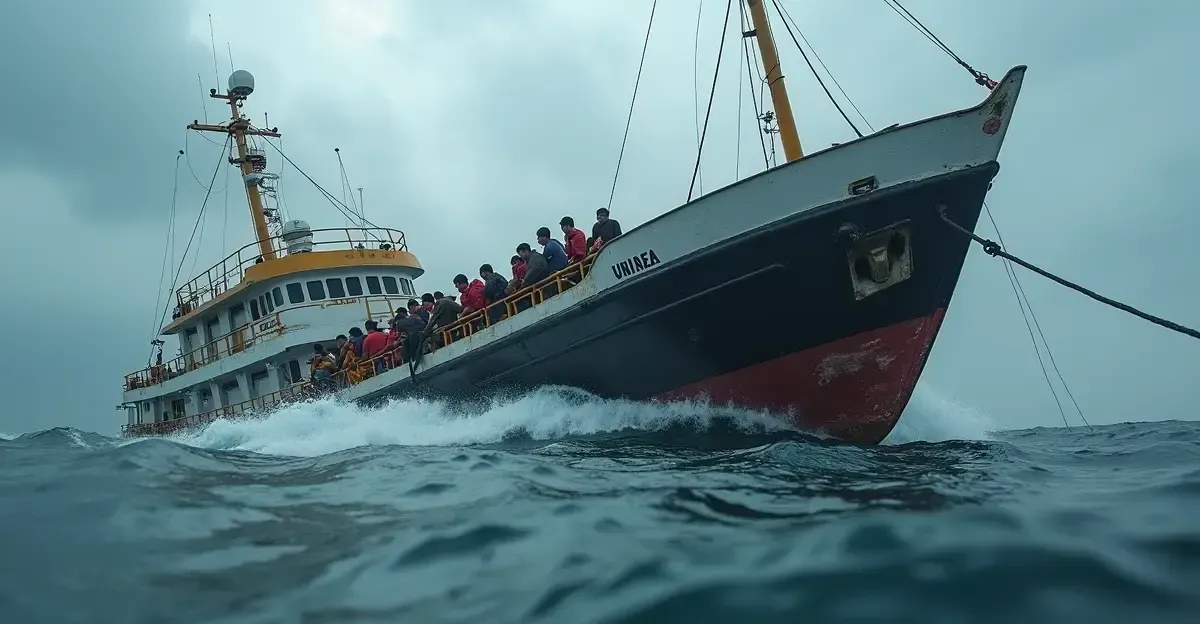
The Virgo Transport 8 departed Surabaya, East Java, at around 10:13 AM local time on Saturday 12 September with 243 people on board — 213 passengers and 30 crew — plus 89 vehicles. Around 2:00 AM on Sunday, the captain reported that the ship was listing after encountering heavy seas, and that was the last communication before contact was lost. “The ship had capsized but not sunk,” Indonesian Transport Minister Dudy Purwagandhi told reporters. The ferry, built in Japan in 1987 and previously known as Ferry Kurushima, was located about 150 kilometres from the Borneo coast in waters with waves of up to 2.5 to 3 metres. The vessel is 119 metres long with a gross tonnage of 4,277 and was purchased by PT Virgo Karya Shipping in 2025.
Search and rescue operation
Basarnas deployed the rescue vessel KN SAR Laksmana 241 and a helicopter to the last known position. Three nearby commercial vessels assisted: MV Haida rescued 49 survivors, TB Mauhaw IX pulled 15 survivors and one body from the water, and TB TCP recovered 38 people including five fatalities. “Our priority is the safety of everyone on board,” a Basarnas official said. Rescuers continue to battle challenging conditions, with poor visibility and high waves hampering the operation. The Java Sea ferry disaster has mobilised multiple agencies and volunteers along the Kalimantan coast.
Key rescue assets deployed
- KN SAR Laksmana 241 — Basarnas rescue vessel
- Basarnas helicopter — aerial search support
- MV Haida — rescued 49 survivors
- TB Mauhaw IX — rescued 15 survivors, recovered one body
- TB TCP — recovered 38 people, including five fatalities
Why do ferry accidents keep happening in Indonesia?
Indonesia relies heavily on ferries to connect its more than 17,000 islands, but safety standards are often poorly enforced. The Indonesian maritime safety record has come under scrutiny after several incidents in recent months. Many vessels operate with outdated equipment, overloaded manifests, and limited weather monitoring. This sinking is Indonesia’s fourth major ferry emergency since July 2026, according to local reports, raising fresh questions about manifest accuracy and vessel seaworthiness. Investigators are examining natural, technical, human and cargo factors in the Virgo Transport 8 case.
Impact and next steps
Relatives have gathered at a command post in Banjarmasin awaiting news. The death toll may rise as search teams extend their sweep. The incident underscores the vulnerability of regional ferry networks to extreme weather and the need for stronger enforcement of ferry safety regulations. Basarnas said search operations would continue through Sunday night and into Monday, with additional assets being readied. The cause remains unconfirmed, with an investigation weighing weather conditions and possible technical failure.
FAQ
How many people are missing after the Indonesia ferry sinking?
As of Sunday 13 September 2026, 129 people remain missing, with 108 rescued and six confirmed dead.
What was the Virgo Transport 8 route?
The ferry was sailing from Surabaya, East Java, to Banjarmasin, South Kalimantan, a journey of about 500 kilometres across the Java Sea.
Why did the ferry capsize?
The captain reported the ship was listing after encountering rough seas with waves up to 3 metres. The exact cause is under investigation.
How many people were on board?
There were 243 people on board: 213 passengers and 30 crew, along with 89 vehicles.
Who is leading the rescue operation?
Indonesia’s national search and rescue agency, Basarnas, is leading the operation with ships and a helicopter.

Follow Discussion