


 Deutsch
 English
 Español
 Français
 Nederlands
 Português


 Share
Share




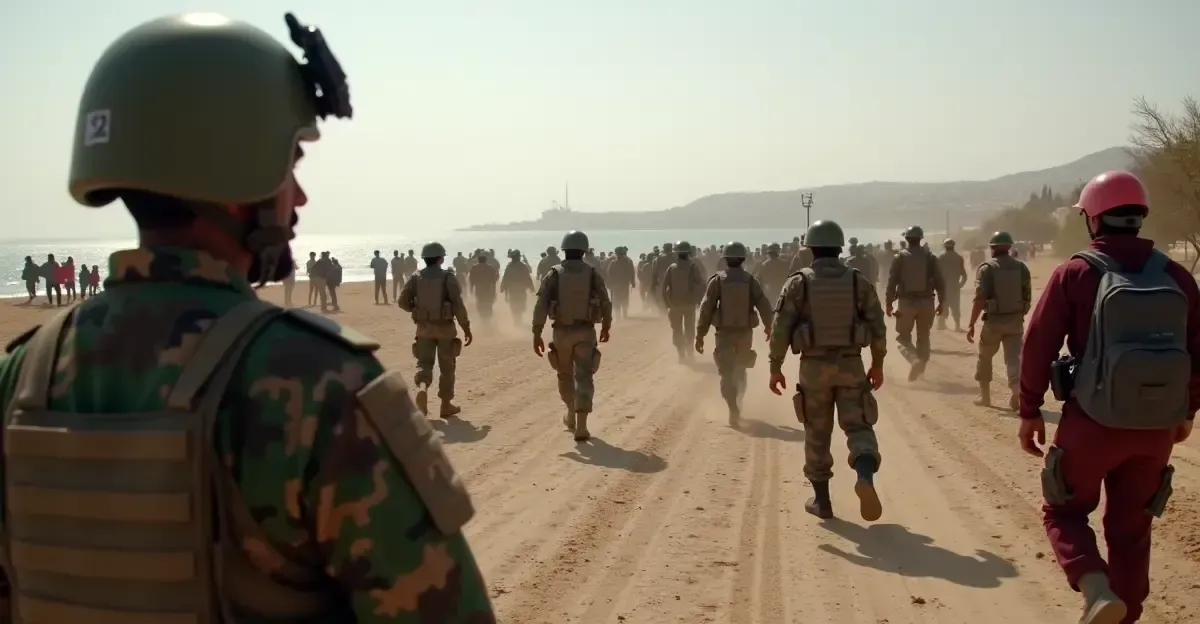
Spanish authorities are on high alert after intelligence reports and social media monitoring revealed a credible plan for another mass migration attempt into the North African enclave of Ceuta, tentatively scheduled for August 15, 2026. The Guardia Civil, Spain’s national police, and the CNI intelligence service have all deemed the threat authentic, just days after an unprecedented influx of over 70,000 people overwhelmed the territory in late July. With messages circulating on WhatsApp, Facebook, Instagram, and TikTok calling for a gathering in the Moroccan border town of Fnideq, security forces are bracing for a potential repeat — or escalation — of the crisis.
Background: The July 2026 Ceuta Crisis
On 30 July 2026, an estimated 80,000 people, predominantly young men, crossed illegally from Morocco into Ceuta, one of two Spanish autonomous cities on the African continent alongside Melilla border security. Most entered by swimming around breakwaters or wading along the shoreline, overwhelming reception facilities and prompting Ceuta's regional president to request a national emergency. The surge was fuelled by a coordinated social media campaign that distorted a recent Spanish Supreme Court ruling on migrant returns, falsely suggesting that anyone reaching Spanish soil would be guaranteed asylum. Within days, roughly 70,000 individuals had voluntarily returned to Morocco, but at least 111 deaths were recorded — 100 in Ceuta and 11 in Fnideq — making it one of the deadliest border incidents in recent European history.
Social Media Campaign Fuels New Threats
According to Spanish radio network Cadena SER, the latest online calls are being treated with "full credibility" by the intelligence services. Fact-checking organisation Maldita.es has identified posts containing remarkably specific details — routes, preparation checklists, and instructions on what to bring or avoid. One Facebook group with over 108,000 members remains active, openly promoting the August 15 date. A separate intelligence report by Alicante-based firm Golden Owl traced the earlier campaign, dubbed "Asalto Karyaj a Ceuta," to a decentralised network of nearly half a million anonymous accounts. The report warned that the same infrastructure could be redeployed, and noted escalating posts that tagged neighbourhoods in northern Ceuta with threats of "revenge."
The EU migration pact 2026 is being tested as member states grapple with the implications of weaponised social media in mass migration events. Meta, the parent company of Facebook and Instagram, stated it is removing content that facilitates human smuggling, but the sheer volume and distributed nature of the campaign make enforcement difficult.
Why August 15? Strategic Timing and Concerns
The choice of date is widely believed to exploit the Spanish national holiday of Maria-Tenhemelopneming (Assumption of Mary), when many government offices are closed and staffing levels at border checkpoints could be reduced. However, authorities have emphasised that additional security measures will be in place precisely because of the holiday. Some messages even urge participants to move earlier, acknowledging that the date has become public knowledge. A source within the Guardia Civil told news site 20 Minutos that the intelligence is "much more than a rumour."
Morocco has also stepped up its side of the border. The country's interior ministry acknowledged that the July crisis was partly driven by an online disinformation campaign and has opened judicial investigations. Yet the underlying drivers — nearly 40% youth unemployment in Morocco, the economic fallout from the Western Sahara diplomatic tensions, and Spain's January 2026 migrant regularisation programme (criticised by 22 EU leaders as a "pull factor") — remain unresolved.
Spain and EU Response
Spain's Interior Ministry has deployed additional Guardia Civil units, reinforced border fencing, and increased surveillance drones. The European Commission has offered more support through Frontex, the EU's border agency, and called for "united action" from member states. Italy and Denmark led an open letter signed by 22 governments demanding the elimination of pull factors, while Italy unilaterally suspended Schengen arrangements with Spain in a move that legal experts question under EU law.
"The images from Ceuta are unacceptable. Dangerous crossings must stop, and we must address root causes together," European Commission President Ursula von der Leyen said after the July surge. The crisis marks the first major test of the EU's newly adopted migration pact, which emphasises burden-sharing and faster returns, but critics argue it does little to address the spontaneous mass border crossings seen in Ceuta.
FAQ: Ceuta Migration Crisis 2026
What is driving the mass migration to Ceuta?
A combination of economic desperation (Morocco's youth unemployment near 40%), misinformation about Spanish asylum rules, organised smuggling networks, and social media campaigns that mobilise thousands within hours.
How many people crossed into Ceuta in July 2026?
Estimates range from 72,000 to 80,000. Approximately 70,000 returned voluntarily to Morocco within 48 hours, but thousands, mainly from sub-Saharan Africa, remain in Spain.
Is the August 15 threat credible?
Yes, according to Spanish intelligence services. The Guardia Civil, CNI, and national police all consider the social media calls authentic and are treating them as a serious security risk.
What is the EU doing about the Ceuta crisis?
The EU has offered increased Frontex support, called for a coordinated European response, and is urging Morocco to collaborate on border security. However, divisions among member states on migration policy persist.
How does the Spanish Supreme Court ruling affect border policy?
The June 2026 ruling limited "hot returns" at sea, requiring individual assessments for anyone entering Spanish waters. While it does not apply to land crossings, it was misinterpreted online as a guarantee of asylum, fuelling the July surge.





Follow Discussion