


 Deutsch
 English
 Español
 Français
 Nederlands
 Português


 Share
Share




A Ukrainian man has been arrested in Croatia over the September 2022 bombing of the Nord Stream gas pipelines, marking the second high-profile detention in the international Nord Stream sabotage investigation. The suspect, identified as Volodymyr Z. and reported as trained diver Volodymyr Zhuravlev, was taken into custody in the coastal town of Pula on 19 August 2026 after Germany issued a European arrest warrant.
What happened to the Nord Stream pipelines?
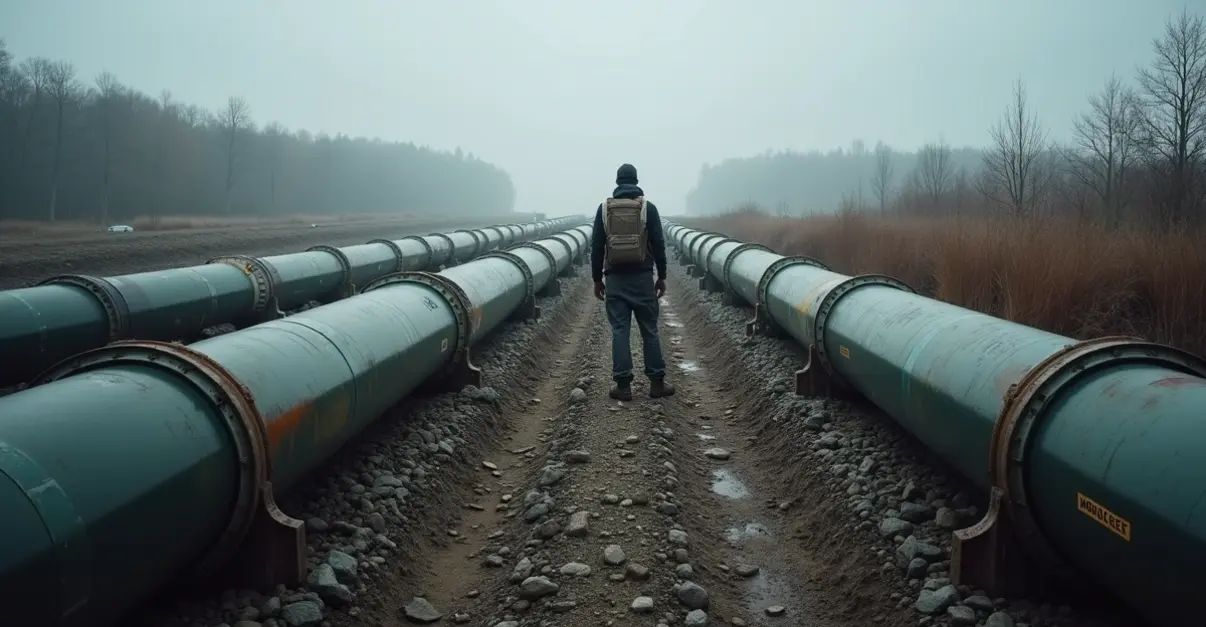
On 26 September 2022, a series of underwater explosions ruptured three of the four Nord Stream 1 and Nord Stream 2 pipelines in the Baltic Sea near the Danish island of Bornholm. The pipelines, built to carry Russian gas to Germany, were mostly idle following Russia's full-scale invasion of Ukraine. Investigators concluded the damage was deliberate sabotage, and the Baltic Sea energy infrastructure became the focus of a sprawling criminal probe.
Who is Volodymyr Zhuravlev and why was he arrested?
Croatian police detained Zhuravlev in Pula under a German European arrest warrant issued in June 2024. German federal prosecutors allege he was one of the scuba divers who planted explosive devices on the pipelines at depths of around 80 metres, working as part of a group led by separately prosecuted Serhii K. He previously worked as a diving instructor in Kyiv and had served in the Ukrainian army, according to German media. The suspect denies the allegations.
Poland released him — now Germany is trying again
Zhuravlev was first arrested in Poland in 2025, where he lived with his family west of Warsaw. A Polish court refused to extradite him to Germany and ordered his release. The judge argued the attack should be seen as a military act in wartime and questioned whether Germany had jurisdiction because the explosions occurred in international waters, NOS reported. Unlike the Polish court ruling that freed him, German authorities insist they have jurisdiction because the pipelines terminate at Lubmin in Germany.
The wider investigation: seven suspects and the Andromeda yacht
German investigators identified seven Ukrainian suspects linked to a Kyiv diving school. One, Vsevelod K., was killed fighting at the front in Ukraine. The team allegedly rented the sailing yacht Andromeda in Rostock and used it to reach the pipelines; later searches found traces of the military explosives HMX and RDX. Prosecutors say four time-delayed devices, each containing 20-35 kilograms of explosive material, were attached to the pipelines.
Serhii K., a former Ukrainian army officer, was arrested in Italy in August 2025 and extradited to Germany in November. He has been charged with attacking civilian energy infrastructure, a war crime, and his trial in Hamburg is expected to begin in the coming weeks. He denies involvement. The Andromeda sailing yacht remains central to the case.
- 26 September 2022: explosions damage three of four pipelines
- Seven Ukrainian suspects identified, linked to a Kyiv diving school
- Andromeda yacht carried traces of HMX and RDX explosives
- Four devices, 20-35 kg each, attached at up to 80 metres depth
- Serhii K. charged with war crimes; Hamburg trial expected soon
Why this arrest matters
The detention in Croatia signals Berlin's determination to prosecute the sabotage despite diplomatic sensitivities. It also complicates the narrative around the attack, which initially drew suspicion toward Russia but later pointed to a possible Ukrainian-linked operation. Ukraine's government and President Volodymyr Zelensky have repeatedly denied any involvement, and Kyiv has suggested a possible Russian false-flag operation. Denmark and Sweden closed their probes in 2024, leaving Germany as the only country still investigating. The case carries significant implications for European energy security and relations between Berlin, Warsaw and Kyiv.
FAQ
When did the Nord Stream explosions happen?
The explosions occurred on 26 September 2022 in the Baltic Sea near Bornholm, Denmark.
Who is the latest suspect arrested in the Nord Stream case?
Ukrainian diver Volodymyr Zhuravlev was arrested in Pula, Croatia, on 19 August 2026 under a German warrant.
Why did Poland release the suspect in 2025?
A Polish judge refused Germany's extradition request, questioning German jurisdiction and describing the attack as a military act in wartime.
Has anyone been charged over the sabotage?
Yes, former Ukrainian officer Serhii K. has been charged with war crimes and is awaiting trial in Hamburg.
Who ordered the Nord Stream sabotage?
It remains unclear. Germany's investigation has focused on Ukrainian-linked suspects, but Kyiv denies involvement and points to a possible Russian false-flag operation.

Follow Discussion