


 Deutsch
 English
 Español
 Français
 Nederlands
 Português


 Share
Share




Berlin Pride Attack: Police Monitored Abdul B. Before Slaying, German Media Reveal
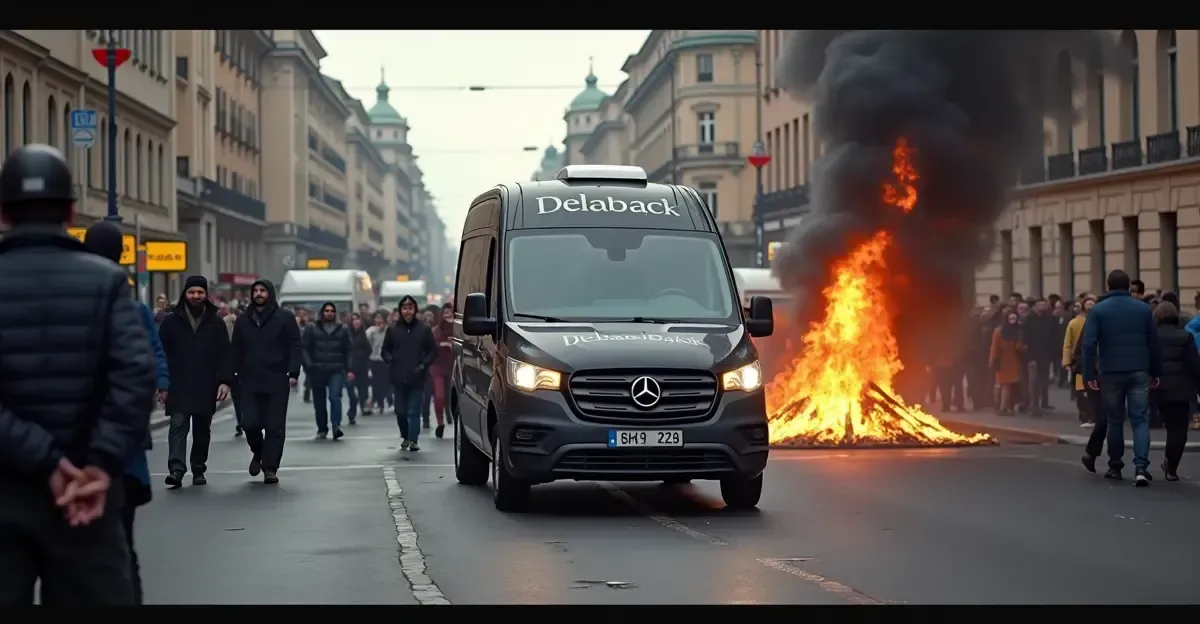
German security services monitored Abdul B., the 21-year-old suspect in the deadly Berlin Pride attack, up until shortly before the incident, according to a joint investigation by Süddeutsche Zeitung, NDR, and WDR. Police had installed a surveillance camera outside his residence and filmed him leaving his home on the evening of July 25, 2026—approximately one hour before he allegedly drove a van into a crowd at the Christopher Street Day celebrations in Tiergarten, killing a 65-year-old Polish woman and injuring 29 others.
The surveillance operation began after Ballout's release from custody in mid-May 2026, following a suspended sentence for preparing a serious act of subversive violence. Authorities had required him to participate in a deradicalization program for extremists as a condition of his release. However, the monitoring was scaled back ten days later after officers concluded there were no concrete indications he was planning an attack. This decision was reportedly influenced by limited resources within the security agency.
Surveillance Gaps and Missed Warnings
According to German media reports, an anti-terrorism team later assessed Ballout as a high-risk threat—categorizing him as 'red'—but because the surveillance officers had reached a different conclusion, no additional measures were implemented. The monitoring of Ballout's phone and internet activity did continue, and camera footage from his residence was reviewed every 24 hours. However, it remains unclear whether officers saw Ballout leave his home on the night of the attack in real time or only when reviewing the footage later.
Just three weeks before the attack, on July 3, police conducted a search of Ballout's home after camera footage showed him carrying a suspicious object resembling a pistol. The object turned out to be a toy weapon. The Violence Prevention Network, the organization tasked with Ballout's deradicalization, later stated that his cooperation appeared 'fake' and that he showed no genuine interest in changing his extremist views.
Background of the Attacker
Abdul Ballout was born in Berlin in 2005 to a family of Shia Muslim background, but he adopted Sunni beliefs. He left school after the tenth grade and worked as a security guard and hired driver. His criminal record began in February 2022 when he was convicted of assault and extortion against schoolmates. In June 2024, he began posting Islamic State propaganda on social media, and in May 2025 he made two attempts to join the Islamic State—first attempting to enter Mauritania, then traveling to Lebanon with the intention of crossing into Syria. Lebanese authorities arrested him, and he was sentenced to three months in prison for inciting religious conflict. After his release, he returned to Berlin, where he was arrested at the airport. German prosecutors sought a three-year prison sentence, but a juvenile court handed down a suspended sentence of one year and ten months in May 2026. The prosecution appealed, and Ballout was allowed to remain free pending the appeal.
Political Fallout and Security Debate
The attack has ignited fierce political debate in Germany, occurring in the midst of campaigning for Berlin state elections and ahead of the 2025 federal election. Germany correspondent Chiem Balduk noted: 'From left to right, there is astonishment that Abdul B. was free. The outrage will only grow with this publication.' The CDU/CSU is calling for harsher sentences, while coalition partner SPD points to implementation failures by police and judiciary. The far-right Alternative for Germany (AfD) has seized on the immigration and security policy debate, linking the attack to immigration despite Ballout being German-born. Research from Goethe University has shown that terrorist attacks have historically boosted AfD vote shares, placing mainstream parties in a difficult position as they seek to address security concerns without fueling far-right gains.
Interior Minister Alexander Dobrindt described the incident as an Islamic terrorist attack. Chancellor Friedrich Merz vowed to defend Germany's freedom and stated that extremists have no place in society. Berlin's justice senator Felor Badenberg has called for an overhaul of juvenile criminal law to prevent similar cases. The attack has also raised questions about the effectiveness of Germany's deradicalization programs and the monitoring of Islamist extremists in Germany.
FAQ: Berlin Pride Attack 2026
What happened during the Berlin Pride attack?
On July 25, 2026, Abdul Ballout drove a van into a crowd of pedestrians at Berlin's Christopher Street Day celebration in Tiergarten, killing a 65-year-old Polish woman and injuring 29 people. He then fled on foot, attacking bystanders with a machete, before being fatally shot by police the following day in Spandau.
Was the attacker known to authorities?
Yes. Ballout was known to German security services as an Islamist extremist. He had been convicted in May 2026 of planning an attack but received a suspended sentence. He was under surveillance until shortly before the attack, though monitoring was scaled back due to limited resources and a lack of concrete threat indicators.
Why was Abdul Ballout free despite his conviction?
A juvenile court sentenced Ballout to one year and ten months in prison but suspended the sentence, citing his young age and potential for rehabilitation. The prosecution had appealed the lenient sentence, and Ballout was allowed to remain free pending the appeal. He was also required to participate in a deradicalization program.
What political impact has the attack had?
The attack has intensified debate over Germany's security and immigration policies. The far-right AfD has used the incident to campaign on anti-Islam and anti-immigration platforms, while mainstream parties call for tighter extremism laws and improved surveillance of known threats. The attack occurred during campaigning for Berlin state elections and is expected to influence voter sentiment.
How did the deradicalization program fail?
The Violence Prevention Network, which screened Ballout, reported that his participation appeared insincere. He showed no genuine interest in deradicalization and continued to hold extremist views. The program's effectiveness has been questioned, especially given that Ballout was under surveillance but still able to carry out the attack.
Sources
This article is based on reporting from Süddeutsche Zeitung, NDR, WDR, the Associated Press, BBC News, CBS News, and Wikipedia. Additional context was provided by NOS correspondent Chiem Balduk and research from Goethe University Frankfurt.
Follow Discussion