


 Deutsch
 English
 Español
 Français
 Nederlands
 Português


 Share
Share




Breakthrough in the Delphine Jubillar Murder Case
In a dramatic development in one of France's most notorious femicide cases, Cédric Jubillar, 38, was taken from his prison cell on July 16, 2026, to lead investigators to the location where he had hidden the body of his wife, Delphine Aussaguel-Jubillar. The discovery of bones—including two femurs—at a site near Mailhoc in the Tarn region, approximately 15 kilometers from the couple's home in Cagnac-les-Mines, marks the first physical evidence of the victim's remains since her disappearance in December 2020.
Jubillar, who was convicted in October 2025 to 30 years in prison for the murder despite the absence of a body, had confessed to killing his wife earlier in July 2026. The case, known as the 'Affaire Jubillar,' has gripped France for over five years, raising questions about domestic violence, the justice system's handling of no-body murder trials, and the broader issue of femicide in France.
Background: The Disappearance of Delphine Jubillar
Delphine Aussaguel-Jubillar, a 33-year-old nurse and mother of two, vanished from the family home in Cagnac-les-Mines during the night of December 15–16, 2020. Her husband, Cédric Jubillar, called police at around 4 a.m. to report her missing, claiming she had left the house after an argument. In the hours that followed, he called her phone dozens of times, a detail that later raised investigators' suspicions.
Massive search operations were launched, involving cave explorers, drones, and canine units, but no trace of Delphine was found. The case quickly became a media sensation, with the French press dubbing it one of the country's most perplexing 'no-body' murder investigations.
The Investigation and Conviction
Despite the absence of a body, French prosecutors built a case against Cédric Jubillar based on circumstantial evidence, including contradictory statements, witness testimony about the couple's turbulent relationship, and digital forensics. In June 2021, he was charged with murder and placed in pretrial detention.
The trial, held before the Tarn Assize Court in October 2025, resulted in a conviction for murder. The jury, relying on the French legal principle of intime conviction (inner conviction), sentenced Jubillar to 30 years in prison. Delphine's family expressed relief but also frustration that her body had never been found, denying them the chance to give her a proper burial.
Confession and Discovery of Remains
Jubillar maintained his innocence for years, but in a dramatic reversal, he confessed to the murder in a handwritten letter to his new lawyers, Maîtres Pierre and Guy Debuisson, in early July 2026. According to his legal team, Jubillar expressed "deep regret" and described the killing as occurring during a "domestic dispute" involving "excessive violence."
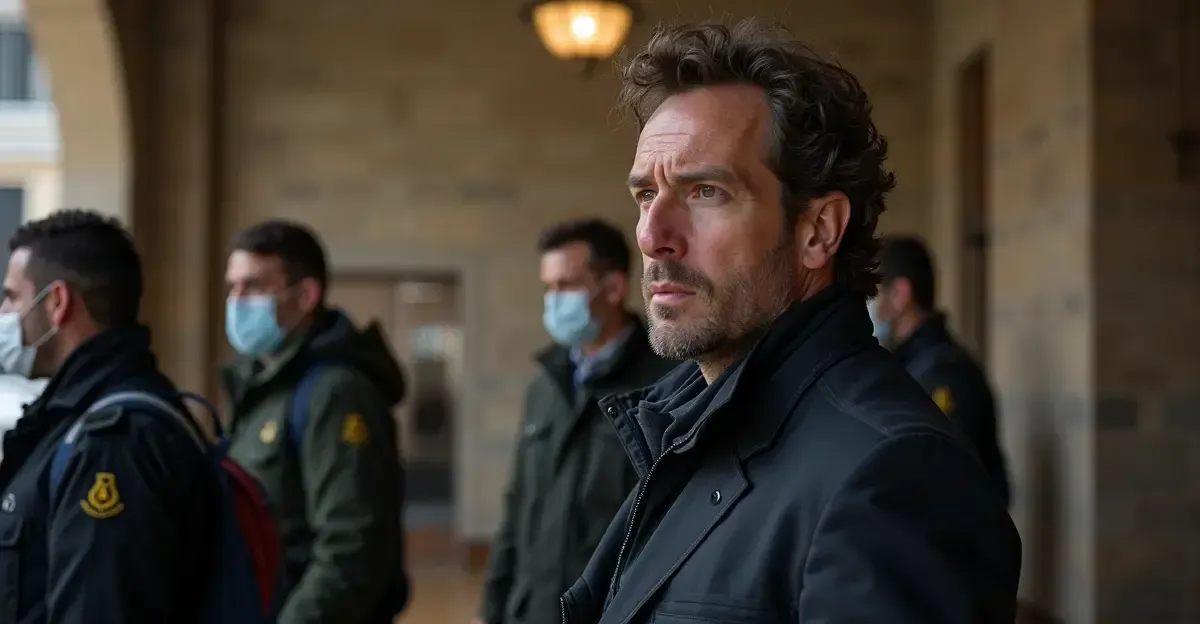
On July 16, 2026, Jubillar was escorted by around 100 gendarmes, including K-9 teams and an anti-drone unit, to a remote field in Mailhoc. There, he pointed to a mound of earth where investigators unearthed bones, including two femurs, believed to be Delphine's remains. The local prosecutor confirmed at a press conference: "Bones have been found, possibly human remains, at the location Jubillar indicated as the site where he left the body of Mrs. Jubillar."
Forensic experts are now conducting DNA analysis to confirm the identity of the remains and to determine the cause of death. The discovery could provide crucial evidence about whether Delphine was strangled, beaten, or killed by other means—details that Jubillar has not yet fully disclosed.
Legal Implications and Appeal Trial
Jubillar's conviction is under appeal, with the new trial scheduled to begin on September 21, 2026, before the Haute-Garonne Assize Court in Toulouse. The appeal was originally set to re-examine the case from scratch, but the confession and discovery of the body have fundamentally altered the legal landscape.
Jubillar's lawyers have suggested that the killing was not premeditated, arguing that it resulted from a "conjugal quarrel" that escalated beyond control. They hope the confession and cooperation could lead to a reduced sentence—potentially 20 years for manslaughter rather than murder. However, prosecutors may argue that the concealment of the body for over five years demonstrates intent and aggravating circumstances.
The case has also reignited debates about domestic violence prevention in France, where an average of 98 femicides were recorded in 2025 alone, according to the association Féminicides France. Delphine's story is tragically emblematic: she was in the process of divorcing Cédric and had met another partner online, a common risk factor for intimate partner homicide.
Impact on the Family and Public Reaction
Delphine's family has expressed "great relief" at the discovery of the remains, hoping it will finally allow them to lay her to rest. The couple's two children—aged 6 and 1.5 years at the time of the murder—have been in the care of relatives.
The case has drawn widespread attention across France and beyond, with many following the twists and turns of an investigation that seemed destined to remain unresolved. The discovery of the body, while providing answers, also raises painful questions about the circumstances of Delphine's final moments and the systemic failures that may have allowed the tragedy to occur.
FAQ: The Jubillar Case
What happened to Delphine Jubillar?
Delphine Jubillar, a 33-year-old French nurse, disappeared from her home in Cagnac-les-Mines on the night of December 15–16, 2020. Her husband, Cédric Jubillar, was convicted of her murder in 2025 despite her body not being found. In July 2026, he confessed and led police to her remains.
Why was Cédric Jubillar convicted without a body?
French law allows conviction based on intime conviction—the jury's inner certainty of guilt—even without physical evidence of a body. Circumstantial evidence, including Jubillar's lies, digital traces, and testimony about the couple's violent relationship, was deemed sufficient.
Where was Delphine's body found?
Bones believed to be Delphine's remains were discovered on July 16, 2026, in a field near Mailhoc, Tarn, about 15 kilometers from the family home. Jubillar guided investigators to the site.
When is the appeal trial?
The appeal trial is scheduled to begin on September 21, 2026, at the Haute-Garonne Assize Court in Toulouse.
What sentence could Jubillar face?
Jubillar was sentenced to 30 years for murder. His lawyers hope the confession and cooperation may lead to a reduced sentence for manslaughter, potentially around 20 years.





Follow Discussion