


 Deutsch
 English
 Español
 Français
 Nederlands
 Português


 Share
Share




Italian police have arrested seven individuals suspected of belonging to an anarchist militant cell responsible for sabotaging high-speed rail lines during the 2026 Winter Olympics in Milan and Cortina. The arrests, announced on June 16, 2026, follow a months-long investigation into a series of coordinated attacks on Italy's railway infrastructure that disrupted travel for tens of thousands of passengers during the global sporting event.
Sabotage During the Games
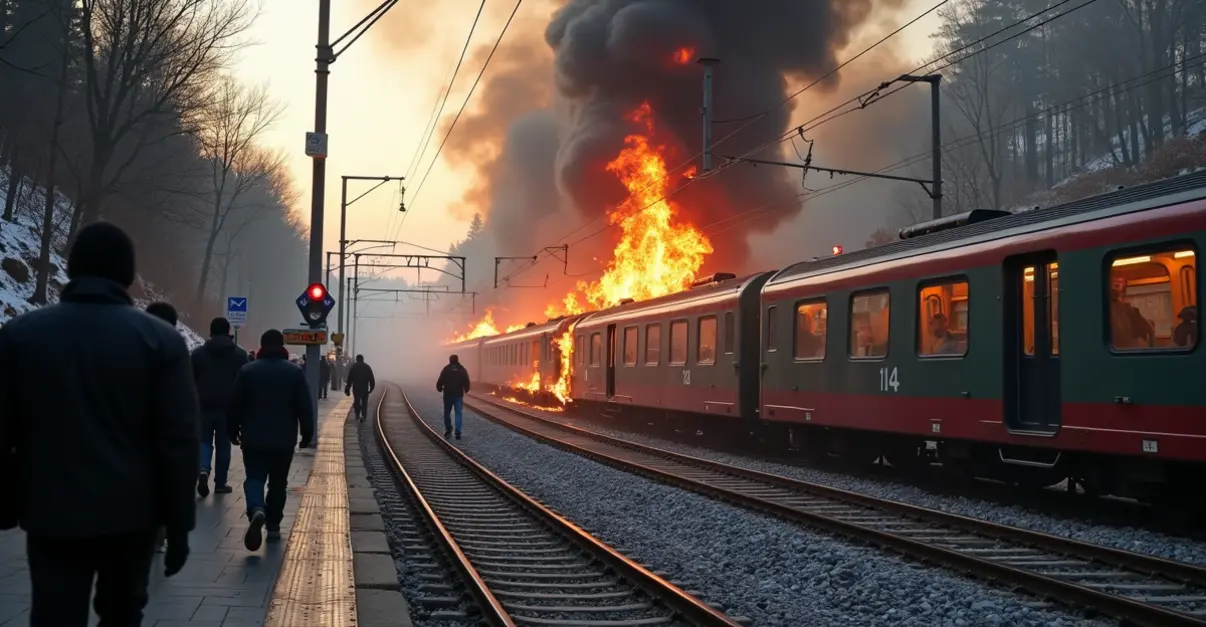
The most significant attack occurred on February 14, 2026, when homemade explosives were used to damage the high-speed rail line between Rome and Florence. The blast caused an estimated €455,000 in damage and forced the suspension of services on one of Italy's busiest rail corridors. A simultaneous sabotage attempt on the Rome-Naples line was also reported, with perpetrators prying open underground cable ducts and setting fire to signaling cables. Trenitalia and Italo trains experienced delays of up to 150 minutes, with disruptions felt as far north as Milan and Bologna.
These attacks were not isolated. On February 7, the first full day of Olympic competition, three separate incidents targeted the critical rail corridor near Bologna: an arson attack on an electrical cabin near Pesaro, severed fiber-optic cables at the Bologna hub, and the discovery of an incendiary device on a track switch near Padua. Approximately 40,000 passengers were affected, with delays lasting up to 2.5 hours. No injuries were reported.
Anarchist Claims and Motives
Responsibility for the February 14 attacks was claimed on the website ispirazione.noblogs.org, which authorities say was created specifically for this purpose months earlier. The statement linked the sabotage to the 2026 Winter Olympics protests and referenced the imprisonment of Alfredo Cospito, one of Italy's most high-profile anarchist prisoners. In a separate manifesto on February 9, another anarchist group denounced the Olympics as a "capitalist showcase" and a "glorification of nationalism," stating that government crackdowns on demonstrations had made street protests "ineffective," forcing them to adopt "clandestine methods."
Who is Alfredo Cospito?
Alfredo Cospito, 58, is a member of the Informal Anarchist Federation serving a 30-year sentence under Italy's strict 41 bis prison regime—a high-security isolation measure typically reserved for mafia bosses. He was convicted for a 2006 bombing at a Carabinieri school in Fossano that injured two officers, and the 2012 kneecapping of a nuclear executive. His case has become a rallying point for anarchist movements both in Italy and abroad. The European Court of Human Rights recently ruled his appeal against the 41 bis regime as "manifestly unfounded."
The Arrests and Investigation
The seven suspects, all allegedly part of an anarchist militant network, face charges including membership in a terrorist organization, sabotage, and undermining the democratic order. Five have been placed in pre-trial detention, while two are under house arrest. According to the Italian police statement, the suspects are based in Rome but maintained links with anarchist groups in Bologna, Milan, and Naples. Simultaneous raids and searches were conducted in all four cities.
The investigation, led by the DIGOS anti-terrorism unit, uncovered evidence of a coordinated network that sought to exploit the international spotlight on Italy during the Milano Cortina 2026 Olympics to advance its political agenda. Authorities are also examining possible connections to similar sabotage attempts during the 2024 Paris Olympics.
Government Response
Italian Prime Minister Giorgia Meloni condemned both the saboteurs and street protesters as "enemies of Italy." Deputy Prime Minister and Transport Minister Matteo Salvini called the perpetrators "delinquents" and vowed to prosecute them to the fullest extent of the law. The government has since increased security measures on the rail network and stepped up surveillance of extremist groups.
The arrests mark a significant victory for Italian counter-terrorism efforts, though authorities acknowledge that the threat from anarchist militancy remains. The 41 bis regime for Cospito was recently renewed, a decision that critics argue could further inflame tensions. As one police official noted, 'The network we dismantled was sophisticated and determined. We remain vigilant.'
FAQ: Italy Rail Sabotage and Anarchist Arrests
What happened during the rail sabotage?
On February 14, 2026, homemade explosives damaged the high-speed Rome-Florence line, causing €455,000 in damages and severe delays. A simultaneous attack targeted the Rome-Naples line. Earlier, on February 7, three incidents near Bologna disrupted travel for 40,000 passengers.
Who was arrested?
Seven individuals suspected of belonging to an anarchist militant cell were arrested on June 16, 2026. Five are in pre-trial detention and two under house arrest, facing charges of terrorism, sabotage, and undermining democratic order.
Why target the Winter Olympics?
Anarchist groups stated they view the Olympics as a "capitalist showcase" and a symbol of nationalism. They also sought to protest the imprisonment of Alfredo Cospito under Italy's strict 41 bis regime.
What is the 41 bis regime?
41 bis is a high-security prison regime involving near-total isolation, severe restrictions on communication and visits, and limited time outside the cell. It is typically applied to mafia members but has been used for anarchist prisoners like Cospito.
Were there any injuries?
No injuries were reported in any of the rail sabotage incidents. The attacks were designed to disrupt infrastructure rather than cause casualties.




Follow Discussion