


 Deutsch
 English
 Español
 Français
 Nederlands
 Português

 Share
Share




Breaking: Canada's Deadliest School Shooting Since 1989
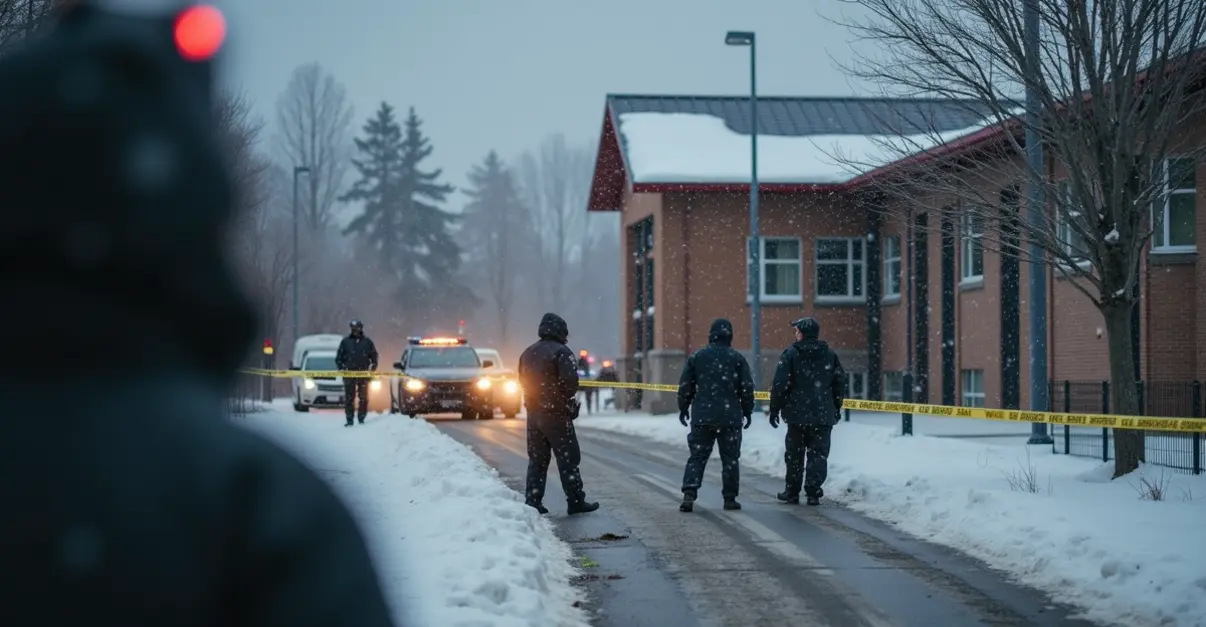
Canadian authorities have identified 18-year-old Jesse Van Rootselaar as the perpetrator of the devastating mass shooting at Tumbler Ridge Secondary School in British Columbia on February 10, 2026. The attack, which left nine people dead including the shooter and at least 25 injured, represents Canada's deadliest school shooting since the 1989 École Polytechnique massacre and has plunged the nation into mourning.
What Happened in Tumbler Ridge?
According to police reconstruction, the tragedy began around 1:20 p.m. local time when Van Rootselaar first killed her 39-year-old mother and 11-year-old stepbrother at their family home. She then proceeded to Tumbler Ridge Secondary School, where she randomly targeted victims in the stairwell and library, killing a 39-year-old teacher and five students aged 12-13. The victims included three 12-year-old girls, a 12-year-old boy, and a 13-year-old boy.
Police arrived within two minutes of receiving the active shooter alert, but Van Rootselaar had already taken her own life with a self-inflicted gunshot wound. Officers recovered two firearms at the scene—a long gun and a modified pistol—though the shooter had no registered firearms in her name.
Who Was Jesse Van Rootselaar?
Jesse Van Rootselaar, an 18-year-old transgender woman who was assigned male at birth but identified as female since age 12, had a documented history of mental health issues and previous police contact. According to authorities, she had dropped out of school four years prior and had been on police radar for multiple mental health incidents at her family home.
'We had responded to several calls at the residence over recent years related to mental health concerns,' confirmed Royal Canadian Mounted Police Superintendent Maria Chen. 'Firearms were previously seized from the home but were later returned to the lawful owner. Her firearms license had expired in 2024.'
The Anti-Defamation League's analysis revealed Van Rootselaar followed a troubling pattern of online radicalization, engaging with white supremacist ideology and disturbing gore content. However, police have found no manifesto or note explaining her motives and believe she acted alone.
Canada's Gun Control Context
This tragedy has reignited debates about Canada's strict gun control laws and their effectiveness in preventing mass shootings. Under Canada's Firearms Act, individuals must:
- Be at least 18 years old
- Pass extensive background checks
- Complete firearms safety courses
- Obtain licenses renewed every five years
- Store firearms locked and unloaded
Since 2022, Canada has implemented a national freeze on handgun sales and transfers, along with a gun buy-back program. These measures followed the 2020 Nova Scotia mass shooting that killed 22 people, which prompted bans on most military-grade assault-style weapons.
Despite these regulations, approximately 7.7% of Canada's adult population (2.2 million people) hold firearm licenses, with an estimated 10 million firearms in circulation nationwide.
Community Impact and National Response
Tumbler Ridge, a remote municipality of approximately 2,400 people located 720 miles northeast of Vancouver, has been devastated by the attack. The secondary school, which serves about 175 students, will remain closed for the remainder of the week, along with the local elementary school.
Canadian Prime Minister Mark Carney addressed Parliament in an emotional statement: 'Today is their first day on earth without someone they love very much,' he said of the victims' families. 'We stand with the community of Tumbler Ridge and all Canadians mourning this senseless tragedy.'
The government has ordered all flags at federal buildings to fly at half-mast for seven days, and Carney cancelled his planned attendance at Germany's Munich Security Conference to focus on the domestic crisis.
Mental Health and Prevention Questions
The shooting has raised urgent questions about mental health treatment systems and early intervention protocols. Van Rootselaar's case highlights the challenges authorities face when dealing with individuals who have:
- Documented mental health histories
- Previous police contact without criminal charges
- Access to firearms through family members
- Online radicalization patterns
British Columbia Premier David Eby acknowledged the complex issues: 'We must examine every aspect of this tragedy—from mental health support to firearm safety—to prevent future incidents,' he stated during a press conference.
Comparative Analysis: Canada vs. United States
| Factor | Canada | United States |
|---|---|---|
| Gun Homicide Rate (per 100,000) | 0.5 | 4.12 |
| Mass Shooting Frequency | Rare | Frequent |
| Background Check Requirements | Mandatory for all sales | Varies by state |
| Assault Weapon Bans | National restrictions | Limited state-level bans |
FAQ: Tumbler Ridge School Shooting
How many people died in the Tumbler Ridge shooting?
Nine people died total: eight victims plus the shooter. The victims included two family members at a residence and six people at the school.
What was the shooter's motive?
Police have not identified a specific motive. Van Rootselaar had mental health issues and engaged with extremist content online, but no manifesto or explanation was found.
How does this compare to other Canadian school shootings?
This is Canada's second-deadliest school shooting after the 1989 École Polytechnique massacre that killed 15 people. It's the deadliest K-12 school shooting in Canadian history.
What weapons were used?
Police recovered a long gun and a modified pistol. The shooter had no registered firearms and her license had expired in 2024.
What support is available for the community?
The Canadian government has deployed crisis counselors, established community support centers, and launched a victim assistance fund. Schools will remain closed with counseling available.

Follow Discussion