English







The Geopolitical Reconfiguration of Global Supply Chains: From Efficiency to Resilience
The global supply chain landscape is undergoing its most profound transformation in decades, shifting from cost-optimized efficiency models to risk-managed resilience frameworks. Recent data shows accelerating trade reconfiguration along geopolitical lines, with 2024 marking significant shifts in US-China trade patterns and European diversification away from Russia, while ongoing Red Sea disruptions continue to demonstrate the vulnerability of global maritime routes. This fundamental redesign represents a strategic response to mounting geopolitical tensions that threaten the stability of international commerce.
What is Supply Chain Resilience?
Supply chain resilience refers to the ability of supply networks to anticipate, prepare for, respond to, and recover from disruptions while maintaining continuous operations. Unlike traditional efficiency-focused models that prioritize cost reduction through lean inventories and single-source suppliers, resilience frameworks emphasize redundancy, diversification, and adaptability. According to the World Economic Forum analysis, organizations must build adaptive, digitally enabled networks prioritizing diversification and agility to thrive amid disruption. The 2026 supply chain standard now emphasizes geopolitical resilience as the top priority, with 74% of logistics managers identifying geopolitical factors as the greatest risk to global supply chains.
Drivers of the Great Supply Chain Reconfiguration
US-China Decoupling and Strategic Competition
The accelerating decoupling between the United States and China represents the most significant driver of supply chain restructuring. U.S. imports from China peaked at 22% in 2017 but dropped to 17% by 2022, with Vietnam, Taiwan, India, and Mexico gaining import shares. However, indirect supply chain links with China remain strong and are growing - Vietnam's imports from China increased from 28% to 33% and Mexico's from 18% to 20% during 2017-2022. This complex dynamic illustrates how companies are navigating the delicate balance between reducing dependency on China while maintaining access to its manufacturing ecosystem through intermediary nations.
Regional Conflicts and Maritime Vulnerabilities
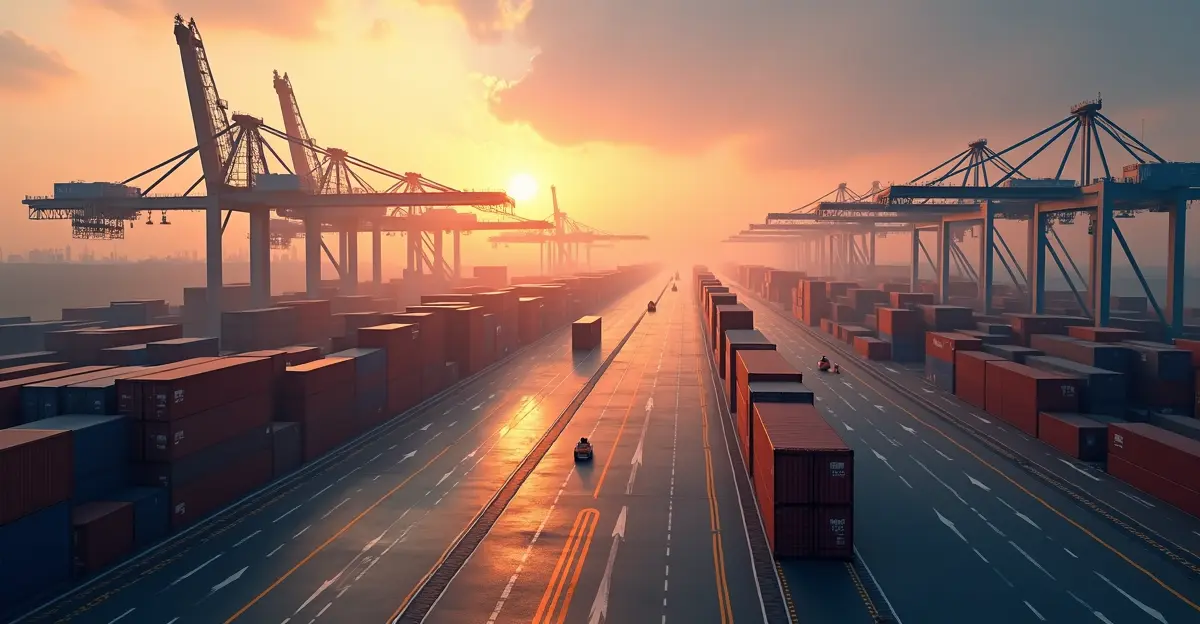
The Red Sea shipping crisis (2024-2025) involving Houthi attacks has severely disrupted global trade since November 2023, with over 190 attacks by October 2024. These attacks have forced major shipping companies to reroute vessels via Africa's Cape of Good Hope, adding 10-14 days to Asia-Europe journeys and reducing Suez Canal traffic by 57.5%. Container ship transits through the Suez Canal dropped 90% between December 2023 and March 2024, forcing vessels to reroute around Africa's Cape of Good Hope. This adds 10-14 days to Asia-Europe transit times and increases costs by $200-400 per TEU, with the total additional cost to global trade estimated at $15-20 billion annually.
Emerging Techno-Nationalism
Techno-nationalism is reshaping supply chains in critical sectors like semiconductors, artificial intelligence, and renewable energy. Governments are increasingly viewing technological supply chains as matters of national security, leading to export controls, investment restrictions, and domestic production incentives. The U.S. Department of Defense analysis from March 2026 addresses artificial intelligence and machine learning supply chain risks and mitigation strategies, highlighting how security vulnerabilities within AI/ML supply chains are becoming critical national security concerns.
The Rise of Friendshoring and Nearshoring
Companies are increasingly adopting 'friendshoring' (shifting supply chains to allied nations) and 'nearshoring' (relocating production closer to end markets) strategies. According to Stanford analysis, while U.S. imports from China have declined, Chinese-owned plants may continue playing important roles in U.S. supply chains through these 'friendshore' and 'nearshore' nations. The strategic trade-offs between reshoring (bringing manufacturing back to home countries) and friendshoring involve complex calculations of cost, security, and geopolitical alignment.
Key Regional Shifts
- North America: Mexico has emerged as a major beneficiary of nearshoring, with its proximity to the U.S. market and competitive labor costs
- Southeast Asia: Vietnam, Thailand, and Malaysia are attracting manufacturing investments as companies diversify away from China
- Europe: Eastern European nations are becoming alternatives to Asian suppliers for European markets
- India: Government initiatives like 'Make in India' are positioning the country as a manufacturing alternative
AI-Powered Monitoring and Risk Management
Advanced technologies are transforming how companies manage geopolitical risks in their supply chains. AI-powered network intelligence helps supply chain teams navigate geopolitical risks by providing real-time risk assessment and scenario planning capabilities. The technology monitors news feeds, regulatory databases, and trade policy changes to flag potential risks to specific suppliers or regions, giving logistics professionals early warning signals. However, a trust gap exists with only 19.5% of European companies trusting AI for autonomous decisions, according to recent industry data.
Strategic Implications and Economic Alliances
The reconfiguration of global supply chains is creating new economic alliances while fragmenting traditional trade networks. The transport and logistics sector is now recognized as a key pillar of European security, adopting a 'dual-use' concept for civilian and military purposes. A case study of the September 2025 border crisis at Małaszewicze, Poland, shows how a two-week border closure resulted in €450 million in EU economic losses, prompting China to accelerate alternative routes. Looking ahead to 2027, companies face dual challenges of geopolitical tensions and EU climate policies (ETS2 potentially increasing costs by 20-30%), driving rapid regionalization of supply chains and local warehousing for 'anti-fragility'.
Expert Perspectives on Supply Chain Transformation
'The shift from efficiency to resilience represents the most significant supply chain transformation since the adoption of containerization in the 1960s,' notes a leading logistics analyst. 'Companies that fail to adapt their supply chain strategies to this new geopolitical reality risk operational disruptions that could threaten their very existence.' According to systematic literature review analyzing 80 articles, financial management, collaboration, resilience, and viable supply chain management are effective strategies for dealing with all geopolitical disruptions.
Frequently Asked Questions
What is the difference between supply chain efficiency and resilience?
Supply chain efficiency focuses on minimizing costs through lean operations and optimized logistics, while resilience prioritizes the ability to withstand and recover from disruptions through redundancy, diversification, and adaptability.
How long will the Red Sea shipping crisis continue to affect supply chains?
As of December 2025, the Red Sea crisis continues to significantly impact global shipping, with major carriers avoiding the route due to ongoing Houthi militant attacks. The disruption has become a persistent feature of global trade, prompting permanent adjustments to shipping routes and logistics strategies.
What are the main benefits of friendshoring versus reshoring?
Friendshoring maintains global trade benefits while mitigating risks through trusted partnerships with allied nations, while reshoring aims to reduce dependency on geopolitical rivals and create domestic jobs but often involves higher production costs.
How effective are AI systems in managing geopolitical supply chain risks?
AI-powered systems provide real-time risk assessment and scenario planning capabilities, but adoption faces challenges with only 19.5% of European companies trusting AI for autonomous decisions in supply chain management.
What industries are most affected by supply chain reconfiguration?
Semiconductors, pharmaceuticals, automotive, electronics, and renewable energy sectors are experiencing the most significant supply chain restructuring due to their strategic importance and complex global networks.
Future Outlook and Conclusion
The geopolitical reconfiguration of global supply chains represents a fundamental shift in how international commerce is organized. As companies navigate the complex landscape of US-China decoupling, regional conflicts, and emerging techno-nationalism, the strategic importance of supply chain resilience will only increase. The transition from efficiency-focused models to resilience frameworks requires significant investment in diversification, technology, and strategic partnerships. Organizations that successfully adapt to this new reality will not only survive disruptions but potentially gain competitive advantages in an increasingly fragmented global economy. The ongoing transformation of global trade networks will continue to reshape economic alliances and redefine the rules of international commerce for years to come.
Sources
World Economic Forum: Supply Chain Adaptation, Stanford Analysis: Friendshoring and Nearshoring, Red Sea Shipping Crisis Analysis, 2026 Supply Chain Standards, AI-Powered Supply Chain Risk Management