


 Deutsch
 English
 Español
 Français
 Nederlands
 Português


 Share
Share




National EV Charger Network Acceleration: Public-Private Plans, Charger Density & Interoperability Timelines
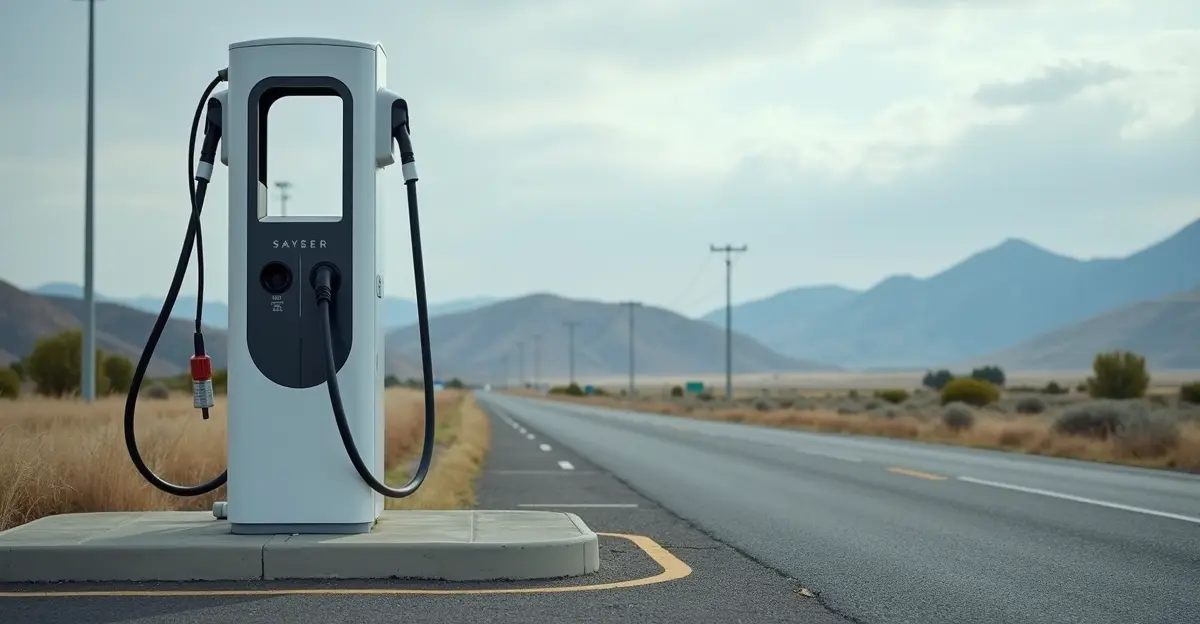
The United States is undergoing a transformative acceleration of its national electric vehicle charging network through strategic public-private partnerships, with 2026 marking a critical inflection point for charger density, interoperability standards, and deployment timelines. The National Electric Vehicle Infrastructure (NEVI) program, a $5 billion initiative established under the Bipartisan Infrastructure Law, is being rebooted with updated guidance that removes barriers and increases flexibility for states and private partners. As of late 2025, only about 56-57 NEVI-funded stations were operational across 15 states, but the program is poised for rapid expansion with $885 million in FY2026 apportionment and streamlined requirements.
What is the National EV Charger Network Acceleration?
The National EV Charger Network Acceleration represents a coordinated effort between federal agencies, state governments, and private sector partners to rapidly deploy electric vehicle charging infrastructure across the United States. This initiative aims to overcome range anxiety and support the transition to electric mobility by creating a convenient, reliable charging network. According to the IEA's Global EV Outlook 2025, the U.S. increased its charging stock by 20% to nearly 200,000 points in 2024, though federal funding disbursement faces ongoing challenges that the 2026 reboot aims to address.
Public-Private Partnership Models Driving Deployment
Research published in ScienceDirect demonstrates that strategically structured public-private partnerships (PPPs) can accelerate sustainable EV charging infrastructure deployment by leveraging private investment and public resources. The study, which uses evolutionary game theory to analyze decision-making among property owners, operators, and government regulators, identifies eight equilibrium points and four potential evolutionary stable strategies shaped by cost-revenue trade-offs.
Key PPP Success Factors
- Revenue-sharing coefficients critically impact cooperation and project efficiency
- Balanced government subsidies – both excessively high and low subsidies can destabilize the market
- Strategic charging pricing to attract more EV users and improve station utilization
- Risk-return alignment with higher returns linked to greater risks for private investors
The NEVI program exemplifies this approach, providing 80% federal funding coverage for compliant projects while requiring states or private partners to contribute the remaining 20%. This model addresses the high initial costs and uncertain returns that typically deter private sector participation in EV charging infrastructure projects.
Charger Density Standards and 2026 Deployment Targets
The updated NEVI guidance released in August 2025 has significantly revised charger density requirements to accelerate deployment. Key changes include:
| Old Requirement | New 2026 Standard | Impact |
|---|---|---|
| 50-mile spacing limit | Increased state flexibility | Allows better rural coverage |
| Specific proximity rules | Removed requirements | Faster site selection |
| Community engagement mandates | Streamlined processes | Reduced administrative delays |
| Corridor-only deployment | Any public roads once corridors complete | Broader network expansion |
Technical compliance requirements for 2026 include 97% uptime with automated reporting via EV-ChART, dual-connector standards (CCS + NACS), minimum four 150kW DC Fast Chargers per station, OCPP 2.0.1 compliance, and open payment systems. The program aims to deploy 500,000 chargers by 2030, with California having specific 2026 deadlines for light-duty corridor completion and Medium/Heavy-Duty charging solicitations.
Interoperability Standards: The NACS Transition
The charging standard landscape is undergoing a fundamental transformation with the adoption of the North American Charging Standard (NACS), originally developed by Tesla and now codified as SAE J3400. According to industry analysis, all major automakers are committing to switch to NACS by 2026, creating unprecedented interoperability across the charging network.
NACS vs CCS: Key Differences
- Size and weight: NACS is smaller and lighter than CCS
- Connector design: NACS uses the same pins for both AC and DC charging
- Network access: NACS provides access to Tesla's extensive Supercharger network
- Voltage support: CCS supports higher voltages (up to 1,000V) for faster charging
- Transition timeline: Most automakers adopting NACS for 2025-2026 model years
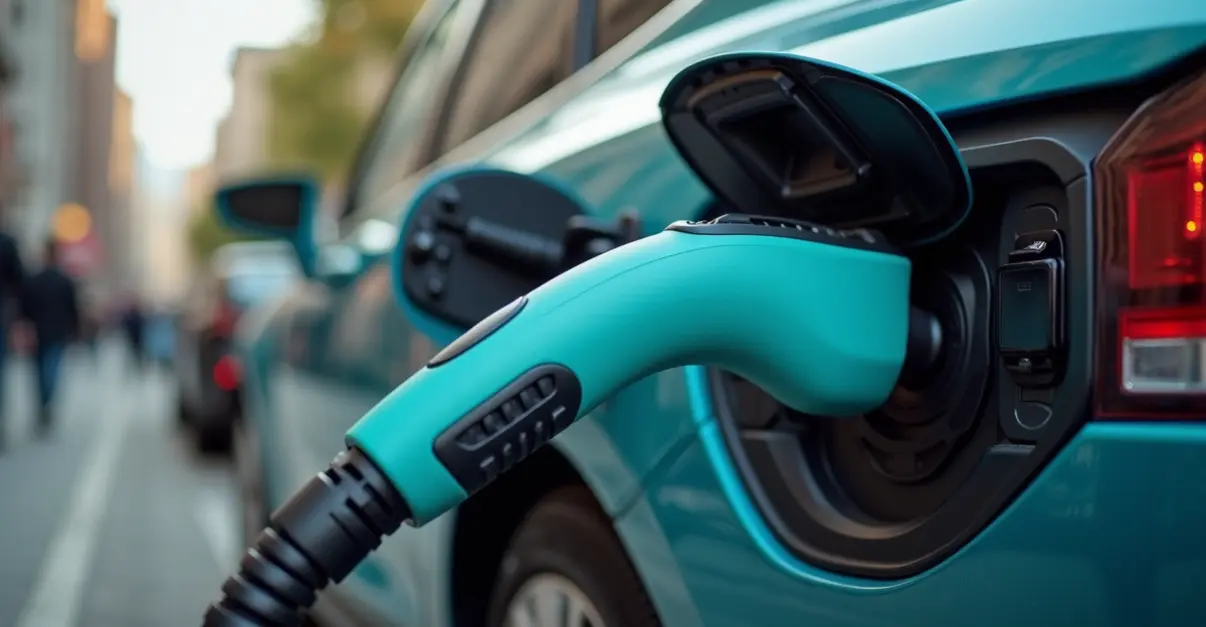
The slim NACS design supports scalable DC up to 500/1000V with continuous currents reaching ~900A and theoretical capacity up to 1MW. This transition enables broader interoperability while maintaining safety through digital vehicle-charger communication and thermal management, addressing a critical barrier to electric vehicle adoption.
Economic Impact and Job Creation
The accelerated deployment of the national EV charging network represents significant economic opportunity. The Joint Office of Energy and Transportation provides resources for economic impact assessment including job creation projections. As states resume paused projects and re-issue RFPs for 2026, the construction, installation, and maintenance of charging infrastructure will generate employment across multiple sectors.
The strategic reboot of the NEVI program in 2026 represents our best opportunity to build the charging infrastructure needed to support mass EV adoption, says an industry analyst familiar with the program. By removing unnecessary barriers and focusing on practical deployment, we can achieve the density and reliability that consumers demand.
Frequently Asked Questions
What is the NEVI program reboot in 2026?
The National Electric Vehicle Infrastructure program is undergoing significant updates in 2026 after being paused in February 2025 for review. Updated guidance removes several requirements to accelerate deployment, including eliminating specific proximity rules and community engagement mandates.
How many EV chargers are currently operational under NEVI?
As of late 2025, only about 56-57 NEVI-funded stations were operational across 15 states. However, many states are now resuming paused projects and re-issuing RFPs for 2026 deployment.
What charging standard will be used in 2026?
The industry is transitioning to the North American Charging Standard (NACS), with all major automakers committing to switch by 2026. NEVI requires dual-connector standards (CCS + NACS) for compliance.
How much federal funding is available for EV charging?
The NEVI program provides $5 billion in federal funding covering up to 80% of project costs, with states or private partners contributing the remaining 20%. FY2026 includes $885 million in apportionment.
What are the technical requirements for NEVI compliance?
Requirements include 97% uptime with automated reporting, dual-connector standards, minimum four 150kW DC Fast Chargers per station, OCPP 2.0.1 compliance, and open payment systems.
Future Outlook and 2030 Targets
The accelerated timeline for national EV charger network deployment aligns with broader transportation electrification goals. The 2030 National Charging Network Report estimates infrastructure needs for 30-40 million EVs by 2030, requiring strategic deployment across urban, suburban, and rural areas. With the 2026 program reboot and standardization around NACS, the United States is positioned to overcome previous deployment challenges and build the comprehensive charging network needed to support the transition to electric mobility.

Follow Discussion