


 Deutsch
 English
 Español
 Français
 Nederlands
 Português


 Share
Share




What is the National EV Charger Network Expansion?
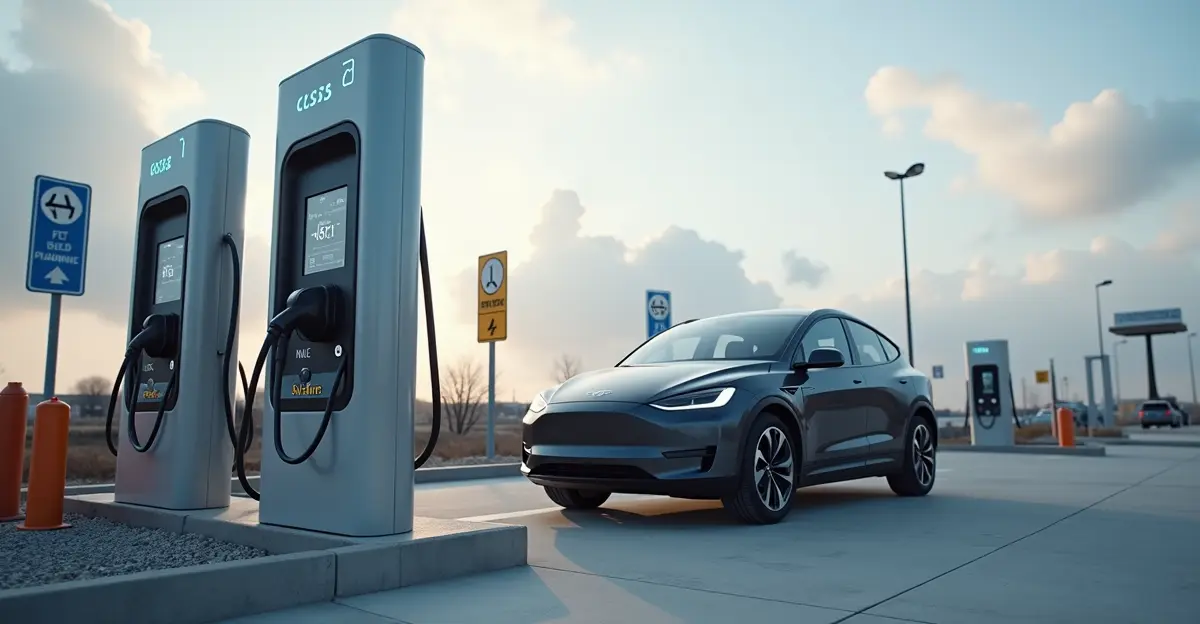
The National Electric Vehicle Infrastructure (NEVI) program represents a $5 billion federal initiative to build a unified, interoperable EV charging network across the United States by 2030. With the program undergoing a major reboot in 2026 following updated federal guidance in August 2025, states are accelerating deployment of fast-charging stations along major highways and rural corridors. This comprehensive expansion addresses critical infrastructure gaps that have hindered electric vehicle adoption, focusing on funding allocations, strategic locations, interoperability standards, and ambitious rollout timelines that will shape the future of electric transportation for years to come.
Funding Landscape and State Allocations
The NEVI program's funding structure has evolved significantly, with the FY2026 apportionment totaling $885 million distributed across all 50 states, Washington D.C., and Puerto Rico. However, recent political developments have introduced uncertainty, as the White House proposed cutting $943 million from four states that voted against President Donald Trump: California, Colorado, Illinois, and Minnesota. These cuts target what the administration labels as 'woke' funds appropriated during the Biden era, potentially impacting equity-focused charging deployment in low-income neighborhoods.
California faces the largest reductions, including $15 million for an equitable charging network in the Bay Area and $2 million for climate adaptation planning. Colorado would lose $4.9 million for charging stations in underserved communities, while Illinois faces a $100 million cut for equity-focused deployment, and Minnesota $15 million for chargers prioritizing low-income areas. Despite these challenges, the NEVI program continues with 80% federal cost coverage for compliant projects, requiring 20% matching funds from private companies or state sources.
State Implementation Progress
As of late 2025, only 56-57 NEVI-funded stations were operational across 15 states, but momentum is building. Oregon serves as a model implementation state, receiving $52 million over five years (2022-2026) to install approximately 50 DC fast charging stations along major highways. The state's Round 2 funding targets 40 stations along I-84, U.S. 20, U.S. 26, U.S. 101, and U.S. 97, with applications due February 20, 2026. Oregon's first NEVI stations are expected to become operational in early 2026, demonstrating the state-level renewable energy initiatives that complement federal programs.
Strategic Locations and Deployment Flexibility
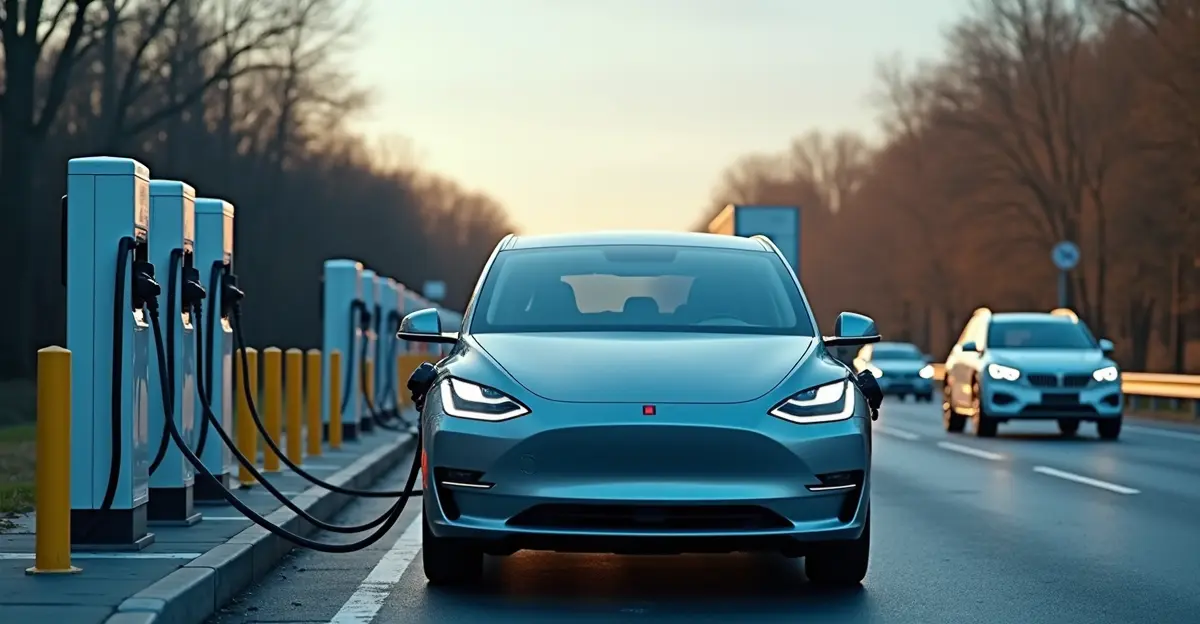
The 2026 NEVI reboot introduces crucial flexibility in station placement, removing the previous strict 50-mile spacing requirement along highways. States can now redirect funds to rural roads and Medium/Heavy-Duty (MHD) charging hubs, addressing critical gaps in the charging network. This strategic shift recognizes that uniform spacing doesn't account for varying traffic patterns, population density, or commercial vehicle needs.
Key location priorities include:
- Alternative Fuel Corridors along interstate highways
- Rural and underserved community access points
- Commercial vehicle charging hubs for MHD applications
- Urban centers with high EV adoption rates
- Tourist destinations and transportation corridors
Once Alternative Fuel Corridors are complete, states gain the ability to use NEVI funds on any public roads, significantly expanding the potential charging network beyond major highways. This flexibility aligns with the program's goal of creating a truly comprehensive national network.
Interoperability Standards and Technical Requirements
Interoperability represents the cornerstone of the national EV charging network, ensuring seamless communication between vehicles, chargers, network solutions, and utility grid operations. The 2026 standards mandate dual-connector compliance with both NACS (North American Charging Standard) and CCS connectors, reflecting the industry's transition toward NACS as the dominant standard starting in 2025.
Key Technical Standards
All NEVI-funded stations must comply with rigorous technical requirements:
- Open Charge Point Protocol (OCPP) 2.0.1: Ensures equipment interoperability across different manufacturers
- ISO 15118: Enables vehicle-to-charger communication including 'plug and charge' functionality
- 97% Uptime Requirement: With automated reporting via EV-ChART system
- Minimum Four 150kW DC Fast Chargers: Per station location
- Open Payment Systems: Multiple payment methods without proprietary apps
These standards prevent proprietary silos that could fragment the charging ecosystem, a critical consideration for technology infrastructure development nationwide. The NACS standard, originally developed by Tesla, uses a smaller, lighter connector that combines AC and DC charging with five pins, promising improved reliability through access to Tesla's Supercharger network.
Rollout Timelines and 2026 Milestones
The NEVI program's 2026 timeline represents the final critical phase of the five-year initiative, with several key milestones:
- February 2026: Oregon's Round 2 funding applications due
- Early 2026: First NEVI stations expected operational in multiple states
- Throughout 2026: Accelerated deployment following program reboot
- By 2030: Target of 500,000 chargers nationwide
The program had been paused in February 2025 for review but resumed with streamlined rules designed to accelerate deployment. The updated guidance features faster 30-day approval processes for state plans, reducing bureaucratic delays that previously slowed implementation. States like Colorado and Idaho are moving forward with revised plans, while the U.S. currently has over 81,000 charging stations with 250,000+ ports nationwide, representing a 17% increase in stations since early 2025.
Impact on EV Adoption and Grid Integration
The national EV charger network expansion directly addresses range anxiety, a primary barrier to electric vehicle adoption. By creating a reliable, interoperable charging infrastructure, the program supports the growing EV market while providing grid flexibility that could save utilities $30 billion over the next decade through managed charging programs. The infrastructure also enables clean energy transition strategies by integrating renewable energy sources with transportation electrification.
According to EVCAN reports, interoperability ensures EVs, chargers, network solutions, energy management systems, and utility grid operations can communicate effectively, preventing fragmentation and frustration for all stakeholders. "Without these standards, proprietary silos hinder infrastructure progress and delay EV adoption needed for decarbonization goals," notes industry analysis.
Frequently Asked Questions
What is the NEVI program?
The National Electric Vehicle Infrastructure (NEVI) program is a $5 billion federal initiative to build a unified EV charging network across the United States, with funding distributed to states for strategic deployment along highways and rural corridors.
What charging standards are required?
NEVI-funded stations must support both NACS and CCS connectors, comply with OCPP 2.0.1 for interoperability, maintain 97% uptime, and feature open payment systems without proprietary requirements.
When will the first NEVI stations be operational?
First stations are expected to become operational in early 2026 in states like Oregon, with accelerated deployment throughout 2026 following program streamlining and updated guidance.
How much funding is available in 2026?
The FY2026 apportionment totals $885 million, though political developments may impact specific state allocations, particularly for California, Colorado, Illinois, and Minnesota facing proposed cuts.
What are the station requirements?
Each NEVI station must have at least four 150kW+ DC fast charging ports, 24/7 availability, multiple payment methods, and five-year maintenance plans with automated uptime reporting.
Future Outlook and Challenges
The national EV charger network faces both opportunities and challenges as it enters its critical 2026 implementation phase. Political uncertainty around funding, particularly the proposed cuts to certain states, could create disparities in charging access. However, the program's increased flexibility and streamlined approval processes offer promising pathways for accelerated deployment. The transition to NACS as the dominant standard, combined with rigorous interoperability requirements, positions the United States to build a charging infrastructure that supports widespread EV adoption while integrating with grid modernization efforts. As states finalize their 2026 deployment plans, the success of this national initiative will depend on continued collaboration between federal agencies, state governments, private companies, and utility providers to create a truly comprehensive and accessible charging network.


Follow Discussion