


 Deutsch
 English
 Español
 Français
 Nederlands
 Português


 Share
Share




Singapore's Landmark Electric Bus Procurement Signals Transport Revolution
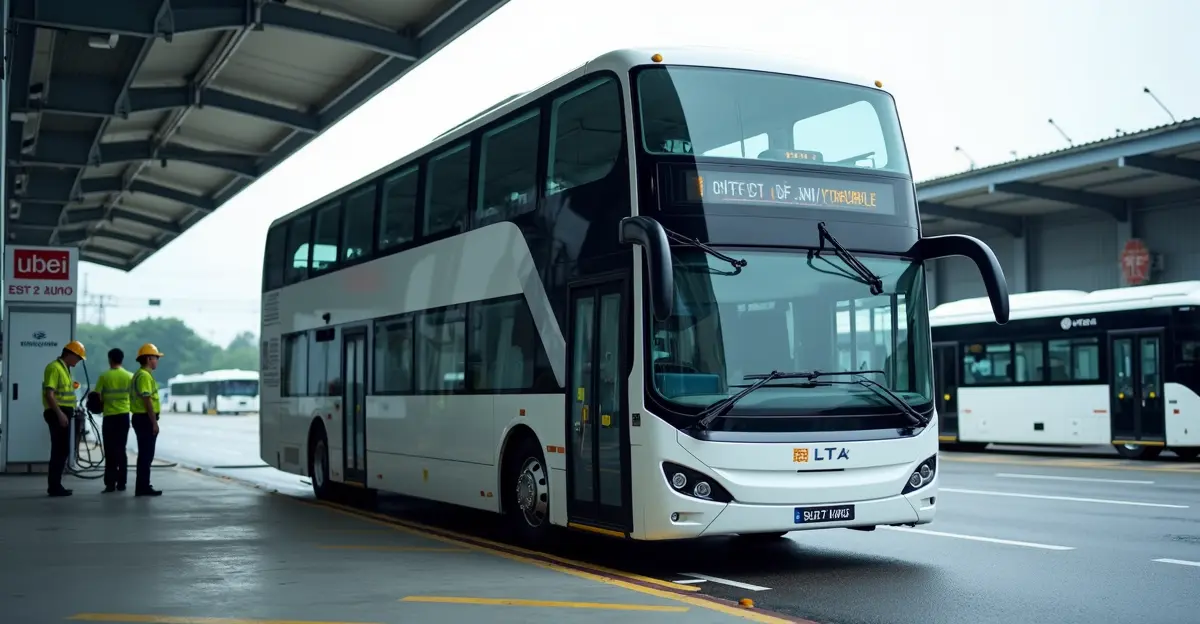
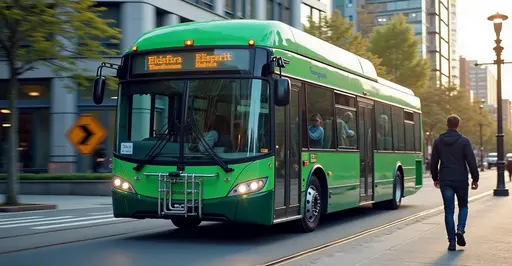
Singapore's Land Transport Authority (LTA) has awarded its largest-ever electric bus procurement contract, worth over S$300 million, to a consortium of four major manufacturers. The deal for 660 new electric buses—including Singapore's first large-scale purchase of electric double-deck buses—marks a significant milestone in the city-state's push toward sustainable public transport.
Historic Procurement Details
The contracts, awarded in December 2025, will see 360 single-deck and 300 double-deck electric buses progressively deployed from end-2026, replacing aging diesel vehicles. The consortium comprises ST Engineering Mobility Services (partnered with CRRC), BYD (Singapore), Yutong International Trade-Yutong Bus Consortium, and Cycle & Carriage Automotive (partnered with Zhongtong Bus). According to LTA's official announcement, the total contract value exceeds S$300 million, with some reports indicating figures as high as S$322.2 million.
'This procurement represents our commitment to transforming Singapore's public transport system into a cleaner, more sustainable network,' said an LTA spokesperson. 'The inclusion of electric double-deck buses for the first time shows how far this technology has advanced.'
Advanced Technology and Safety Features
The new buses will feature cutting-edge technology that goes beyond mere electrification. Improved battery systems will provide longer operating ranges, addressing one of the key concerns about electric bus adoption. Safety enhancements include collision warning systems, driver anti-fatigue monitoring, camera mirror systems replacing traditional mirrors, and 360-degree AI-powered collision detection.
The double-deck buses will introduce three doors and two staircases for smoother passenger flow—a design innovation specifically for Singapore's high-density urban environment. 'The torque management systems have been optimized for Singapore's stop-start traffic conditions,' explained a technical advisor from BYD. 'This ensures smoother acceleration and better energy recovery during braking.'
Policy Implications and Market Impact
This procurement aligns with Singapore's ambitious environmental targets: electric buses are expected to make up half of the public bus fleet by 2030, with a 100% cleaner energy fleet target by 2040. The move reflects broader global trends where governments are using procurement power to drive green transitions.
According to research published in ScienceDirect, electric bus transitions are prompting renegotiation of actor roles, responsibilities, and infrastructure ownership across public transport systems. 'Procurement practices must adapt to accommodate electric bus technology,' the study notes, highlighting the importance of technical competence within Public Transport Authorities.
In the United States, similar initiatives are underway through federal programs like the FTA's Bus Procurement initiatives, which will administer $5.1 billion through the Buses and Bus Facilities Program and an additional $5.6 billion in Low or No Emission Bus Grants through 2026.
Community and Environmental Benefits
For Singaporean communities, the transition means quieter, cleaner buses with reduced local emissions. Electric buses produce zero tailpipe emissions, contributing to improved air quality in densely populated areas. The noise reduction is particularly significant in residential neighborhoods where bus routes operate early in the morning and late at night.
The environmental benefits extend beyond local air quality. Singapore's move supports global climate goals by reducing carbon emissions from public transport. As noted in the Wikipedia entry on electric buses, these vehicles can recover kinetic energy during braking, making them particularly efficient in urban stop-start conditions.
Infrastructure and Implementation Challenges
The massive procurement comes with infrastructure requirements. Singapore is developing charging systems at multiple bus depots and transport hubs to support the new fleet. The LTA has indicated that charging infrastructure will be a combination of overnight depot charging and opportunity charging at terminals.
'The scale of this deployment requires careful planning of charging infrastructure and grid capacity,' noted a transport analyst. 'Singapore's approach of integrating charging with existing transport hubs shows strategic thinking about urban space utilization.'
Future Outlook
This procurement positions Singapore as a regional leader in electric public transport adoption. The successful implementation could serve as a model for other Asian cities facing similar urban density and environmental challenges. With deployment beginning in late 2026, commuters can expect to see these advanced electric buses on Singapore's roads within the next two years.
The consortium approach—bringing together multiple manufacturers—ensures technological diversity and competitive pricing while meeting Singapore's specific operational requirements. As one industry observer commented, 'This isn't just about buying buses; it's about building an ecosystem for sustainable urban mobility.'
Follow Discussion