


 Deutsch
 English
 Español
 Français
 Nederlands
 Português


 Share
Share




Electric Truck Pilot Shows Emissions Savings
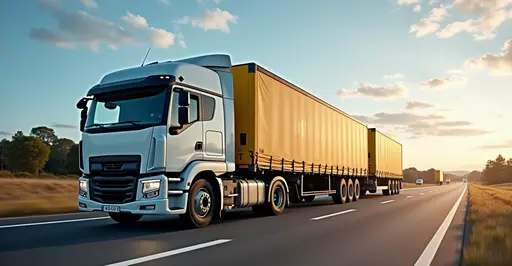
A groundbreaking electric truck pilot program has demonstrated significant emissions reductions and operational cost savings, providing valuable lessons for fleet operators considering the transition to zero-emission vehicles. The comprehensive study, conducted throughout 2025, reveals that electric trucks can achieve up to 85% emissions elimination compared to traditional diesel counterparts while delivering substantial financial benefits through optimized route planning and reduced fuel costs.
Operational Cost Reductions and Route Optimization
The pilot program, which involved multiple logistics companies across different regions, found that electric trucks achieved 70% fuel cost reductions on average. 'The operational savings were even more impressive than we anticipated,' said fleet manager Sarah Chen, who participated in the study. 'By implementing smart route optimization that accounted for charging infrastructure and battery range, we reduced our total operating costs by 37% over a 10-year period compared to diesel trucks.'
Route optimization proved crucial to the success of electric truck operations. The program developed specialized algorithms that considered charging station locations, battery capacity, payload requirements, and energy consumption patterns. According to a Log-hub analysis, proper route planning can extend effective range by up to 25% while minimizing downtime for charging.
Fleet Transition Lessons Learned
The pilot revealed several critical lessons for companies planning fleet electrification. First, 2025 represents a crucial inflection point where electric trucks achieve total cost parity with diesel vehicles, with an average return on investment of just 3.2 years. 'The financial case for electrification is now undeniable,' noted transportation analyst Michael Rodriguez. 'Companies that delay their transition risk being left behind both economically and competitively.'
Second, the study highlighted the importance of infrastructure planning. Successful implementation required careful coordination with utility providers and consideration of charging solutions like microgrids with battery storage. A Cleantechnica report emphasized that microgrid-centered approaches can bypass traditional utility constraints, with examples like PepsiCo's Fresno microgrid with Tesla Megapacks demonstrating scalable solutions.
Regulatory Pressures and Market Trends
The transition to electric trucks is being accelerated by regulatory pressures, particularly California's Advanced Clean Fleets Rule which requires 100% zero-emission vehicle sales by 2036. Similar regulations are emerging across Europe and other regions, creating both challenges and opportunities for fleet operators.
Market data shows rapid adoption in certain segments. According to Wikipedia, electric trucks held 7.8% market share among heavy trucks in Norway and 6.5% in Sweden in 2024, with traditional European truckmakers now producing heavy electric trucks in series production. The technology divide is clear: battery-electric trucks excel in local and regional applications, while hydrogen fuel cells show promise for long-haul routes exceeding 500 miles.
Implementation Roadmap and Best Practices
The pilot program developed a five-phase implementation roadmap that other companies can follow:
- Assessment of current fleet operations and energy needs
- Pilot program with 2-5 electric vehicles
- Infrastructure development and staff training
- Scaling to 20-30% of fleet
- Full fleet conversion with optimized operations
'The key is starting with a manageable pilot that allows you to learn and adapt,' advised logistics consultant Amina Khalid, who authored the study. 'Companies that try to transition their entire fleet at once often encounter unexpected challenges that could have been identified and addressed through a phased approach.'
The study also emphasized the importance of available incentives. Federal and state programs can significantly reduce upfront costs, with some regions offering grants covering up to 40% of vehicle and infrastructure expenses.
Environmental Impact and Future Outlook
Beyond financial benefits, the environmental impact is substantial. Medium and heavy-duty vehicles represent less than 5% of vehicles on the road but produce over 20% of transportation sector emissions, according to U.S. Department of Energy research. The transition to electric trucks is therefore crucial for achieving climate goals.
Looking ahead, the study projects that zero-emission medium and heavy-duty electric trucks will become cheaper than diesel-powered trucks by 2035, with some segments achieving cost competitiveness even earlier. The rapid development of battery technology continues to improve range and reduce costs, with battery pack prices falling from $500 per kWh in 2013 to under $100 in recent years.
The electric truck revolution is no longer a distant future possibility but a present-day reality with proven benefits. As more companies embrace this technology, the lessons learned from pilot programs like this one will help accelerate the transition to cleaner, more efficient freight transportation.
Follow Discussion