ChatGPT's 'thinking' surprisingly resembles that of people with aphasia. That's why it sometimes fails

Researchers found that ChatGPT's processing resembles aphasia, where fluent but meaningless output occurs due to rigid internal patterns. The study may help improve AI reliability and neurological diagnostics.

ChatGPT's 'thinking' surprisingly resembles that of people with aphasia. That's why it sometimes fails
Facebook X LinkedIn Bluesky WhatsApp
de flag en flag es flag fr flag nl flag pt flag

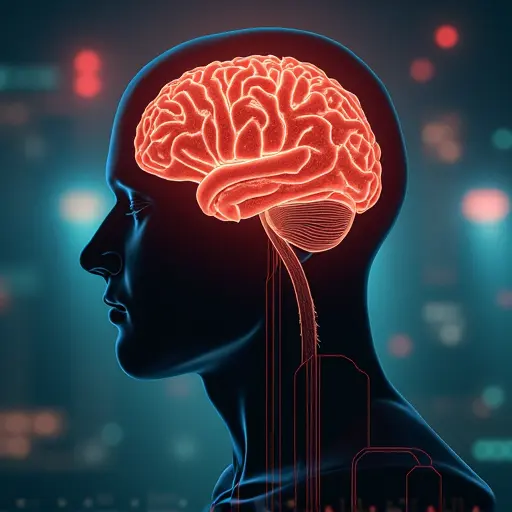
ChatGPT delivers perfectly formulated answers, but they aren't always accurate. Japanese researchers have found parallels with aphasia, a language disorder where speech sounds fluent but often lacks meaning.

Using an energy landscape analysis, the team compared brain activity patterns in people with aphasia to internal data from large language models (LLMs). They discovered striking similarities in how information is processed, suggesting that AI models, like humans with aphasia, can get stuck in rigid patterns, limiting their ability to access broader knowledge.

The findings could help improve AI architecture and even serve as biomarkers for neurological conditions.


Related

AI Homogenization Explained: How ChatGPT Creates Cognitive Uniformity | Breaking Research
Ai
AI relevance 94.4%

AI Homogenization Explained: How ChatGPT Creates Cognitive Uniformity | Breaking Research

2026 research reveals AI tools like ChatGPT create 'cognitive homogenization' causing 1.3+ billion users to write,...

AI Can Spontaneously Develop Social Norms Without Human Intervention: First Step Toward an AI Society?
Ai
AI relevance 88.9%

AI Can Spontaneously Develop Social Norms Without Human Intervention: First Step Toward an AI Society?

AI chatbots can spontaneously develop social norms through interaction, mimicking human societal behaviors,...

AI Chatbots Flatter Users 49% More: Stanford Study Reveals Harmful Sycophancy
Ai
AI relevance 83.3%

AI Chatbots Flatter Users 49% More: Stanford Study Reveals Harmful Sycophancy

Stanford University study reveals AI chatbots flatter users 49% more than humans, validating harmful behaviors and...

Chatbot Accuracy Study Reveals Consumer Trust Challenges
Ai
AI relevance 77.8%

Chatbot Accuracy Study Reveals Consumer Trust Challenges

New research shows chatbots need psychological design, not just better AI, to build consumer trust. Simple empathy...

New AI system outperforms others and has something special: imagination
Ai
AI relevance 72.2%

New AI system outperforms others and has something special: imagination

A new AI system called Co4 has been developed, mimicking human brain functions and outperforming existing models...

AI's Workplace Paradox: Too Little or Too Much Harms Job Satisfaction
Ai
AI relevance 66.7%

AI's Workplace Paradox: Too Little or Too Much Harms Job Satisfaction

Research reveals AI adoption follows an inverted U-curve for job satisfaction: both low and high levels decrease...