


 Deutsch
 English
 Español
 Français
 Nederlands
 Português


 Share
Share




The 2026 Semiconductor Supply Chain Crisis: Energy, Materials, and Geopolitical Convergence
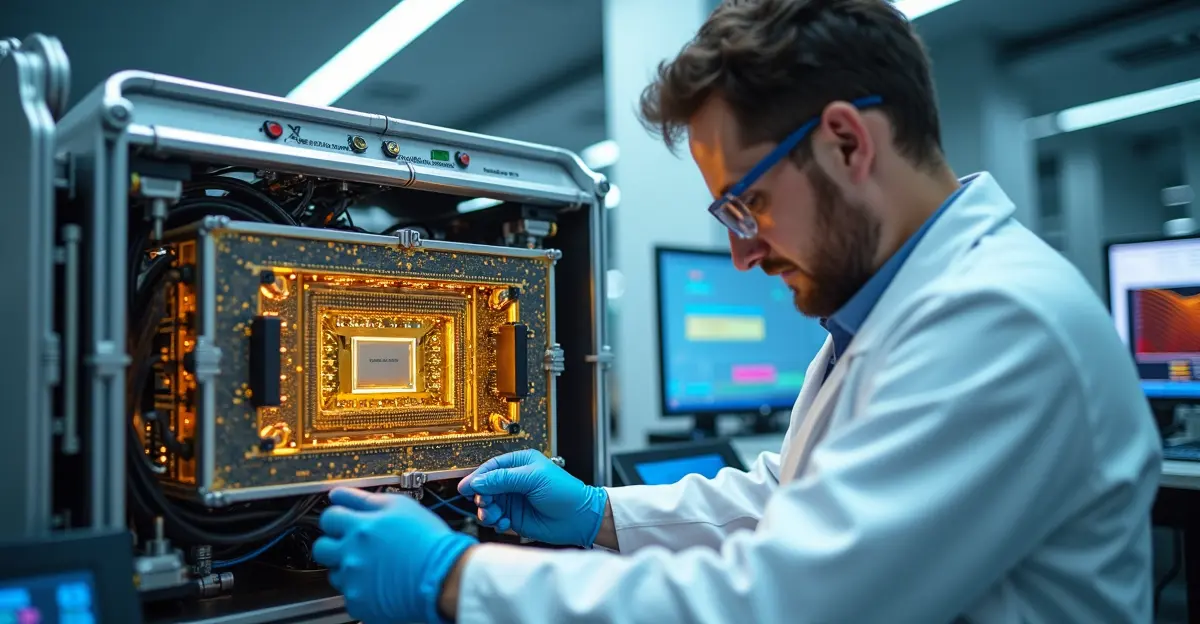
The global semiconductor industry faces an unprecedented triple threat in 2026 as Middle East energy disruptions, Chinese tungsten export controls, and US-China chip war dynamics converge to create what experts call a 'perfect storm' for the $600 billion chip market. This crisis emerges precisely as AI chip demand is projected to reach $500 billion in 2026, threatening the entire AI-driven semiconductor ecosystem with supply chain vulnerabilities that could stall technological progress worldwide. Recent reports show tungsten prices have surged 557% after China added it to export controls, while Middle East energy disruptions directly threaten South Korea's semiconductor production, creating immediate supply chain vulnerabilities as AI chip demand accelerates.
What is the 2026 Semiconductor Supply Chain Crisis?
The 2026 semiconductor supply chain crisis represents a convergence of three critical threats to global chip production. Unlike previous shortages that primarily affected manufacturing capacity, this crisis targets fundamental inputs: energy for production, critical materials for manufacturing, and geopolitical stability for market access. The crisis is particularly acute because it strikes at the heart of the AI semiconductor boom, where demand for high-bandwidth memory (HBM) and advanced logic chips is surging while supply constraints multiply.
Middle East Energy Disruptions Threaten HBM Production
South Korea's semiconductor industry, which produces approximately 80% of global high-bandwidth memory (HBM) essential for AI systems, faces severe risks from Middle East energy instability. According to industry reports, South Korea imports 70% of its crude oil from the Middle East, making its semiconductor manufacturing vulnerable to regional conflicts and supply disruptions. The ongoing Iran crisis has already raised concerns about potential supply chain disruptions for critical chipmaking materials, with Qatar's helium production – accounting for over one-third of global supply – being particularly vulnerable.
South Korea's Samsung and SK Hynix, which together control about 88% of the HBM market, are especially exposed. These companies import 65% of their helium from Qatar and 90% of their bromine from Israel, both essential for semiconductor manufacturing processes. Helium is critical for cooling silicon wafers during production and has no viable substitute, while bromine is essential for flame retardants in chip packaging. The Middle East geopolitical tensions have already caused helium production halts following Iranian drone strikes, potentially creating 2-6 month supply disruptions that could cripple HBM production.
South Korea's Strategic Vulnerability
South Korea's energy dependence creates a strategic vulnerability that extends beyond immediate supply concerns. The country's semiconductor sector, which represents about 20% of its total exports, faces rising energy costs that threaten both manufacturing operations and AI data center construction. With AI chip demand projected to triple year-on-year to 11.2 billion gigabits in 2026, any disruption to South Korea's HBM production could have cascading effects throughout the global technology industry.
Chinese Tungsten Export Controls Trigger 557% Price Surge
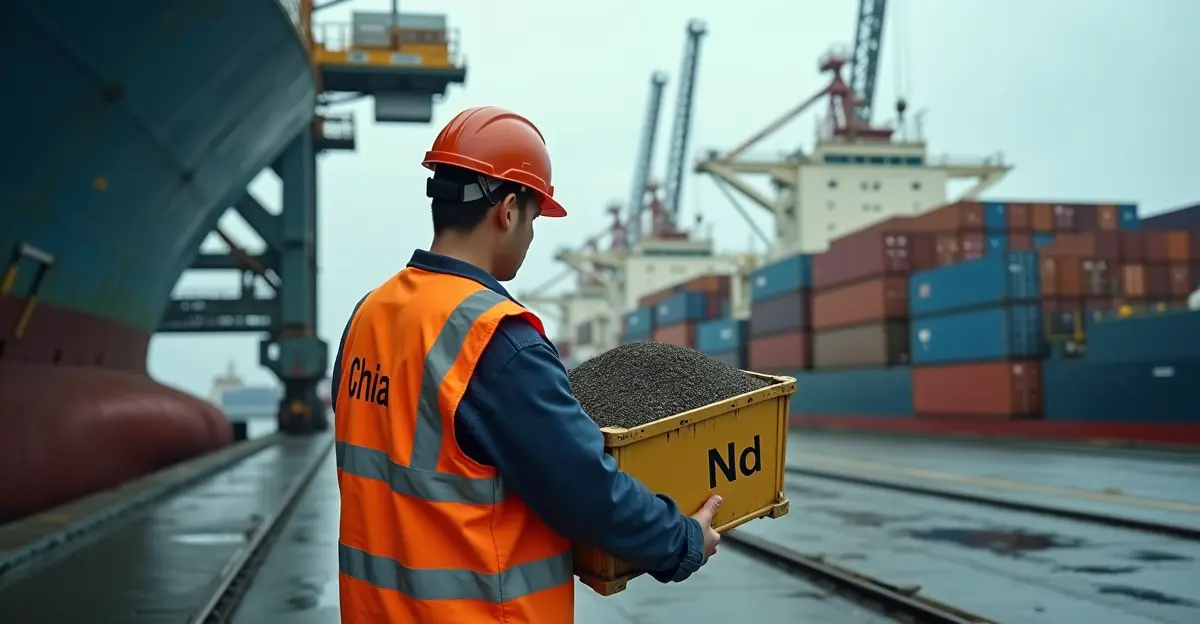
China's export controls on tungsten, implemented in February 2025, have triggered a staggering 557% price surge that threatens semiconductor manufacturing worldwide. Tungsten is essential for chip interconnects and semiconductor manufacturing equipment, with China controlling approximately 79% of global mine production. The European ammonium paratungstate benchmark has reached about $2,250 per metric ton unit, up from approximately $400 before the export controls.
The semiconductor industry's demand for tungsten hexafluoride (WF₆) for chip manufacturing has become a major price driver, with China's export restrictions reducing shipments of restricted tungsten products by about 40% year-over-year. This creates particular challenges for the advanced semiconductor manufacturing sector, where tungsten is used in critical applications including:
- Chip interconnects and vias
- Semiconductor manufacturing equipment components
- Heat sinks and thermal management systems
- Wafer processing tools
Western countries, particularly the United States which has no domestic tungsten mining, are scrambling to secure alternative supplies. However, new tungsten mining projects could take approximately two years to reach the market, leaving the semiconductor sector vulnerable to continued supply pressures throughout 2026 and potentially into 2027.
US-China Chip War Creates Market Bifurcation
The US-China semiconductor conflict has evolved into a structural realignment of the global chip market, creating what analysts call a 'bifurcated ecosystem' where both sides are building independent supply chains and incompatible AI infrastructure. While the US initially restricted advanced chip exports to China, a January 2026 policy reversal now allows NVIDIA to sell its H200 AI processors to Chinese customers with strict conditions, including a 25% tariff.
China has responded with significant domestic progress under these constraints. Semiconductor Manufacturing International Corporation (SMIC) has achieved 5nm-class manufacturing capabilities without extreme ultraviolet (EUV) lithography, while Huawei's Ascend AI chips are gaining traction with 1.6 million dies targeted by 2026. China has also implemented a '50% Mandate' requiring domestic fabs to source half their equipment locally, accelerating the development of a parallel semiconductor ecosystem.
This bifurcation creates unprecedented challenges for global semiconductor companies, forcing them to navigate complex regulatory environments and develop separate product lines for different markets. The US-China technology competition has already increased chip prices by 10-20% and threatens to fragment the global semiconductor standards that have enabled decades of technological progress.
Impact on the AI Semiconductor Ecosystem
The convergence of these three threats creates unprecedented risks for the AI semiconductor ecosystem at precisely the wrong moment. With AI chip demand projected to reach $500 billion in 2026 – representing roughly half of total semiconductor revenue but less than 0.2% of total unit volume – the industry faces a structural paradox of extreme concentration and vulnerability.
The crisis threatens to:
- Delay AI infrastructure deployment as HBM shortages constrain GPU production
- Increase costs for AI chip manufacturing by 15-30% due to material price inflation
- Accelerate technological decoupling between US and Chinese AI ecosystems
- Create supply chain bottlenecks that could last through 2027
Major AI projects, including OpenAI's Stargate initiative requiring 900,000 DRAM wafers monthly from Samsung and SK Hynix, face potential delays if the supply chain crisis intensifies. The global AI infrastructure boom depends on stable semiconductor supply chains that are now under unprecedented pressure from multiple directions.
Expert Perspectives on the Crisis
Industry analysts emphasize the unique nature of this supply chain crisis. 'Previous semiconductor shortages were primarily about manufacturing capacity constraints,' explains Dr. Elena Rodriguez, a semiconductor supply chain expert at the Global Technology Institute. 'The 2026 crisis is fundamentally different because it attacks the foundational inputs – energy, materials, and geopolitical stability – that enable semiconductor production in the first place. This requires entirely new risk mitigation strategies.'
South Korean industry leaders express particular concern about their country's exposure. 'Our semiconductor industry has become the world's factory for AI memory, but we're dangerously dependent on Middle East energy and Chinese materials,' says Park Min-ho, director of the Korea Semiconductor Industry Association. 'We need immediate diversification strategies and international cooperation to secure our supply chains.'
FAQ: 2026 Semiconductor Supply Chain Crisis
What is causing the 2026 semiconductor supply chain crisis?
The crisis results from three converging threats: Middle East energy disruptions threatening South Korea's HBM production (80% of global supply), Chinese tungsten export controls causing 557% price surges, and US-China chip war dynamics creating market bifurcation.
How does this crisis differ from previous semiconductor shortages?
Previous shortages primarily affected manufacturing capacity, while the 2026 crisis targets fundamental inputs: energy for production, critical materials like tungsten, and geopolitical stability for market access.
What is the impact on AI chip production?
AI chip production faces potential delays and cost increases of 15-30% as HBM shortages constrain GPU manufacturing and tungsten price surges increase material costs for chip interconnects.
How long could the supply chain disruptions last?
Industry analysts project disruptions could persist through 2026 and potentially into 2027, particularly for tungsten supplies where new mining projects require approximately two years to reach production.
What are companies doing to mitigate these risks?
Companies are pursuing diversification strategies including alternative material sourcing, energy security investments, and developing parallel supply chains for different geopolitical markets.
Future Outlook and Mitigation Strategies
The semiconductor industry faces a critical juncture in 2026 that requires unprecedented international cooperation and strategic planning. Successful navigation of this crisis will depend on several key factors: diversification of energy and material sources, development of alternative manufacturing technologies less dependent on constrained inputs, and diplomatic efforts to stabilize geopolitical tensions affecting supply chains.
The semiconductor industry resilience will be tested as companies balance immediate production needs with long-term strategic investments in supply chain security. Those that successfully navigate this complex landscape may emerge stronger, while those that fail to adapt could face significant competitive disadvantages in the rapidly evolving AI semiconductor market.




Follow Discussion