


 Deutsch
 English
 Español
 Français
 Nederlands
 Português


 Share
Share




What Are the December 2024 U.S. Semiconductor Export Control Updates?
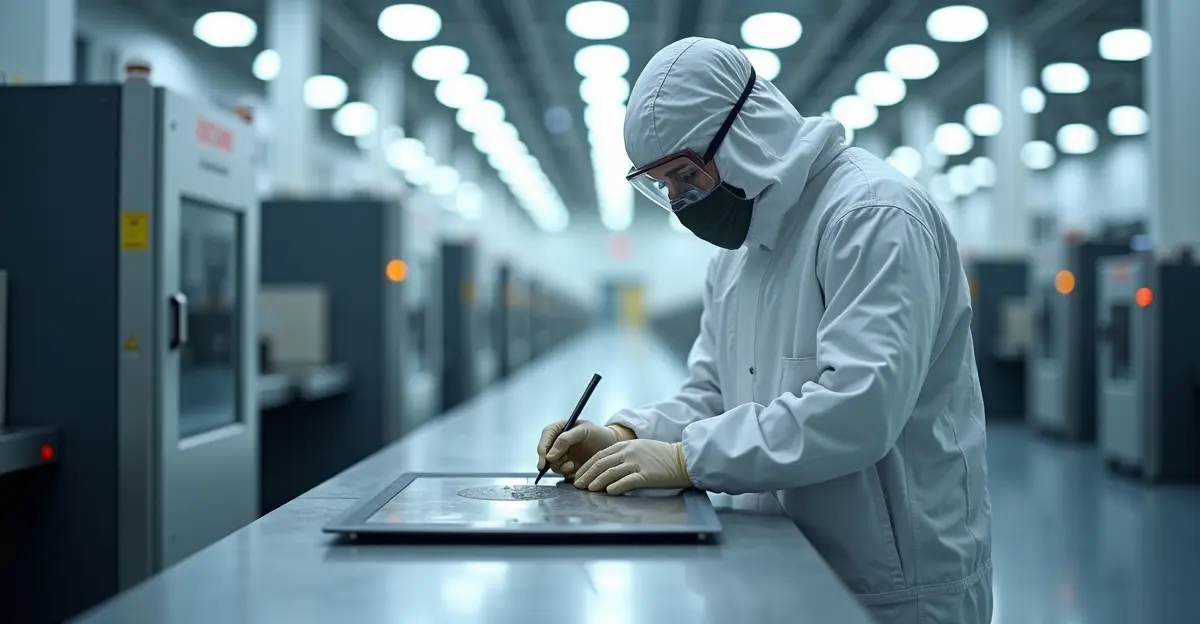
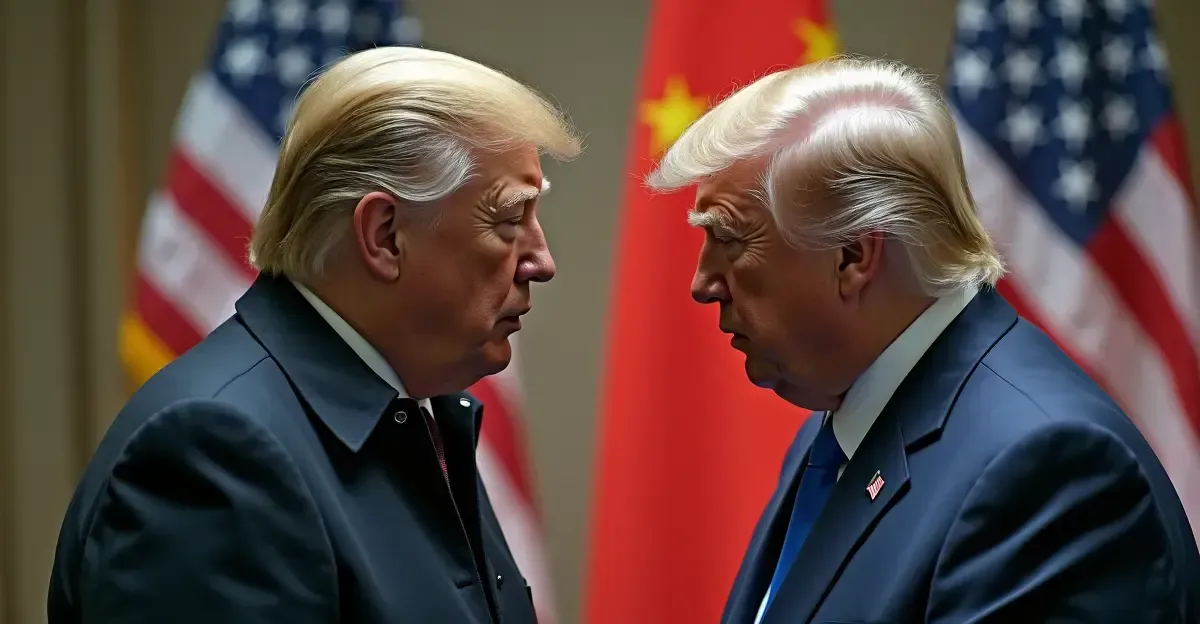
The United States implemented significant updates to semiconductor export controls in December 2024 and January 2025, representing a critical escalation in technology competition with China. These measures, announced by the Department of Commerce's Bureau of Industry and Security (BIS), specifically target China's ability to produce advanced semiconductors for military applications and artificial intelligence development. The controls expand on previous restrictions established in October 2022, creating what analysts describe as the most comprehensive technology containment strategy since the Cold War. According to recent CSIS analysis, these updates highlight the complex challenges of allied coordination given varying legal authorities across partner nations like the Netherlands, Germany, South Korea, Japan, and Taiwan.
Key Components of the December 2024 Export Control Updates
The Biden administration's December 2024 export control updates represent a major expansion of semiconductor restrictions targeting China's AI capabilities. The new controls take eight key actions according to CSIS analysis:
- Expanding country-wide chip-level restrictions to include High-Bandwidth Memory (HBM), which is critical for AI applications
- Updating restrictions on advanced semiconductor manufacturing equipment
- Expanding Foreign Direct Product Rule applicability
- Offering exemptions to allies like Japan and Netherlands
- Adding new due diligence requirements
- Adding 140 new entities to the Entity List
- Creating new Restricted Fabrication Facility license exceptions
The HBM restrictions are particularly significant as HBM accounts for roughly half the manufacturing cost of Nvidia AI chips and is dominated by just three companies: SK Hynix, Samsung, and Micron. These measures aim to choke off China's access to advanced AI chips, prevent domestic alternatives, and mitigate impacts on U.S. industry.
The Geopolitical Calculus Behind the Controls
Allied Coordination Challenges
The effectiveness of U.S. semiconductor export controls depends heavily on allied cooperation, yet this presents significant challenges. Key allies like the Netherlands, Germany, South Korea, Japan, and Taiwan control critical chokepoints in the semiconductor value chain, making unilateral U.S. action insufficient. The CSIS report on allied legal authority finds that while allies often lack equivalents to U.S. tools like the Foreign Direct Product Rule and Entity List, they generally have authority to implement some controls on advanced chips and equipment not covered by multilateral regimes. Success depends on allies' enforcement capacity and willingness to act, not just legal authority.
Technological Chokepoints Controlled by Allies
Several allies control essential technological chokepoints:
- Netherlands: ASML's extreme ultraviolet (EUV) lithography machines
- Germany: Advanced semiconductor manufacturing equipment
- South Korea: Memory chip production and HBM technology
- Japan: Semiconductor materials and equipment
- Taiwan: Advanced chip fabrication through TSMC
These dependencies create complex diplomatic challenges for the U.S. as it seeks to coordinate a unified technology containment strategy.
Economic Consequences for U.S. Firms
The economic impact of these export controls on U.S. semiconductor companies is substantial. A November 2025 ITIF report warns that U.S. semiconductor export controls on China could severely harm American chipmakers and innovation. The analysis estimates that in a full decoupling scenario, U.S. firms could lose approximately $77 billion in semiconductor sales in the first year, with South Korean, EU, Taiwanese, Japanese, and Chinese firms gaining market share from these losses.
This revenue decline would reduce U.S. semiconductor R&D investments by about 24% ($14 billion) compared to current levels. The report projects significant job losses, with over 80,000 fewer U.S. semiconductor industry jobs and nearly 500,000 fewer downstream jobs. The study examines four decoupling scenarios ranging from Entity List restrictions to full export bans, concluding that policymakers should keep semiconductor export controls to a minimum to avoid damaging U.S. competitiveness, innovation capacity, and employment.
Strategic Implications and Future Outlook
Accelerating China's Technological Self-Sufficiency
One of the key debates surrounding these export controls is whether they represent effective economic statecraft or risk accelerating China's technological self-sufficiency efforts. China has responded with countermeasures including increased semiconductor R&D funding, developing domestic alternatives, and implementing retaliatory export controls on critical materials like gallium and germanium. The controls have created a bifurcated global semiconductor market, with U.S. firms potentially losing substantial market share while Chinese companies accelerate domestic development.
According to the Congressional Research Service report on U.S. export controls, these measures reflect the United States' ambition to counter the accelerating advancement of China's high-tech capabilities to address foreign policy and national security concerns. However, they also risk creating a parallel semiconductor ecosystem in China that could eventually compete directly with Western technology leadership.
Broader Implications for Global Technology Leadership
The December 2024 updates represent more than just trade restrictions—they signal a fundamental shift in how nations approach technology competition. The controls are part of broader U.S. national security efforts to maintain technological leadership and prevent sensitive technologies from being used to enhance China's military capabilities through its military-civil fusion strategy. This approach reflects growing concerns about the intersection of commercial technological advancements and military applications in the context of U.S.-China strategic competition.
The CHIPS and Science Act of 2022 provides $280 billion in funding, including $52.7 billion in direct grants and a 25% investment tax credit, which has already attracted over $450 billion in private investment across 28 states. This domestic investment strategy complements the export control measures, creating a dual approach of restricting competitors while strengthening domestic capabilities.
Expert Perspectives on the Export Controls
Industry analysts and policy experts offer mixed assessments of the December 2024 updates. Some view them as necessary national security measures, while others warn of unintended consequences. "The HBM restrictions are particularly significant as they target a critical bottleneck in AI chip production," notes a CSIS analyst. "However, the success of these measures depends entirely on allied cooperation and enforcement."
Another expert from the Information Technology and Innovation Foundation warns: "While aimed at protecting national security, these restrictions limit market access for U.S. companies in key global markets, potentially reducing revenue streams needed for research and development. They may inadvertently accelerate China's efforts to develop domestic semiconductor capabilities, creating future competitors."
Frequently Asked Questions
What are the December 2024 semiconductor export control updates?
The December 2024 updates expand U.S. export controls on semiconductors to China, including new restrictions on High-Bandwidth Memory (HBM), updates to manufacturing equipment limitations, expansion of the Foreign Direct Product Rule, and addition of 140 entities to the Entity List.
How much could U.S. firms lose from these export controls?
According to ITIF analysis, U.S. semiconductor firms could lose approximately $77 billion in sales in the first year of full decoupling, with potential reductions in R&D investment of $14 billion and job losses exceeding 80,000 in the semiconductor industry.
Which allies are critical for enforcing these controls?
Key allies include the Netherlands (ASML lithography), Germany (manufacturing equipment), South Korea (memory chips), Japan (materials), and Taiwan (TSMC fabrication). Their cooperation is essential for the controls' effectiveness.
Will these controls accelerate China's semiconductor self-sufficiency?
Many experts believe the controls will accelerate China's domestic semiconductor development efforts, potentially creating a parallel technology ecosystem that could compete with Western leadership in the long term.
What is the strategic goal of these export controls?
The primary goal is to limit China's ability to develop advanced semiconductors for military and AI applications while maintaining U.S. technological leadership and addressing national security concerns related to military-civil fusion.
Conclusion: Balancing Security and Competitiveness
The December 2024 U.S. semiconductor export control updates represent a critical juncture in global technology competition. While designed to protect national security and maintain technological leadership, these measures carry significant economic costs and strategic risks. The $77 billion potential loss for U.S. firms highlights the delicate balance between security concerns and economic competitiveness. As the global semiconductor landscape continues to evolve, the effectiveness of these controls will depend not only on U.S. enforcement but on coordinated action with allies who control essential technological chokepoints. The coming years will reveal whether this approach represents effective economic statecraft or accelerates the very technological independence it seeks to prevent.



Follow Discussion